
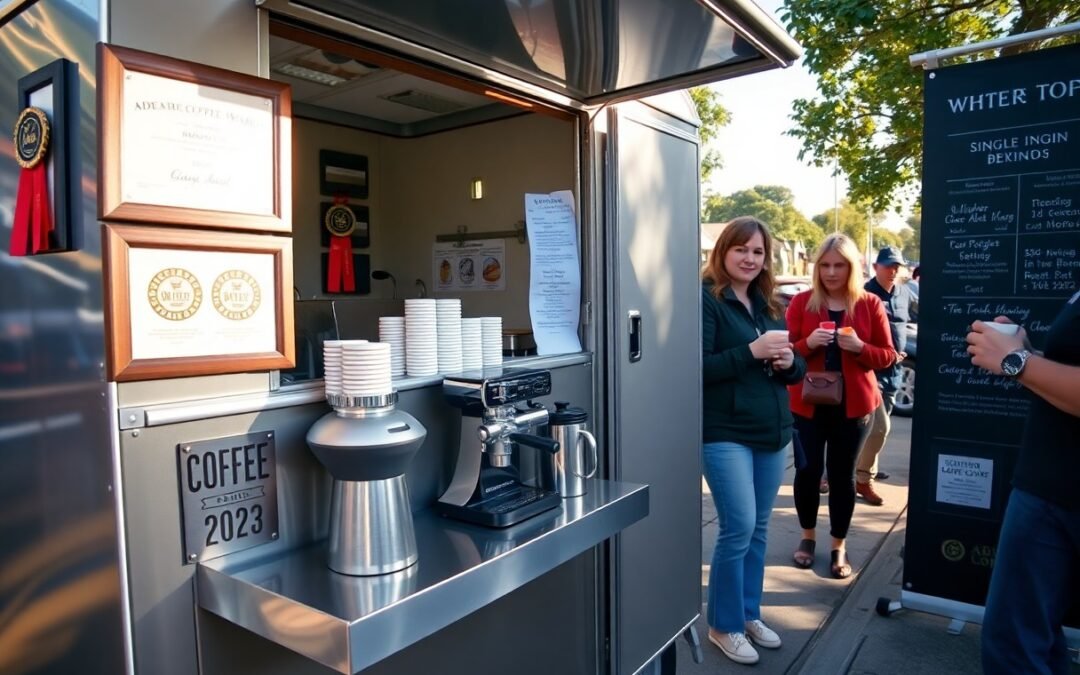
Over the next few minutes you’ll learn the practical signs that distinguish an award-winning Adelaide coffee van: visible awards or accreditation, a steady queue of locals, masterful barista skills and consistent aroma and taste, transparent sourcing and roast information, spotless van and professional equipment, strong local reviews and social media presence, and regular appearances at markets or festivals that prove community recognition.
Understanding Award-Winning Coffee Vans
When you scout for a top-tier mobile setup, scan for media coverage and event presence-an example is the Award-winning Cheeky Grin Coffee van slings Willow Bend … piece that shows how a judged mobile operation presents itself at pop-ups. You should also note how often a van turns up at busy markets and festivals (vans doing 10+ weekend events a season are being stress-tested regularly), because consistent field performance is a strong indicator of award-level reliability.
What Makes a Coffee Van Award-Winning
Technical consistency matters: award-winning vans typically run commercial two-group machines (examples: La Marzocco or Synesso), stepless grinders calibrated to the day’s roast, and robust water filtration to protect extraction. Expect espresso parameters close to specialty standards-an 18-20 g dose producing ~36-40 g yield in ~25-30 seconds for balanced shots-and a menu that offers at least one single-origin filter alongside a well-executed house blend. High-throughput capability (30-50 drinks per hour during peak service) plus hygienic, well-organised workflow are non-negotiable in judged environments.
Operational credentials back the sensory side: look for SCA (Specialty Coffee Association) or equivalent barista certifications, partnerships with reputable roasters that list roast dates (freshness often within 7-14 days), and evidence of sustainable sourcing or compostable packaging. Vans that have won local “Best Mobile Coffee” or specialist awards often display credentials, press clippings, and dedicated event bookings-these are practical signals you can verify on-site or via their social listings.
Recognizing Quality and Craftsmanship
You’ll detect craftsmanship immediately in the cup and the method: a clean, sweet aroma, stable crema on espresso, and a balanced acidity-to-body ratio point to precise dosing and extraction control. In milk drinks, glossy microfoam and consistent latte art (rosetta, heart) indicate proper steaming at the right temperatures (typically 60-65°C). Also assess the barista’s technique-steady tamp, timed shots, and minimal wait between grind and extraction reveal attention to detail.
For more depth, ask for a single-origin pour-over or a straight espresso and check a few concrete markers: pour-over brew ratios around 1:15-1:18 should yield clarity of flavour, while a 1:2 espresso ratio (e.g., 18 g in to ~36 g out) in ~25-30 seconds shows disciplined dialing. Inspect equipment maintenance-clean group heads, regular backflushing, visible water-filtration units and tidy grinder dosing bins-and you’ll have objective evidence that the van’s quality is more than just hype.
Key Factors to Consider
Scan for objective signs that separate an award-winner from a good local van: visible roast dates and origin details on bags, clear menu descriptions (single-origin vs blend), up-to-date equipment, and baristas who can explain extraction and milk texture. Check online ratings and recent competition mentions, but weigh them against on-site evidence – for example, a van that lists roast dates within 2-4 weeks and displays a calibration log for its grinder and group heads is more likely to deliver consistency than one with no provenance or maintenance notes.
- Coffee quality and roast-date transparency
- Equipment type and calibration (e.g., PID controls, quality burr grinders)
- Barista skill, training and product knowledge
- Menu clarity, brew methods offered and seasonal options
- Hygiene, presentation and workflow efficiency
- Payment and ordering options (contactless, pre-order apps)
Knowing these factors lets you compare vans side-by-side: award-winning setups typically pair roast-date transparency with PID-controlled espresso machines, calibrated grinders and baristas who hit 18-20 g doses, 36-40 g yields in ~25-30 seconds for espresso, which together produce repeatable quality.
Coffee Quality and Variety
You should prioritise vans that post roast dates and list origins and processing methods – single-origin Ethiopian, Colombian or Brazilian lot information tells you what flavour profiles to expect and whether the roaster is working with seasonal lots. Expect specialty vending vans to rotate beans every 2-6 weeks; blends will be aimed at balance and crema stability, while single-origins will highlight specific tasting notes like citrus, stone-fruit or chocolate.
Ask about extraction parameters and brewing options: a reliable espresso shot on a quality van will use a dose around 18-20 g, yield roughly 36-40 g, and pull in 25-30 seconds at 92-96°C; for filter methods you can look for brew ratios of about 1:15-1:17 with a 30-second bloom and total brew times between 2:30 and 3:30. You can also test variety by ordering both an espresso and a single-origin pour-over – consistent excellence across both is a strong indicator of top-tier bean selection and skilled preparation.
Customer Service and Experience
You’ll judge service by speed, clarity and barista engagement: a strong van aims to serve espresso-based drinks within 90-120 seconds once the order is accepted, and milk drinks within 3-4 minutes even during a steady queue. Clear signage, a visible menu with tasting notes, and pre-order or contactless payment options cut perceived wait times and show the operation has thought through customer flow.
Consistency across repeated visits is a key part of the experience: well-trained baristas will dial in shots to the same extraction window, text milk to a consistent texture (60-65°C), and plate drinks with reliable latte art and temperature. Equipment brands you’ll often see at award-winning vans include La Marzocco or Victoria Arduino line machines and high-end burr grinders; visible maintenance logs or recent service stickers are practical proof that the van invests in uptime and consistency.
Finally, you can evaluate community reputation – check for a steady stream of local reviews, loyalty schemes or partnerships with nearby businesses, and whether staff can recommend a pairing or explain why a particular single-origin is on the menu; those details reveal whether you’re dealing with a mobile coffee team that aims for long-term standards, not just a one-off buzz.

Tips for Spotting an Award-Winning Coffee Van
Watch for consistent signals of craft and professionalism: a steady queue on multiple days, clearly displayed awards or competition badges, an on-trailer roaster or named roaster partner, and a short, focused menu that highlights single-origin beans or defined blends. You should also note equipment and workflow – mobile setups using commercial machines (La Marzocco GS/Linea-era class or Synesso-level build) and dedicated grinders, a clean tamping station, and precise milk steaming usually deliver the crema and texture judges expect in competition settings. A reliable van will list bean origin, roast date, and typical shot times on its menu or social posts.
- Visible award plaques or competition mentions (state barista placements, Australian-level finals)
- Online ratings above 4.5 with 30+ reviews that cite specific drinks or techniques
- Regular, predictable locations posted within 24-48 hours on social channels
- Partnerships with known local roasters or clear single-origin provenance
- Clean, efficient service and consistent cup appearance across different customers
Assume that a van ticking at least three of the checklist items above and backed by recent customer photos and reviews is worth prioritising when you want award-quality coffee.
Researching Online Reviews and Ratings
Use Google and Facebook as your primary review sources, then cross-check Instagram comments and photos for visual confirmation; aim for vans with an average rating of 4.5+ from at least 30 reviewers to reduce statistical noise. Pay attention to review content – specific mentions like “silky microfoam,” “tight crema,” “30-35 second shot,” or named drinks (flat white, piccolo) are more useful than generic praise. Also scan timestamps: a van with steady positive feedback over 6-12 months demonstrates consistency rather than a short spike of hype.
Spot fake or biased reviews by looking for repetitive phrasing, a cluster of five-star reviews on the same day, or accounts with no other activity. You should cross-reference review claims with posted photos and stories; if multiple customers upload cup photos showing identical latte art or the same branded takeaway cup, that corroborates authenticity. When in doubt, filter reviews by recent months and scan for mentions of service speed, machine noise, and staff names – those details indicate real experiences.
Engaging with the Local Community
Follow the van’s social channels and local community groups so you can see where they park, which events they service (farmers markets, council events, AFL match-day precincts), and how they interact with customers. You’ll notice award-winning vans often run loyalty systems, fundraising partnerships, or pop-ups with local bakeries, which not only builds repeat business but also exposes their coffee to diverse palates – a good test of consistency.
Talk directly to regulars and small-business partners: ask local bakery owners which vans they trust for wholesale runs, or check community pages for posts about the van’s presence at staples like the Adelaide Central Market or weekend farmers markets. You can also watch for public collaborations advertised on council event pages; vans that supply major local festivals or charity events typically meet higher service and safety standards required by organisers.
When you want deeper proof, visit the van during a busy service window and ask the barista one focused question about their process – roast date, typical extraction time, or whether they participate in state-level competitions – then come back another day to compare the taste and consistency; award-winning operators tend to give consistent technical answers and repeatable results.
Visual Indicators of Excellence
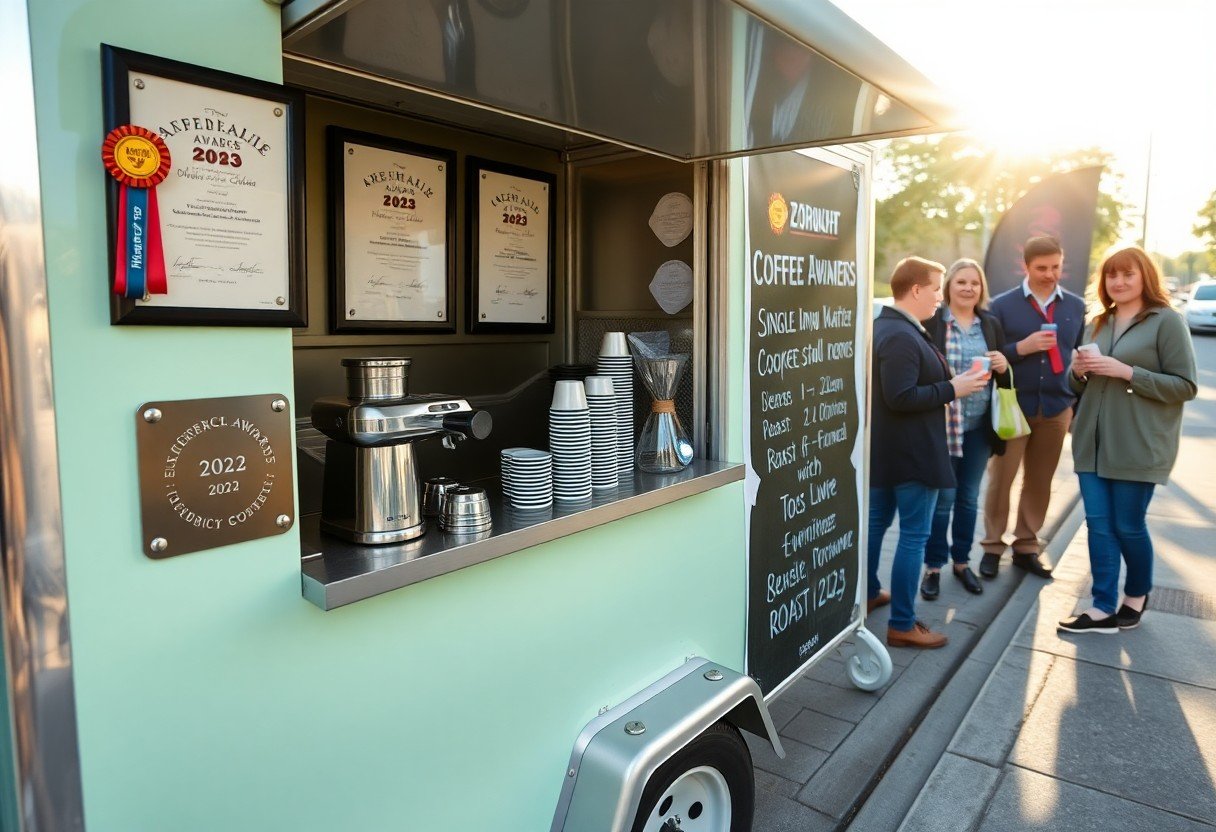
You can often tell quality before you taste it by scanning for professional details: stamped roast dates on bags, clear origin info, and framed awards or certificates visible near the service window. Vans that present these elements alongside neat queue management and a visible milk fridge with clear temperature readouts are signaling systems-level care – small investments that translate to consistent cups.
When you visit more than once, note repeatable presentation: identical latte art styles, unchanged menu layout, and the same well-maintained equipment each time. These repeatable visual cues correlate with shops that score highly in blind tastings and local competitions, where judges look for reliability as much as flavour complexity.
Mobile Setup and Presentation
You want to see commercial-grade equipment bolted in: a dual-group espresso machine such as a La Marzocco Linea or Synesso, a heavy-duty grinder (Mahlkönig EK43 or similar), and a visible water-filtration system-these are investments that cost vendors tens of thousands of dollars but directly affect extraction consistency. Clean stainless-steel surfaces, clearly labelled syrups and dairy alternatives, plus single-portion dosing trays show that the team prioritises hygiene and workflow efficiency.
Uniforms, tidy signage and a logically arranged service area also matter. Vans that serve 80-200 customers per day without chaos will have a defined barista zone, clear pick-up points and waste bins positioned to keep queues moving; if you can see staff using checklists or a POS with order-screen display, that’s a sign you won’t be waiting for inconsistent drinks during peak times.
Consistency in Branding and Marketing
You should expect branding that’s coherent across physical and digital touchpoints: the logo on cups matching the van livery, menu typography echoed on the website and Instagram, and staff apparel that reflects the same colour palette. Vans with 1,000-5,000 engaged followers who post daily behind-the-scenes shots are often the same ones maintaining daily roast schedules and origin transparency in their menus.
Promotional materials give clues too-loyalty cards with printed expiry dates, consistent seasonal campaigns (pumpkin spice in April for Southern Hemisphere autumn), and repeat participation in local events indicate a strategic approach rather than ad-hoc marketing. Vendors that track events and post professionally shot photos usually have systems for inventory and bean rotation, which impacts freshness.
Look up their social pages before you visit: consistent posting frequency (at least 3-4 times weekly), multiple tagged customer photos, and clear location check-ins mean you can verify popularity and recent trading hours; vans that update followers about machine maintenance or roast-date changes are signaling operational transparency you can rely on.
The Importance of Awards and Recognition
Awards give you a short-hand way to separate vans that invest in repeatable quality from those that rely on occasional luck. When a mobile barista wins at a state or national level-such as a placement in the Australian Barista Championship pathway or a specialty-roaster cupping medal-you can expect documented standards: consistent roast-date rotation, calibrated espresso recipes, and staff trained in extraction and milk technique. Media recognition (Good Food Guide citations or local “best of” lists) also translates into verifiable exposure and third-party vetting that you can cross-check online.
Awarded vans often show operational evidence you can inspect on the spot: labeled green-bean origins, roast-date stamps within 7-14 days, and sensory descriptors on single-origin pour-over menus. That matters because awards typically require blind cupping, technical scoring, or judged service criteria-so they indicate a level of repeatability rather than a one-off great cup.
Types of Awards to Look For
Pay attention to awards that test coffee against objective criteria and those that reflect customer acclaim; they tell different stories. Industry-judged prizes (barista championships, cupping medals) demonstrate technical skill and consistent sensory quality. Editorial and community awards (Good Food Guide mentions, local paper “best coffee” polls, festival people’s choice) show market traction and reliability under service pressure.
- State and national barista competitions (entry to the Australian Barista Championship pathway)
- Specialty cupping medals and roaster competitions that publish scoring notes
- Local editorial listings and Good Food Guide mentions that include reviewer notes
- Festival or trade awards from events like the Royal Adelaide Show or industry expos
- Any community-voted “Best Coffee Van” or people’s-choice awards that show customer repeat support
| Barista/Competition Placings | Signals trained baristas, documented routines, and judged sensory/technical scoring |
| Cupping Medals / Roaster Awards | Indicates bean quality, roast proficiency, and objective flavour scoring |
| Local Editorial Mentions | Reflects reviewer testing, consistency across visits, and local relevance |
| Festival & Trade Prizes | Shows performance under volume, service efficiency, and public appeal |
| People’s Choice / Community Votes | Demonstrates strong repeat customer base and word-of-mouth reliability |
How Awards Reflect Quality
Award processes reveal what was tested: judges assess sensory clarity, balance, and consistency across multiple cups, while competition formats also evaluate workflow and presentation-so you should read any award citation to understand which aspect of quality was judged. For example, a cupping medal signals green-bean selection and roast profile control (you’ll often see tasting notes like “clean citric acidity, syrupy body, chocolate finish”), whereas a barista placement points to extraction discipline and milk-texture technique required during service.
Practical inspection will confirm whether the award-holder maintains the judged standards day to day: check roast dates (ideally within two weeks for espresso-focused vans), ask for the espresso recipe (dose, yield, time), and observe whether tamping and steaming techniques are consistent between baristas during busy periods. Awards raise the probability of a reliably good cup, but you still need to verify operational consistency on site.
When you evaluate an awarded van, use the award as a hypothesis to test: sample the house espresso, try a single-origin brew, and ask about supply chain traceability-winners will usually be transparent about bean origin, farm, and roast profile because those details earned them the recognition.

Making the Right Choice
Weigh tangible metrics against what matters to you: a van with 3+ local awards and a 4.5+ average rating from 50+ reviews is more likely to deliver repeatable quality than a newcomer with no feedback. You should also scan for objective signs of care – stamped roast dates within two weeks, consistent dosing (18-20g for a double espresso), and visibly trained baristas who pull shots in the 25-30 second range – these indicate a van that controls variables rather than guessing.
Balance those quality signals with practical needs: if you need a grab-and-go morning coffee, prioritise vans that take contactless payment, keep queues under five minutes during peak hours, and list menu shortcuts (single-shot, double, takeaway cup). When you plan a weekend stop, favour vans that advertise filter or batch-brew options if you value tasting clarity, and pick ones that state origin and roast level so you know what to expect before you order.
Considerations for Personal Preferences
If you prefer a punchy espresso, look for vans that offer a double-shot standard and let you request a ristretto; a typical double uses 18-20g of dose extracted in 25-30 seconds at 92-96°C. For filter lovers, expect brew ratios around 1:15-1:17 (coffee to water) and vendors who list single-origin beans and processing methods – those details tell you whether the barista is set up to highlight bright, fruity notes or deeper chocolate profiles.
Your milk choice changes what you should look for: vans that steam properly for oat or almond milk will reach 60-65°C and be able to texture plant milk without separation, which affects latte art and mouthfeel. If sustainability or direct-trade sourcing matters, prioritise vans that display origin certificates, roast dates, or partnership notes (farm or co-op names) – transparency on the bag or menu is often a reliable proxy for ethical sourcing practices.
Recommendations Based on Suburb
In the CBD and North Terrace precincts you’ll want vans that open early (7am-9am peaks) and offer fast service; pick ones near tram stops or Rundle Mall that show roast dates and have multiple positive reviews. In beachside suburbs like Glenelg or Henley Beach, expect higher demand for cold brew and iced lattes-choose vans that advertise cold-brew batches or nitrogen taps and keep beans in sealed containers to protect flavour in warm conditions. For inner-eastern suburbs such as Norwood and Unley, hunt for vans that rotate single-origin filter options alongside a house blend-those areas tend to reward vans that cater to both espresso and specialty-filter drinkers. In Port Adelaide and western suburbs, favour vans active at local markets and events that demonstrate adaptability (mobile grinders, alternative milks, compact pour-over setups) because variety and service speed matter most there.
More info: on weekends at farmers’ markets and community events you’ll commonly find vans offering filter flights or tasting pours (30-60ml samples) so you can compare roast profiles; if you’re scouting a regular spot near office precincts, check whether the van accepts pre-orders via an app or text-this often cuts queue time from 10+ minutes down to under 3 and is a practical tie-breaker when two vans look equally skilled.
Summing up
With these considerations you can quickly assess whether a coffee van in your suburb meets award‑winning standards: observe consistent quality and a clean, professional setup; taste for balanced extraction and freshly roasted beans; evaluate the barista’s technique and customer service; and cross‑check awards, local reviews and supplier partnerships to verify claims. Your best indicators are repeated excellence over time, transparent sourcing and equipment that delivers consistent results rather than gimmicks.
Apply this practical checklist when you scout vans-sample more than one drink, track repeat visits, follow social channels for community feedback and engage the operator about their process-and you’ll be able to separate well‑deserved winners from good marketing. Trust your palate, local reputation and the small operational details you can observe, and you’ll find a truly award‑worthy coffee van in your neighbourhood.