
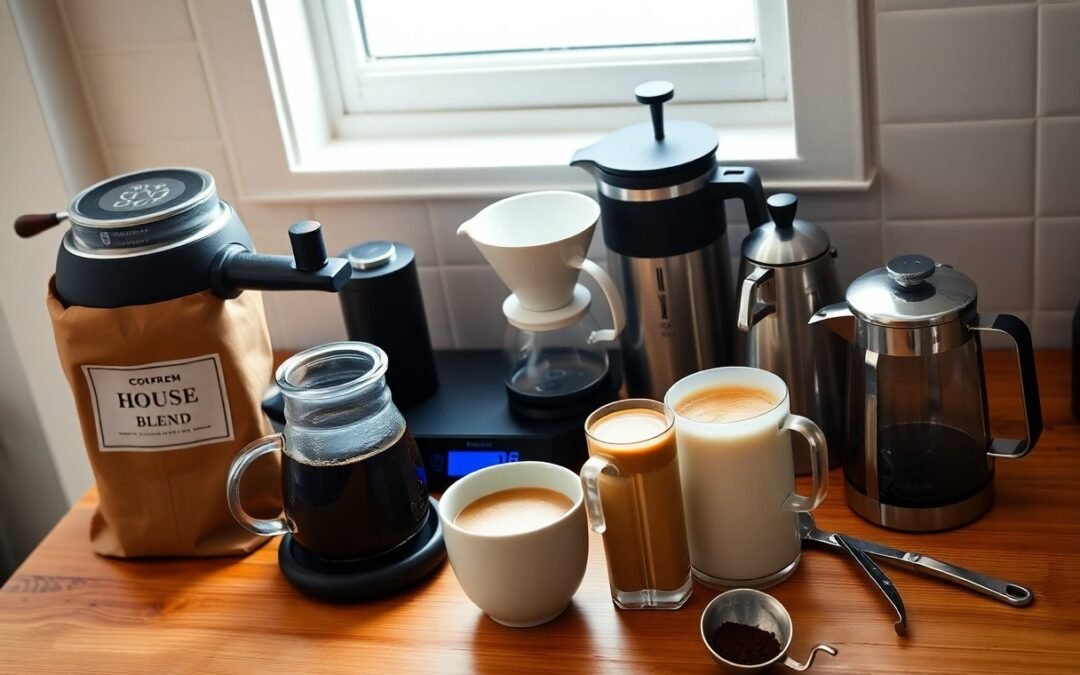
Over a few clear steps, you will master versatile house blend coffee beans for espresso, pour-over, and drip by adjusting grind, dose, brew time, and water temperature to achieve consistent flavor across styles.
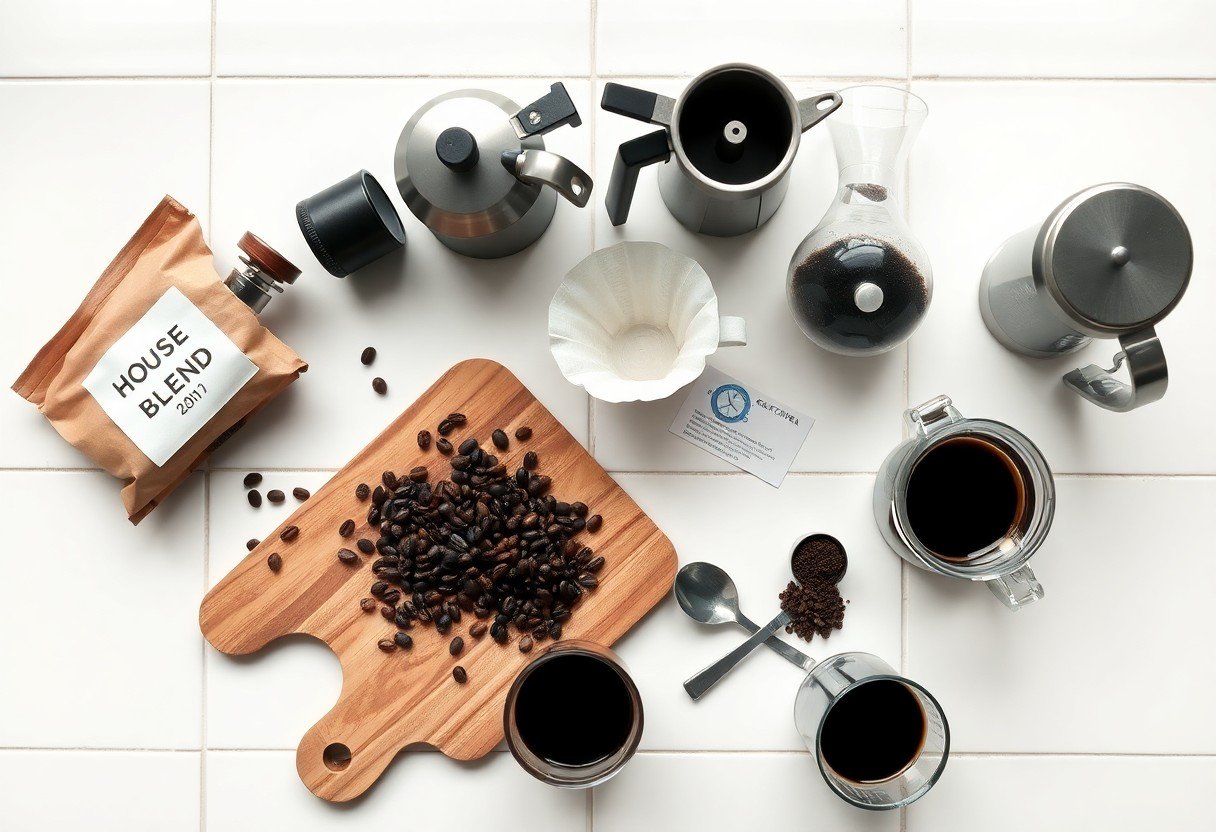
Key Takeaways:
- Match roast and grind to brew: choose a balanced medium roast as a house blend; use fine grind and 18-20 g dose for espresso (yield ~36-40 g in 25-30 s), medium-fine for pour-over at ~1:16 ratio with 2:30-3:00 brew time, and coarse for French press at ~1:15 for 4 minutes.
- Control extraction variables: set water temperature to 92-96°C, adjust grind size and dose in small increments, and taste for balance between acidity, sweetness, and bitterness to refine each style.
- Store and calibrate: keep beans in an opaque airtight container at room temperature, allow 2-7 days post-roast for degassing, and log grind, dose, time, and tasting notes to reproduce preferred recipes.
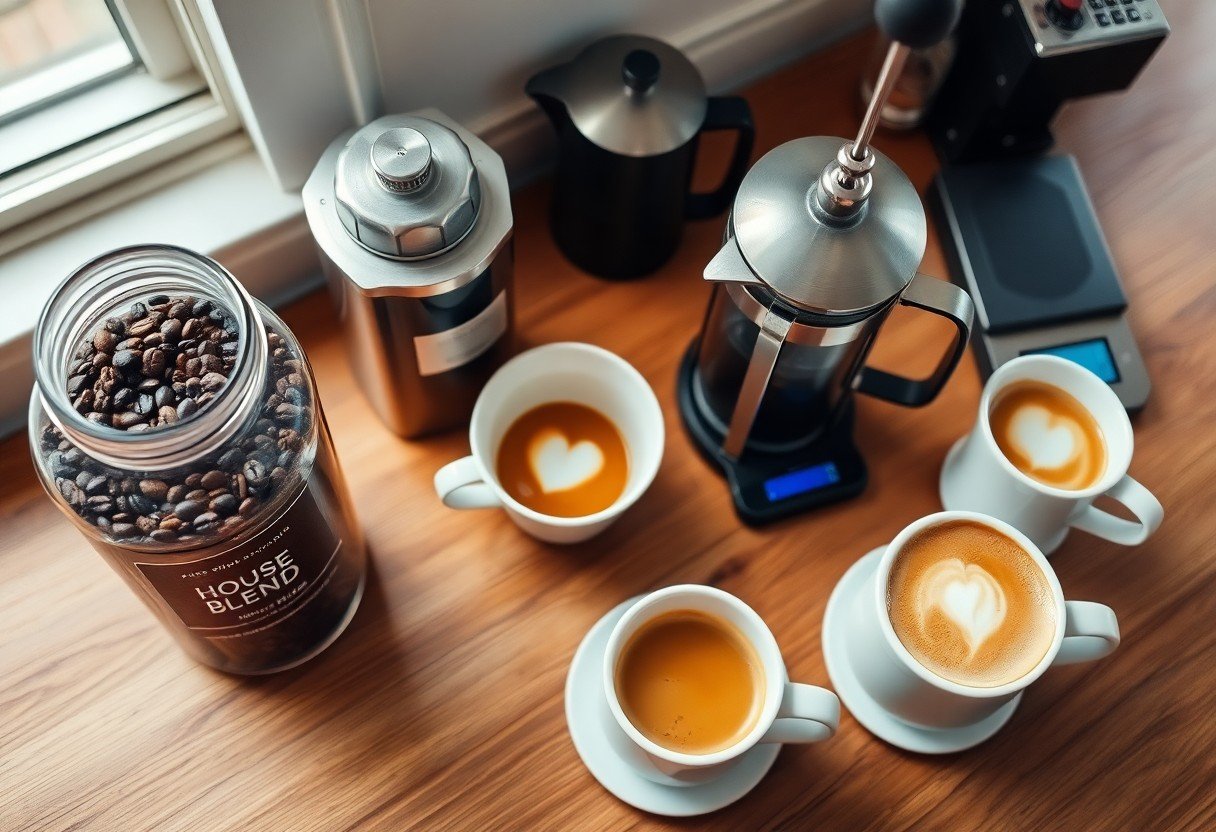
The Foundations of a Versatile House Blend
You shape a house blend by balancing origins, roast degree, and grind so it performs reliably across espresso, pour-over, and immersion methods, offering consistent sweetness, measured acidity, and adaptable body.
Choose complementary beans-one for sweetness, one for structure, one for aromatics-and refine roast levels and proportions through repeat tastings until the blend reads well in every brew style.
Factors Determining a Balanced Flavor Profile
Balance depends on origin ratios, processing, and roast curve: combining a bright component with a sweeter, fuller counterpart gives you flexibility to dial taste with grind and temperature.
- Origin mix – bright vs. sweet proportions
- Roast profile – light for clarity, medium for body
- Processing – washed, natural, honey impacts sweetness and mouthfeel
- Bean freshness and storage – affects aroma and crema
- Grind and brew ratio – adapt for method-specific extraction
After tasting across methods, adjust percentages and roast to smooth extremes so the blend reads consistently whether pulled as espresso or brewed as filter.
How-to Recognize Quality in Multi-Origin Blends
Assess quality by clarity and layering: you should hear distinct origin notes instead of a single muddled tone, with clean acidity, defined sweetness, and a finish that lasts without harsh edges.
Taste across espresso and filter brews and you will see whether complexity holds-high-quality blends keep clarity in filter and reveal depth under pressure, indicating thoughtful sourcing and even roasting.
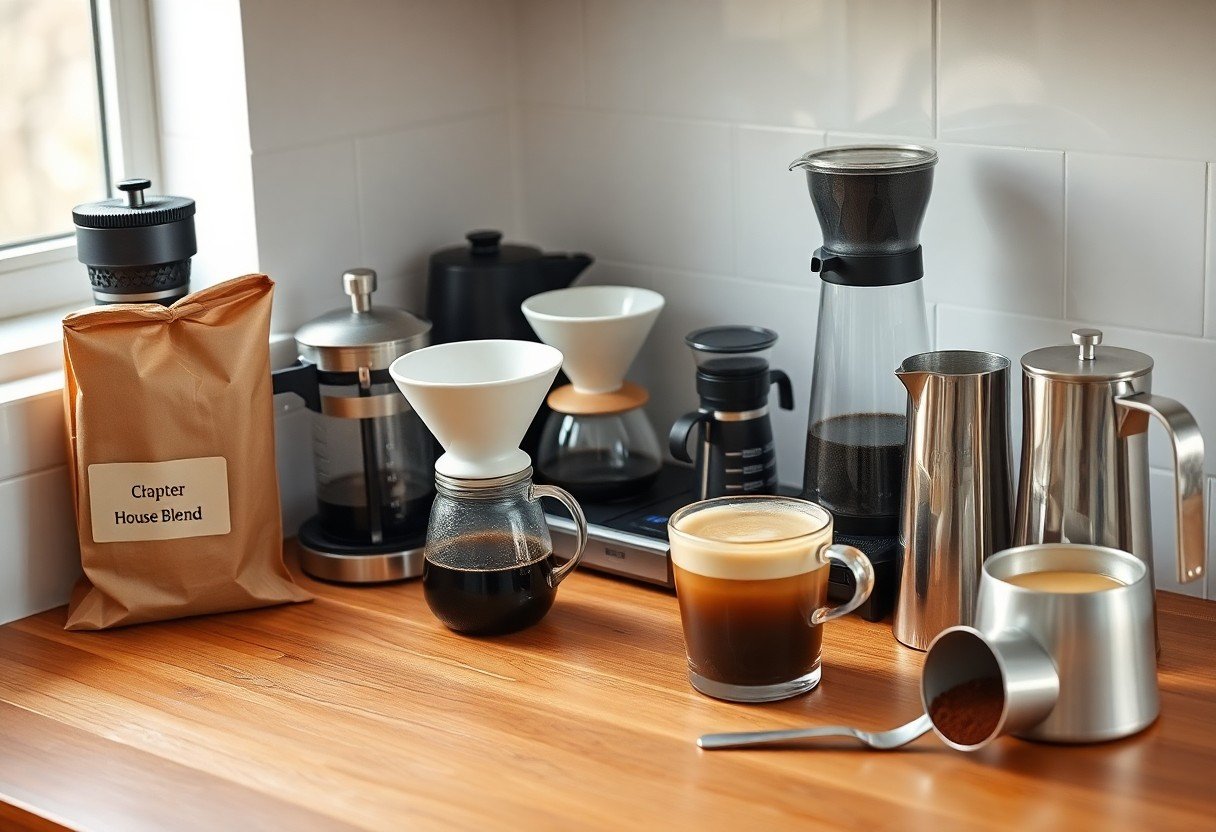
Mastering the Grind for Diverse Preparations
Practice dialing grind to suit each brew: finer for espresso to increase surface area and extraction speed, medium for pour-over to balance clarity and body, and coarser for French press to avoid over-extraction. You should make incremental changes, note extraction times and flavor shifts, and standardize the setting that consistently delivers the profile you prefer.
How-to Calibrate Grind Size for Different Methods
Test with small, repeatable trials: change the grind by one click or notch, brew, time the extraction, and taste. You should log dose, yield and time so you can reproduce the preferred result across espresso, pour-over, AeroPress, and cold brew without guesswork.
Tips for Maintaining Consistent Particle Distribution
Use a quality burr grinder, purge a small dose after adjustments, and weigh beans to control retention and clumping. You should also keep the hopper clean and grind in consistent batches to minimize fines and large particles that alter extraction.
- Clean burrs regularly to prevent oily buildup and channeling.
- Grind fixed doses and avoid sudden speed changes in motorized grinders.
- Perceiving uneven flow or sour spots in cups indicates you need to check particle distribution.
Keep testing distribution with simple checks: perform a timed pour-over and observe flow, or use a coarse sieve to sample fines; you can then tweak burr gap or dosing to tighten the spread. You should document adjustments so patterns become clear over time.
- Measure retention by weighing output after a purge to detect stale grounds.
- Note humidity, roast level and bean oiliness when recording settings.
- Perceiving consistent improvement after small changes confirms you’ve reduced particle variance.
Precision Techniques for Espresso and Moka Pot
You dial grind and dose finer for espresso, tamp evenly and aim for a 25-30 second shot; for Moka Pot, choose a slightly coarser grind, fill the basket correctly and use controlled heat to avoid bitter over-extraction.
Experiment with temperature control and preheating so you hit stable extraction-aim near 92-96°C for espresso and use low, steady stovetop heat or preheated water for the Moka Pot to shorten contact time and preserve sweetness for you.
How-to Optimize Extraction for Intense Flavors
Adjust grind size, dose and puck preparation to tune strength and clarity, and use a scale and timer so you can reproduce the intensity you prefer with every shot or brew.
Monitor flow rate and color change during extraction, and pause or tweak grind and dose when the stream blacks out too quickly so you keep acidity balanced and avoid harshness you won’t want in milk drinks.
Factors That Impact Crema and Body
Grind consistency, roast level and bean freshness shape crema volume and tactile body, so you use a precise grinder, dose accurately and keep beans within a fresh window to give you better mouthfeel.
- Grind uniformity controls solubles and microfoam formation.
- Roast degree influences oil content and surface tension.
- Extraction yield and pressure determine emulsification.
- Perceiving crema sheen and thickness helps you judge stability.
Observe puck resistance, tamp evenness and water hardness because small shifts change emulsion and body, and you can tweak those variables to fit espresso or Moka Pot textures you prefer.
- Water temperature and boiler pressure affect oil release.
- Dose and distribution influence channeling and mouthfeel.
- Brewing speed alters crema persistence.
- Perceiving subtle oil sheen and surface tension tells you crema stability.
Perfecting Pour-Over and Drip Infusions
You should tune grind, dose, and brew ratio so your house blend performs across cone, flat-bottom, and automatic drippers; small adjustments reveal sweeter midtones or brighter acidity.
Practice consistent bloom and timed pours to stabilize extraction and reproduce the clarity you prefer from batch to cup.
Tips for Controlling Water Chemistry and Heat
Adjust water temperature and mineral balance to match your roast profile: lighter roasts respond to 92-96°C, darker roasts to the lower end of that range, and moderate mineral content prevents flatness.
- Use filtered water with some calcium and magnesium to support extraction.
- Heat to target and let sit 20-30 seconds if you lack a thermometer.
- Measure by taste and adjust small mineral additions or switch filters if extraction feels dull.
This simple control over temperature and mineral content will sharpen clarity and stabilize sweetness across pour-over and drip methods.
How-to Adjust Pouring Dynamics for Clarity
Control pour rate and stream width to influence agitation: a narrow, steady stream focuses extraction and preserves clarity while wider, circular pours increase body and sweetness.
Experiment with pulse pours and varying radii to manage bloom and drain time; tweak grind one step coarser if your cup tastes over-extracted or finer for more presence.
Advanced Strategies for Immersion and Cold Brew
Experiment with agitation, grind size, and temperature so you can shape brightness, sweetness, and body in both immersion and cold brew; you should try short, vigorous stirs for clarity and gentle agitation for syrupy texture.
Use a baseline ratio and adjust by taste-aim 1:8-1:12 for ready-to-drink immersion and 1:4-1:8 for concentrate, then refine with trials; consult Tired of Boring Coffee? Here’s Your Guide to Crafting … for blending ideas.
- Dial grind: coarser for long cold brews, slightly finer for short immersion
- Set time: 6-18 hours for cold brew, 2-6 minutes for immersion experiments
- Choose filter: paper for clarity, metal or cloth for fuller mouthfeel
Quick Variables
| Variable | Effect |
|---|---|
| Grind Size | Extraction speed and clarity |
| Brew Ratio | Strength and concentrate yield |
| Steep Time | Body, sweetness, and acidity balance |
Factors in Saturation and Steeping Time
Control how evenly you wet grounds during the bloom and through the steep to avoid channels; you should stagger stirring or pouring to ensure full saturation and consistent extraction across the bed.
- Perform an initial bloom to release trapped CO2
- Stir gently at set intervals to redistribute fines
- Match grind distribution to your chosen steep duration
Perceiving subtle sweetness shifts as steep time changes will guide you toward the extraction target that suits your blend and style.
How-to Scale Ratios for Bulk Preparation
Scale by keeping your chosen brew ratio constant and multiplying grounds and water for batch size, weigh ingredients for accuracy, account for filter retention by adding ~10-15% extra water or grounds as needed, and only tweak steep time when particle distribution or container geometry alters extraction dynamics.
Final Words
Upon reflecting, you have a clear roadmap: choose a balanced roast, adjust grind and dose for each method, control water temperature and extraction time, and taste with purpose. Consistent technique and targeted experiments help you match the house blend to espresso, pour-over, French press, or cold brew. Practice and careful tasting build the instinct that lets you switch styles while preserving a signature profile.
FAQ
Q: What makes a house blend versatile for every coffee style?
A: A versatile house blend mixes beans from complementary origins to balance acidity, sweetness, and body. A medium to medium‑dark roast profile preserves origin character while adding enough caramelization for milk drinks. A consistent bean quality and uniform roast help the blend perform across espresso, drip, pour‑over, and French press.
Q: How do I choose bean origins and roast levels for a multi‑style house blend?
A: Combine a bright, high‑altitude bean (for acidity and clarity) with a lower‑altitude bean (for body and chocolatey notes). Roast the combined blend to a medium or slightly darker medium level so it keeps brightness for black brews and adds sweetness for milk drinks. Test small sample roasts and adjust proportions until the balance fits your preferred menu.
Q: What grind settings should I use for espresso, pour‑over, drip, and French press?
A: Espresso requires a fine grind that yields a 25-30 second extraction at typical doses. Pour‑over works best with medium‑fine to medium grind and a 2.5-3.5 minute brew time. Automatic drip brewers prefer a medium grind, while French press needs a coarse grind and a 3.5-4 minute steep.
Q: What brew ratios and water temperatures suit a house blend across methods?
A: Use a 1:16 ratio (coffee:water by weight) as a baseline for drip and pour‑over, tighten to 1:15 for a fuller cup. For espresso, aim for a 1:2 yield (dosing rules vary by machine and style). Keep water temperature between 90-96°C (195-205°F) for most extraction goals; lower temps favor brightness, higher temps increase extraction and body.
Q: How do I dial in extraction times to get consistent flavor?
A: Adjust grind first: finer grinds speed extraction, coarser slow it. Monitor total contact time for each method (espresso 25-30s, pour‑over 2.5-3.5min, French press 3.5-4min) and taste for under‑extracted (sour, thin) or over‑extracted (bitter, hollow) notes. Make single‑variable changes and retaste until balanced sweetness, acidity, and body appear.
Q: How should I modify the house blend for milk‑based drinks versus black coffee?
A: For milk drinks, increase dose slightly or use a slightly darker roast to enhance cocoa and caramel notes that stand up to milk. For black coffee, emphasize clarity by using a slightly lighter dose, a bit coarser grind, or a lower brew temperature to showcase acidity and origin flavors. Keep the base recipe consistent so small tweaks achieve the intended profile without losing balance.
Q: What are best practices for storing house blend beans to preserve flavor?
A: Store whole beans in an airtight, opaque container at room temperature away from heat, light, and moisture. Grind only what you need within minutes of brewing and buy beans in quantities you can use within two to three weeks of roast date. Freeze long‑term surplus in an airtight bag, removing only what you will use within a few days to avoid moisture cycles.