
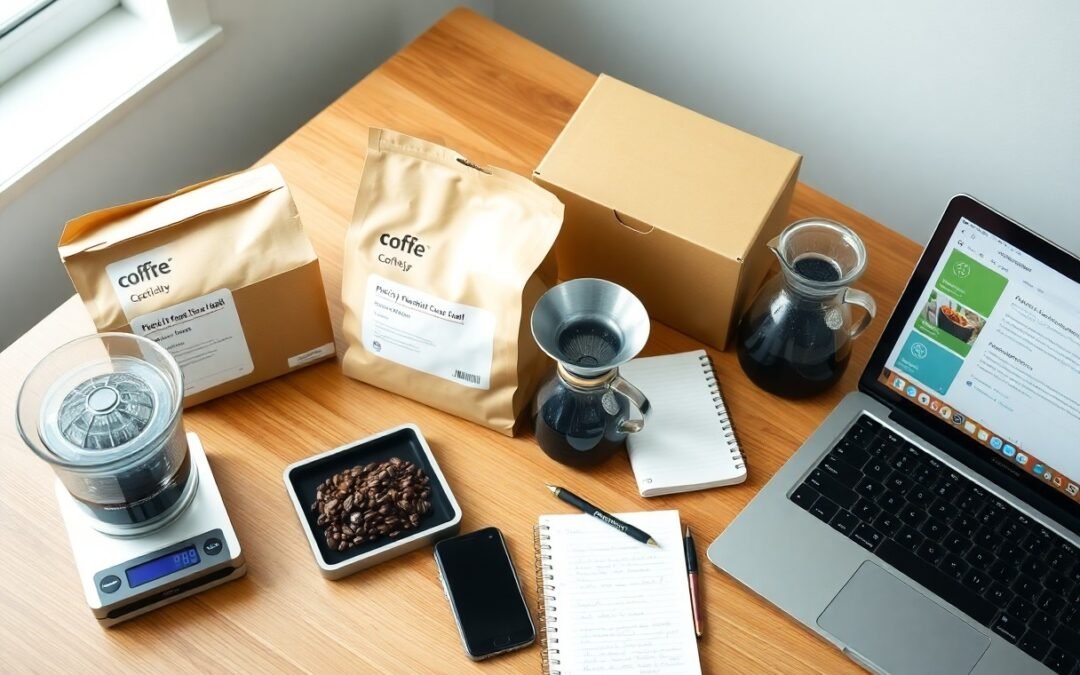
This guide shows you how to write a detailed specialty coffee subscription review like a pro, covering tasting notes, delivery, customer service, price, and brewing tips so you can evaluate quality, consistency, and overall value for your readers.
Key Takeaways:
- Establish a consistent evaluation framework: rate origin, roast date and level, freshness, grind options, packaging, tasting notes, aroma, and price per cup to ensure apples-to-apples comparisons.
- Perform repeatable sensory tests with at least two brew methods, record grind size, dose, water temperature, and brew time, then score aroma, acidity, body, sweetness, and aftertaste with clear descriptors and photos.
- Compare total cost, shipping, commitment terms, and customer experience; disclose any affiliate relationships and sample size, then give a concise recommendation specifying who will enjoy the subscription.
Researching the Subscription Service
You should map out plan options, frequency, grind choices, pricing tiers and cancellation terms so your review reflects practical expectations for subscribers.
Compare sample sizes, roast date transparency, trial offers and shipping regions to judge value and accessibility for different reader types.
Identifying the target audience for the review
Define whether you write for beginners, home baristas, espresso enthusiasts or gift buyers so your tone and evaluation criteria match reader needs.
Consider factors like brewing equipment, budget sensitivity, taste adventurousness and desire for education when scoring suitability and recommending subscription tiers.
Analyzing the roaster’s reputation and sourcing ethics
Investigate claimed sourcing practices, origin transparency and certifications, and check whether the roaster shares farmer, lot or cooperative details that you can verify.
Review roast-date policies, batch consistency and community feedback, using customer reviews and industry mentions to corroborate ethical claims.
Ask the roaster for traceability documentation, photos or purchase contracts, and evaluate whether premiums reach producers by looking for direct-trade evidence, third-party audits or published sustainability reports; use these proofs to grade authenticity and long-term commitment to ethical sourcing.
Essential Factors to Evaluate During Unboxing
Inspect the outer package and internal cushioning, confirm seals and sample counts, and note any discrepancies between what was advertised and what arrived.
- Packaging integrity: tears, vacuum seal, valve function
- Label accuracy: roast date, origin, processing method
- Usability: resealable features, clear instructions, sample size
After opening, record aroma intensity, bean color, and any off-odors immediately to inform freshness and handling scores.
Assessing packaging sustainability and design
Evaluate whether materials are recyclable or compostable, if inserts are minimal, and how resealability balances freshness with waste; you should score sustainability alongside protective design.
Verifying roast dates and bean origin transparency
Check labels for clear roast dates, batch numbers, and named farms or cooperatives so you can assess traceability and freshness windows.
Confirm that roast-to-ship timelines are published and realistic, and note vague origin claims or missing batch info as downgrade factors in your rating.
Trace ambiguous listings via QR codes, roaster websites, or direct questions to customer service, and include response quality and documentation depth in your final review.
How to Execute a Professional Sensory Analysis
Start by controlling sensory conditions-quiet room, neutral air, consistent lighting-and taste when you are fresh so you reduce bias and maintain focus during a session.
Use standardized scoring sheets and blind samples so you can separate preference from measurable attributes and present repeatable, defensible conclusions to your readers.
Standardizing the brewing method for consistency
Standardize brew parameters: set grind size, dose, water temperature, and extraction time; measure with a scale and thermometer so you can reproduce results and compare batches reliably.
Documenting flavor notes, aroma, and mouthfeel
Control tasting order and palate cleansers; pour identical volumes and assess hot through cooled stages so you capture evolving flavors and ensure your evaluations remain consistent.
Note aroma, acidity, body, sweetness, and aftertaste on your sheet, using precise descriptors (berry, caramel, floral) and intensity scales so you help readers grasp the profile clearly.
Detail how you translated sensory impressions into ratings, explain any calibration terms you used, and include photos or brief audio cues when helpful so your notes are actionable for subscribers and fellow reviewers.
Evaluating Value and Customer Experience
Evaluate the subscription’s total cost against what you receive: bag size, roast date, shipping, and any introductory offers. You should track freshness guarantees, sourcing transparency, and whether tasting notes match your brew to decide if price reflects real quality.
Compare the provider’s customer service and consistency by checking delivery reliability, response times, and replacement or refund policies. You should also read recurring-customer feedback and sample unboxing reports to judge long-term satisfaction and predictable enjoyment.
Calculating the cost-to-quality ratio
Quantify value by breaking price down to cost per cup or per gram while including recurring discounts and shipping fees. You should weigh that number against measurable quality signals-roast date, origin clarity, processing notes, and any third-party scores-to form a defendable judgment.
Testing the flexibility of subscription management
Assess account controls by trying pause, skip, frequency changes, and grind or roast swaps through the dashboard. You should note how quickly changes apply, whether billing updates are transparent, and if the interface makes adjustments intuitive.
Explore support responsiveness by submitting a management request via app, email, and chat to compare reply times and resolution quality. You should also test cancellation and refund flows to see how clearly policies are communicated and how much friction your readers will face.
Final Words
Taking this into account, you should test each subscription blind, score beans on freshness, roast, flavor complexity, packaging, price, and customer options. Use consistent brew methods, include tasting notes and photos, and disclose your preferences to help readers contextualize ratings. Present a clear scoring rubric, list pros and cons, and end with a concise recommendation tailored to different drinker types so readers can choose confidently.
FAQ
Q: What key elements should I include in a specialty coffee subscription review?
A: Begin with an overview: subscription name, price tiers, bag sizes, frequency options, roast profile and origin focus. Describe the beans: roast date, processing, tasting notes and available grind options. Rate packaging, customer service, shipping reliability and perceived value. Provide a concise verdict with a numeric or star rating and a summary pros/cons list.
Q: How do I evaluate coffee quality objectively?
A: Cup the coffee using a consistent brewing method and record dose, grind, water temperature and brew time. Score aroma, acidity, body, sweetness, balance and aftertaste with a simple rubric and include specific sensory descriptors. Compare results to a baseline coffee brewed with the same parameters to control for equipment and technique variables.
Q: How should I test the subscription experience, delivery, and value?
A: Order the most common plan to experience the typical onboarding, packing and delivery timeline; note roast-date accuracy and packaging condition on arrival. Test ordering, billing, swap/cancel options and customer support responsiveness through real interactions. Calculate cost-per-cup using bag weight and recommended brew ratios to judge price versus quality.
Q: How do I write professional tasting notes and scorecards?
A: Use specific sensory language and avoid vague praise; list aroma, flavor, acidity, body, sweetness and finish with clear descriptors and intensity levels. Apply a transparent scoring system that defines how points are allocated so readers can interpret scores. Include brewing parameters and repeat tastings to confirm consistency before finalizing notes.
Q: How can I compare multiple subscriptions fairly?
A: Build a comparison table showing price, bag size, roast-date policy, origin transparency, grind options and shipping costs. Brew each coffee using the same method and dose to judge flavor and value on equal terms. Highlight unique features like single-origin focus, seasonal curation, or partnerships with specific roasters while noting trade-offs.
Q: What photos and media improve a review’s credibility?
A: Include high-resolution photos of the bag front/back (label details and roast date), the beans and a close-up of the grounds or brew for color and crema. Add short unboxing or brewing clips to demonstrate packaging and a quick sniff or pour-over sequence. Attach downloadable cupping sheets or raw tasting data when possible.
Q: How should I disclose affiliations and maintain transparency?
A: State clearly whether you purchased the subscription, received it as a sample, or were paid to review, and disclose any affiliate links or sponsorships at the top of the review. Describe testing methods, iteration count and any factors that might influence tone. Offer a final independent verdict and link to raw notes or supporting data for readers to verify.