
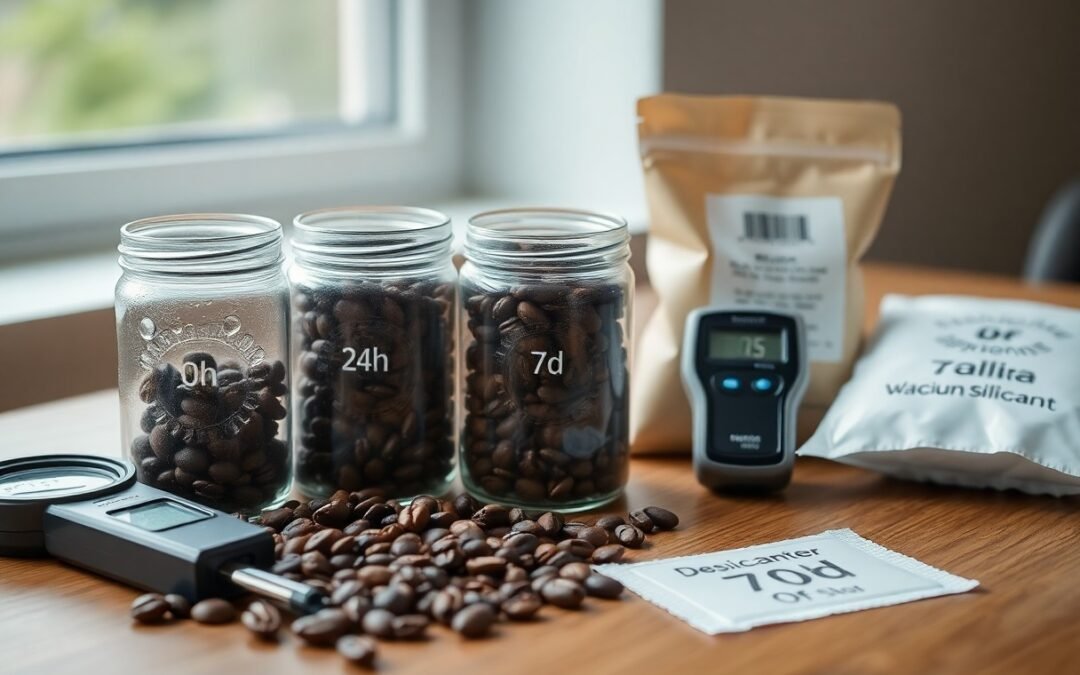
Freshness in roasted beans depends on CO2 release, oxidation and moisture changes; you learn how volatile aromatics fade and how storage and timing affect the cup so you can brew when flavor peaks.
Key Takeaways:
- Roasted beans release CO2 and volatile aromatics rapidly; aroma and flavor usually peak within days to two weeks as gases escape and reactive compounds stabilize.
- Oxygen and light drive chemical oxidation of lipids and aroma molecules, causing staling; airtight, opaque storage at cool temperatures slows this degradation.
- Grinding exposes inner oils and increases surface area, accelerating aroma loss and oxidation; grind immediately before brewing to preserve freshness.
The Degassing Phenomenon: Carbon Dioxide Release
Roasted beans emit large volumes of carbon dioxide in the first 24-72 hours, and you will notice weight loss, a sharp aromatic burst, and measurable internal pressure changes as gas migrates to the surface.
Within that early window you should avoid grinding and brewing immediately, because trapped CO2 can cause channeling, light sourness, and accelerated surface oxidation when it rapidly vents during extraction.
The kinetics of gas diffusion post-roast
Diffusion rates depend on bean porosity, roast degree, and temperature, so you can slow degassing with cooler storage and limited surface area or accelerate it by increasing grind exposure and warmth.
Impact of internal pressure on espresso extraction
Pressure retained in fresh beans forces microbubbles out during tamping and pre-infusion, and you will often see fuller crema yet uneven extraction if rapid gas release disrupts puck saturation.
Managing degassing by resting beans several days reduces gas-driven channeling, so you should tailor roast-to-shot timing and grind setting to balance crema development with consistent extraction.
Lipid Oxidation and the Chemistry of Rancidity
Lipid oxidation begins when oxygen attacks unsaturated bonds in bean oils, forming hydroperoxides that alter aroma and body. You perceive a muted roast profile as volatile esters are lost and mouthfeel flattens.
Peroxides break down into aldehydes and ketones that you detect as stale or cardboard-like notes, so you limit oxygen exposure through packaging and proper storage to slow this chemistry.
Breakdown of coffee oils and fatty acids
Coffee oils are primarily triglycerides plus free fatty acids that you expose to air when grinding; increased surface area accelerates oxidative reactions. You speed up rancidity by leaving grounds open to light and heat.
Unsaturated fatty acids such as linoleic and oleic acid oxidize fastest, producing reactive fragments that strip complexity from the cup. You should store beans cool and dark to slow these processes.
Development of off-flavors and metallic notes
Aldehydes and ketones produced from oil breakdown create sweet, green, or stale off-flavors that mask floral and fruity notes, and you may notice metallic edges when certain compounds interact with your taste receptors.
Metallic impressions often arise from metal-catalyzed oxidation or tiny iron particles from grinders, making cups taste sharp or tinny unless you keep equipment clean and minimize exposure. You reduce these risks with regular maintenance.
Mitigation involves reducing oxygen contact through inert-gas flushing, using sealed bags, and strict equipment hygiene so you preserve volatile aromatics and prevent metal-catalyzed pathways from producing unpleasant metallic notes.
Volatile Organic Compounds and Aroma Loss
Roasted beans emit a complex mix of volatile organic compounds, and you lose the most delicate notes within hours as low-molecular-weight esters and aldehydes volatilize. Surface diffusion and headspace dynamics mean aroma perception drops even when nonvolatile flavor precursors remain inside the bean matrix.
Sealed storage slows VOC escape, but you still face gradual decline driven by temperature, grind size, and package headspace. Olfactory impact is governed by low-concentration, high-impact molecules, so small fractional losses can noticeably change the cup you brew.
Evaporation rates of aromatic esters and aldehydes
Esters evaporate faster than many aldehydes because you are dealing with lower molecular weight and higher vapor pressure, which makes fruity notes fade quickly after roasting. Grinding and warming accelerate evaporation, so the moment you grind greatly influences the aroma you detect.
The role of oxygen in aromatic degradation
Oxygen reacts with unsaturated aromatics and you will notice oxidation products create stale or papery off-notes as hydroperoxides break down into carbonyls. Trace metals and residual moisture catalyze these reactions, so even brief air exposure can shift aroma profiles.
Preventing oxygen contact through vacuuming or inert-gas flushing helps you retain sensitive thiols, terpenes, and esters for longer, and controlling storage temperature further slows oxidative kinetics to extend the period of optimal aroma.
Hygroscopy: Moisture Absorption and Bean Structure
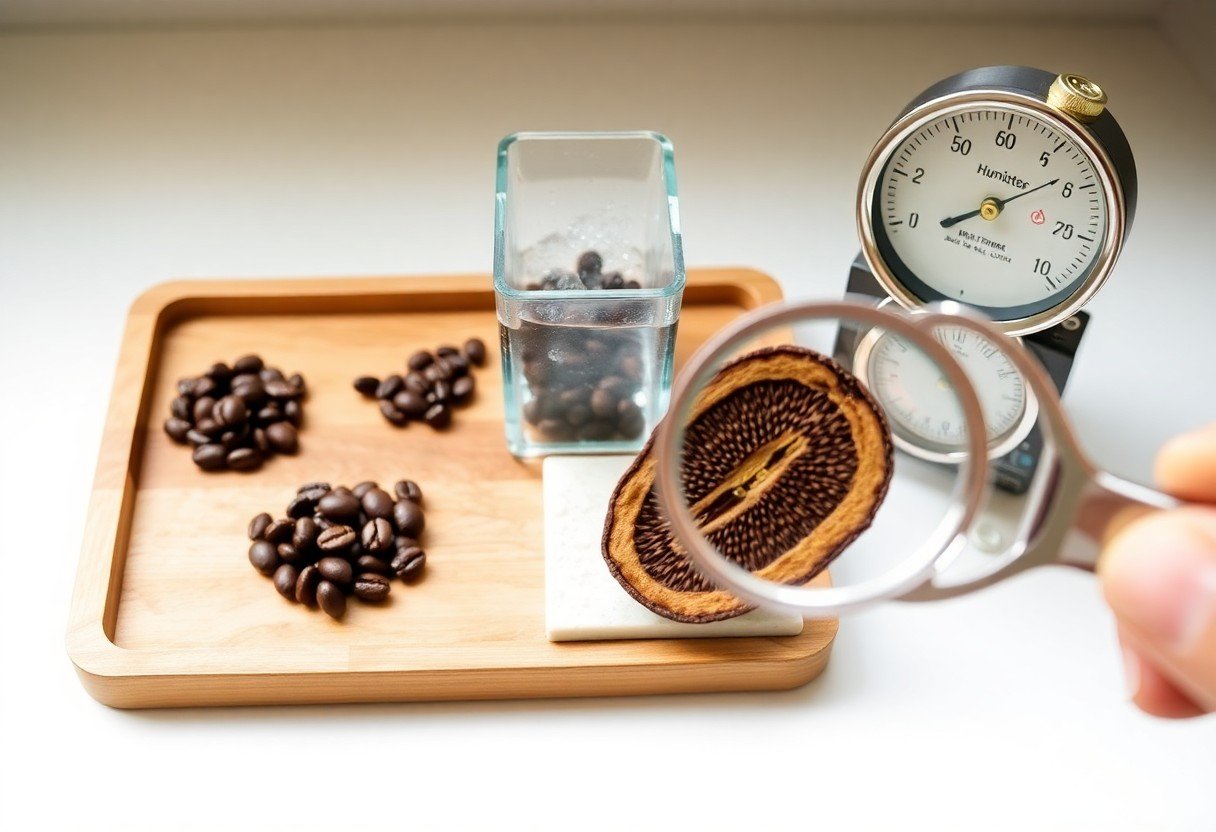
Hygroscopy determines how your beans shift structure and surface moisture after roasting, with absorbed water softening cell walls and altering aroma release.
Beans with different roast levels present varied porosity, so you will notice darker roasts often equilibrate moisture faster and feel oilier as surface lipids migrate.
How porous cellulose reacts to humidity
Cellulose fibers in the endosperm act like tiny sponges, so you observe rapid swelling when humidity rises and an accompanying change in grind behavior.
You should expect repeated humidity cycles to cause microfractures in cell walls that speed staling by increasing surface area exposed to oxygen.
Effects of water activity on shelf-life stability
Water activity, not total moisture, dictates microbial risk and chemical reaction rates, which means you must monitor Aw to predict when off-flavors or mold become likely.
Moisture gradients inside a bag can create pockets where hydrolytic reactions accelerate, so you will see flavor loss unevenly across a batch.
Storage under controlled humidity keeps Aw low enough that enzymatic breakdown slows and you retain volatile aromatics longer, so you should aim for airtight packaging and desiccants in humid climates.
Environmental Catalysts of Staling
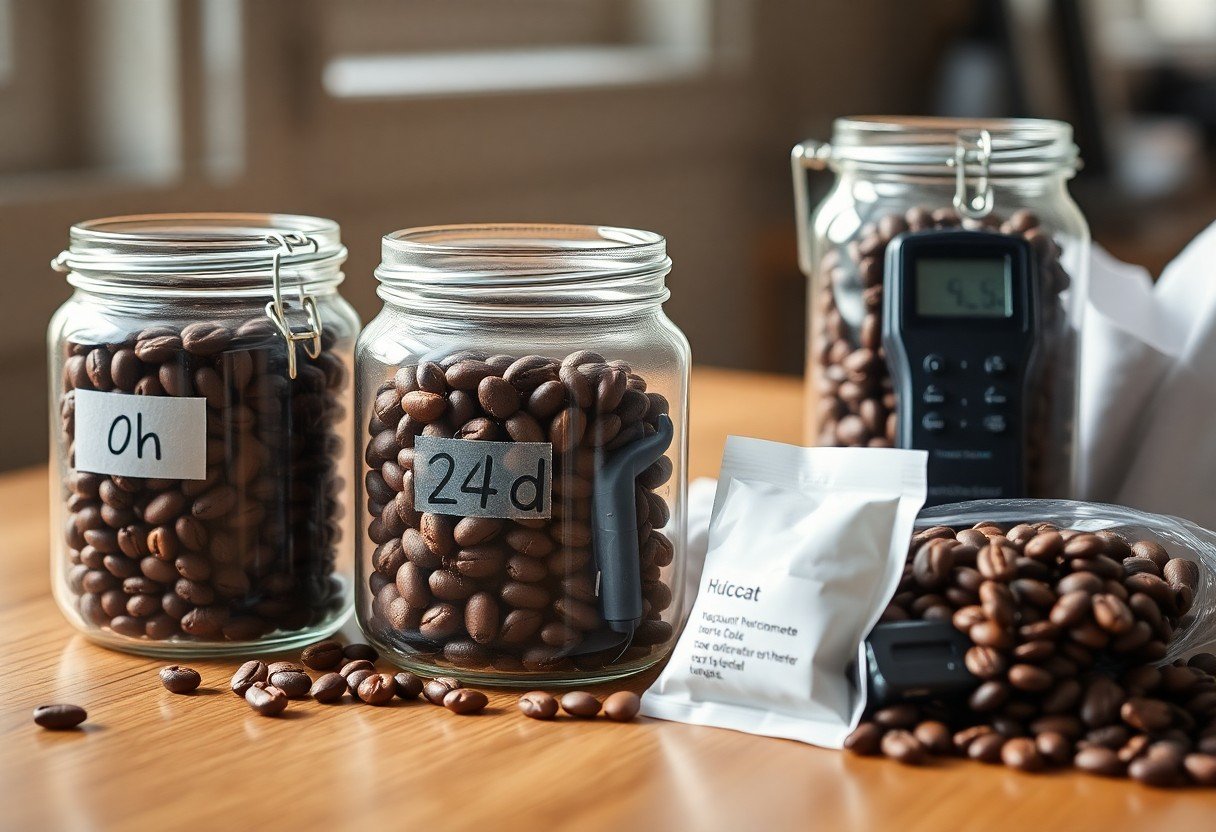
Heat drives kinetic processes that hasten flavor loss after roasting; you observe accelerated oxidation of unsaturated lipids and faster volatilization of delicate aromatics when beans are warm. Rising temperatures also increase gas diffusion from microcracks, so aromatic equilibrium shifts and perceived freshness declines more quickly than at cooler conditions.
Moisture interacts with roasted solids to promote hydrolysis and migrate solubles, and you will notice flattened taste and muted acidity as beans absorb ambient humidity. Water uptake also enhances molecular mobility, allowing oxygen and reactive species to encounter sensitive compounds more readily and speed the staling cascade.
Thermal acceleration of chemical reactions
Temperature governs reaction kinetics via Arrhenius behavior, so you experience markedly faster lipid oxidation and volatile degradation with each incremental rise in degrees. The result is a compressed window of optimal aroma where key aldehydes and terpenes break down sooner than they would under cooler storage.
Photochemical degradation and UV sensitivity
Light exposure, particularly in the UV and blue bands, activates photosensitizers in oils and phenolics and initiates photochemical pathways that diminish desirable volatiles; you may perceive loss of brightness and the emergence of cardboard-like off-notes when beans are left in clear light. Color shifts can accompany these chemical changes.
Exposure to UV produces reactive oxygen species and radicals that attack chlorogenic acids and unsaturated lipids, increasing markers like hexanal while reducing floral and fruity volatiles, so you can trace photodegradation analytically and sensorially when packaging or storage permits light penetration.
Measuring Freshness through Chemical Markers
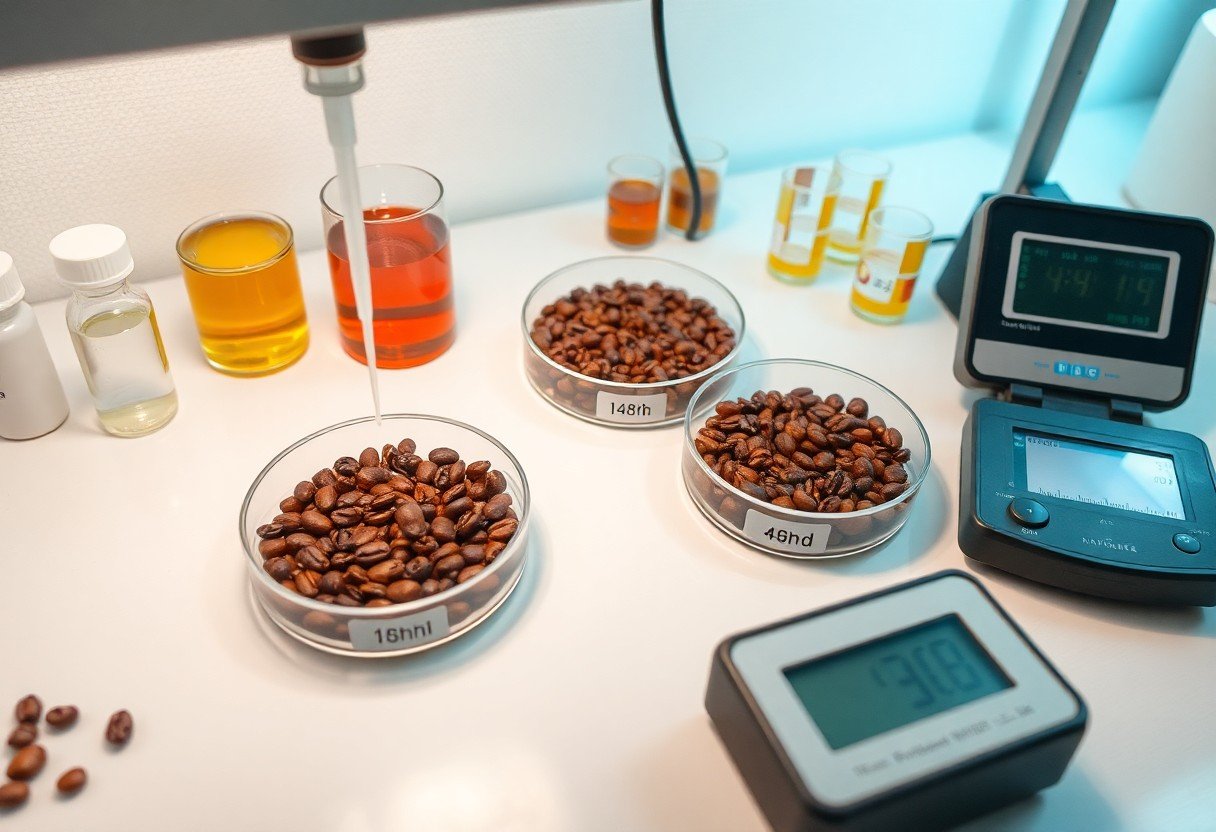
Chemical markers like volatile organic compounds and acidity give you measurable signals of bean age, showing oxidation and degassing patterns after roast and helping you predict flavor shifts.
Analytical tools such as GC-MS and HPLC let you quantify individual compounds so you can correlate chemical decay with sensory decline and refine storage or use-by recommendations.
Quantitative analysis of pH and titratable acidity
pH measurements let you monitor acid evolution in brewed samples, and you can use trends to spot when brightness begins to fade during storage.
Titratable acidity captures total acid load and often aligns more closely with perceived sourness, so you can calibrate titration results against sensory feedback to interpret numeric changes.
Identifying the sensory threshold of “stale” coffee
You often perceive staleness when fruity and floral volatiles drop while cardboardy aldehydes rise, and learning that sensory pattern helps you decide when beans have passed your freshness cutoff.
Panel testing helps you quantify a group threshold, revealing the percentage of tasters who call a sample stale so you can set a practical sensory cutoff for service or retail.
Experimental methods like triangle tests and just-noticeable-difference scaling let you estimate the minimum chemical shift that you will consistently notice as stale, and combining those results with controlled storage variables provides actionable freshness windows for your beans.
Conclusion
To wrap up, you should understand that roasting triggers rapid degassing of CO2 and the loss of volatile aromatics, while residual heat and oxygen start oxidation that dulls flavor. You can preserve peak taste by cooling quickly, minimizing oxygen and moisture exposure, and grinding just before brewing. Proper packaging and storage at cool, stable temperatures slow staling so you taste closer to roast-day complexity.

FAQ
Q: What chemical and physical changes occur in beans immediately after roasting?
A: Roasting triggers Maillard reactions and caramelization that produce hundreds of volatile aromatic compounds and change bean color and structure. High temperatures cause cell walls to expand and rupture, driving moisture loss and creating internal gases such as CO2. Oils migrate toward the surface and some lighter volatiles are lost immediately, while other flavor precursors continue to evolve during post-roast cooling.
Q: Why do roasted beans release CO2 and how does that affect flavor and brewing?
A: Roasted beans contain dissolved CO2 produced during thermal breakdown of carbohydrates and structural compounds. Rapid degassing in the first 24-72 hours can create large bubbles during brewing and reduce crema stability if used too early for espresso. Controlled degassing helps volatile aromatics escape before brewing, allowing better alignment of roast age with specific brew methods.
Q: How does oxygen exposure cause staling and what chemical reactions are involved?
A: Oxygen reacts with unsaturated lipids and aroma compounds, producing oxidized molecules that taste flat, rancid, or cardboard-like. Light and heat accelerate oxidation and photochemical degradation, shortening the timeframe in which beans retain bright, complex flavors. Moisture and repeated exposure to air further speed the breakdown of key volatiles.
Q: What packaging strategies preserve post-roast freshness most effectively?
A: Packaging should limit oxygen and moisture ingress while allowing CO2 to vent; one-way valves on low-permeability bags accomplish both goals. Nitrogen flushing before sealing reduces residual oxygen and slows oxidative reactions during storage. Vacuum sealing changes pressure dynamics and can compress beans, so valve-equipped, low-oxygen bags are preferred for freshly roasted coffee.
Q: When are beans at peak flavor for different brew methods after roasting?
A: Peak flavor varies by roast level and brew technique. Light to medium roasts often reach a sweet-spot 2-7 days after roast for pour-over and drip as volatiles stabilize. Darker roasts can be used earlier because roast-derived flavors dominate; espresso frequently benefits from 3-14 days of degassing to balance crema, acidity, and body depending on grinder and machine setup.
Q: How do grind size and particle distribution influence perceived freshness?
A: Grind size controls extraction rate and therefore how quickly fresh aromatics are released and depleted. Finer grind increases surface area and accentuates subtle flavors but can also highlight staling or bitterness in older beans. Consistent particle size produces predictable extraction and a clearer expression of the bean’s fresh profile.
Q: How can consumers tell if beans have gone stale and what are best home storage practices?
A: Stale beans smell flat or papery, lack bright floral or fruity notes, and taste dull or cardboard-like; excessive surface oil on light or medium roasts signals prolonged storage or heat exposure. Store beans in an opaque, airtight container in a cool, dry place away from direct light to preserve freshness for roughly two weeks for daily-use batches. For longer-term storage, freeze in small, tightly sealed portions and limit thaw-refreeze cycles to minimize flavor loss.