
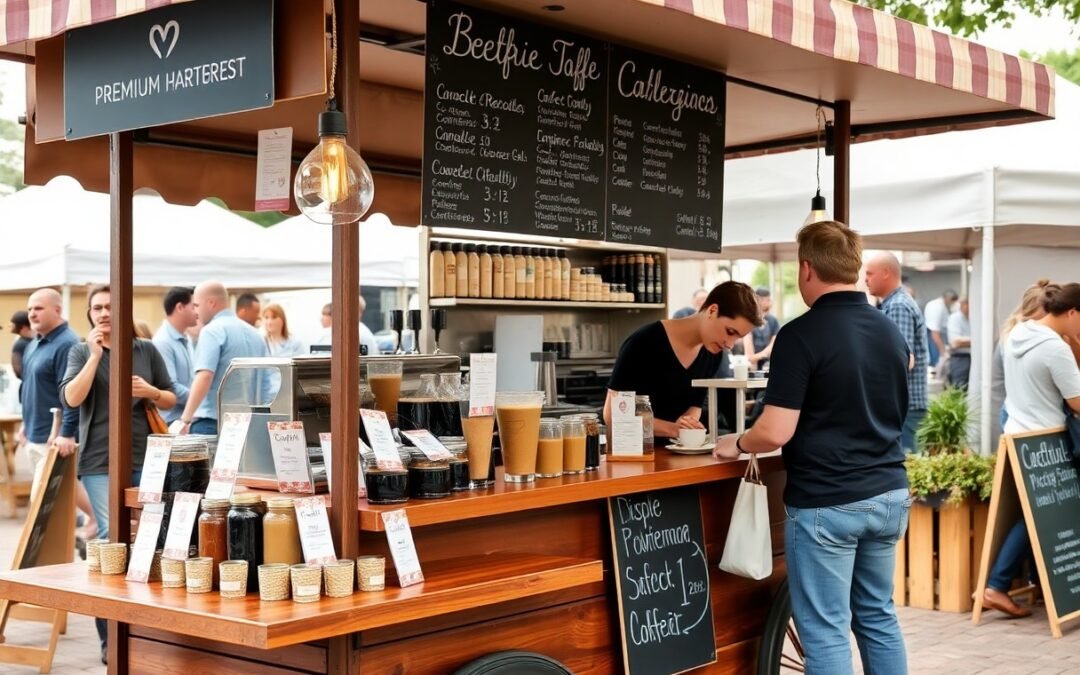
There’s a balance to strike when pricing your premium mobile coffee offerings in Adelaide to ensure both profitability and customer appeal. By evaluating your costs, understanding your target market, and analyzing competitor pricing, you can establish rates that reflect the quality and uniqueness of your service. This guide will provide you with actionable strategies to competitively price your offerings while maintaining the premium experience your customers expect.
Understanding the Premium Market
Defining Premium Offerings
Your premium mobile coffee offerings must convey an exceptional quality that sets them apart from standard options. This involves not just selecting high-grade coffee beans but also curating an experience that includes artisanal brewing methods, unique blends, and personalized service. Consider how you can enhance your menu with exclusive beverages, small-batch pastries, or organic ingredients that appeal to discerning customers. Each element must reflect a commitment to excellence, allowing you to justify higher price points.
Establishing a brand narrative around your premium offerings is key. Present a compelling story about your sourcing practices, such as your partnerships with local farmers or ethical certifications, which resonates with consumers willing to invest in quality. By emphasizing transparency and authenticity, you’ll foster trust and loyalty, important factors when justifying prices that are above market averages.
Identifying Target Audience
Identifying your target audience is fundamental to successful pricing strategies. Premium customers often align with specific demographics such as urban professionals, coffee enthusiasts, or health-conscious individuals. Understanding their values and preferences enables you to tailor your offerings to meet their expectations, both in product quality and service experience. Consider conducting surveys or community engagement to pinpoint their desires and pain points.
Delving deeper, psychographics give insight into lifestyle and buying motivations, which can further refine your approach. For instance, if you discover that your audience values sustainability, you may want to highlight your eco-friendly practices in marketing materials. Creating customer personas based on these insights will allow you to craft compelling messages that resonate with them, enhancing your overall competitive positioning.

Key Factors Influencing Pricing
Understanding the key factors that influence pricing is important for positioning your mobile coffee offerings competitively in Adelaide’s dynamic market. The right pricing strategy can elevate your brand, increase customer loyalty, and optimize profit margins. As you evaluate your pricing model, consider elements such as your cost structure, target market expectations, and competitive landscape. Customers willing to pay a premium expect high-quality ingredients, exceptional service, and a unique experience. Hence, it’s vital to align your offering with the perceived value by addressing these factors thoroughly.
- Cost of ingredients and supplies
- Labor and operational expenses
- Market demand and competition
- Target customer demographics
- Brand positioning and experience
This combination of internal and external factors will guide you in setting a price that reflects both your costs and the value you provide to customers.
Cost of Ingredients and Supplies
The quality of the ingredients you choose directly affects your pricing strategy. Premium coffee beans, organic milk, artisanal pastries, and sustainable sources often come at a higher cost. For instance, sourcing single-origin coffee beans can increase your ingredients cost substantially, but it can also justify a higher price point when marketed effectively. You should analyze your suppliers and seek competitive quotes while maintaining the quality that justifies your premium offerings.
When calculating the cost of ingredients, factor in the volume of your sales projections. If you aim to serve a high volume of customers, negotiate bulk purchasing agreements with suppliers to reduce per-unit costs. This approach allows you to maintain quality while maximizing your profit margins. Your pricing must reflect these costs to ensure that you remain profitable without alienating your target audience.
Labor and Operational Expenses
Labor costs pose a significant factor in determining your pricing structure. Whether you hire baristas or manage the operation alone, wages should reflect not only the skills and experience of your staff but also the local market rates in Adelaide. According to the Australian Bureau of Statistics, the average hourly rate for baristas is retail industry-dependent, but a competitive wage ensures that you attract and retain skilled workers.
In addition to wages, operational expenses such as rent, utilities, equipment maintenance, and transportation for your mobile unit must be meticulously calculated. You might find that investing in high-quality equipment yields better results in the long run, producing more consistent coffee quality and efficiency. This investment should, however, be balanced against your pricing to ensure you don’t overextend your costs beyond what your market can bear.
Labor and operational expenses should be tracked and reviewed regularly to ensure they align with your profitability goals. A clear understanding of where your money is spent allows for adjustments in pricing as needed. Regularly assessing these costs enables you to pivot and adapt your pricing strategy to better meet your financial objectives while providing an excellent product to your customers.
Competitor Analysis
Researching Local Competitors
To effectively price your mobile coffee offerings, start by scrutinizing the local competitors in Adelaide. Identify other mobile coffee vendors operating in your target areas, and create a comprehensive list. Visit their websites, social media pages, and physical locations to gather insights into their product ranges and service offerings. Pay attention to what they highlight, such as sourcing high-quality beans or unique beverage options. This intelligence will help you pinpoint gaps in the market that you can exploit.
Additionally, consider customer reviews and feedback on platforms like Google and Yelp. Potential customers often share their thoughts on pricing and value, allowing you to gauge how your competitors position themselves. This qualitative data can guide you in understanding local preferences and the perceived value of various offerings, which should inform your pricing strategy.
Assessing Pricing Strategies
Next, research into the pricing strategies employed by your competitors. Some may adopt a cost-plus approach, where they calculate expenses and add a markup, while others may base their prices on perceived value. Analyzing these approaches can provide insights into how to structure your pricing effectively. For example, if a competitor charges $5 for a premium latte and emphasizes organic ingredients, it indicates that customers are willing to pay more for quality, signaling that you could similarly price your beverages based on their unique attributes.
You may also encounter competitors offering loyalty programs or bundle deals, which can influence customer purchasing habits. Incorporating similar strategies into your offerings could enhance customer retention and maximize sales. Examine how often competitors adjust their prices; seasonal promotions or discounted rates for events can be effective tactics for driving business during slower periods. By staying informed about these strategies, you can remain agile in your own pricing decisions.
By understanding the nuances of your competitors’ pricing tactics, you can better position your offerings to attract and retain customers. Utilize this analysis to create a pricing model that balances competitiveness with profitability, ensuring that you remain appealing in the thriving Adelaide mobile coffee market.
Setting Your Pricing Strategy
Value-Based Pricing Approach
Adopting a value-based pricing approach means setting your prices based on the perceived value of your offerings to customers rather than just your costs. For instance, if your mobile coffee business provides organic, fair-trade coffee sourced from local farmers, highlight these unique selling points. Customers are often willing to pay a premium for products that align with their values. Conduct market research to understand how much your target audience values these attributes and adjust your prices accordingly. For example, if similar competitors are charging $5 for a standard cappuccino, you might justify a price of $6 or even $7 if your quality and sourcing practices resonate deeply with your clientele.
It’s vital to communicate this value effectively. Provide customers with clear information about the benefit of choosing your premium offerings over standard options. Consider using testimonials, case studies, or certifications to enhance your perceived value. You may find that by emphasizing the story behind your coffee, you can create a stronger emotional connection with customers, enabling you to command higher prices while ensuring customer loyalty.
Dynamic Pricing Techniques
Dynamic pricing allows you to adjust your prices based on real-time supply and demand. This can be particularly effective for a mobile coffee service, where factors like location, time of day, and event type can all influence customer willingness to pay. For example, prices might be higher during peak hours at a popular festival compared to a weekday morning at a quiet office park. Implementing a pricing system that reflects these variables can maximize your revenue potential.
To implementar dynamic pricing effectively, consider using technology to track and analyze your sales data. Establish baseline prices for different scenarios, then adjust according to demand fluctuations. For instance, if you notice a sudden increase in foot traffic at a specific event, don’t hesitate to increase your prices slightly. Many successful businesses in high-demand markets, like ride-sharing services, utilize this approach to ensure that they balance supply with demand while still offering value for customers.
Tips for Communicating Value
Articulating your value proposition effectively can significantly impact how customers perceive your mobile coffee offerings. Start by highlighting the unique elements of your service, such as sourcing premium beans, artisanal brewing techniques, or exceptional customer service. Engage with your audience on social media and in-person to educate them about the quality and craftsmanship behind every cup. Utilize testimonials and reviews to build credibility, showcasing how your offerings elevate events or create memorable experiences.
- Leverage visuals of your mobile coffee setup and product presentation.
- Use storytelling to connect emotionally with potential customers.
- Provide detailed descriptions of your coffee varieties and preparation methods.
- Highlight any sustainable practices or local partnerships.
- Share before-and-after pictures of events where your coffee made an impact.
Any additional resources, like How Much Does Coffee Cart Catering Cost? 2025 Pricing …, can further enhance customer understanding and justification for your pricing.
Crafting Your Unique Selling Proposition
Your unique selling proposition (USP) is the heart of your marketing strategy. To craft a compelling USP, think about what sets your mobile coffee business apart from competitors. Perhaps it’s your specialty coffee blends, the eco-friendly practices you employ, or the unique customer experiences you offer at events. Highlight these differentiators in all your marketing materials, ensuring potential clients understand the unique benefits of choosing your service over others.
For example, if you offer a “coffee experience” that combines high-quality brews with engaging service, emphasize that in your promotions. Consider incorporating client stories that illustrate the impact your service has had at prior events. This not only builds your brand narrative but also solidifies trust and affinity with your audience.
Marketing and Branding Considerations
Your branding should reflect the quality and experience you wish to convey. Invest in a professional logo, cohesive color schemes, and stylish packaging that matches your mobile coffee cart’s aesthetic. Consistency is key; ensure that you maintain uniformity across all customer touchpoints, from your website to social media platforms, reinforcing your brand image with every interaction.
It’s beneficial to engage with local community events where you can showcase your offerings. Not only does this boost your visibility, but it also allows potential customers to experience your coffee firsthand, creating a personal connection. Additionally, collaborating with local businesses or participating in farmer’s markets can enhance your brand’s reach and credibility.
Utilizing both digital marketing and local networking can provide a holistic approach to building your brand identity. From consistent social media presence highlighting your coffee art to using targeted ads that reach event planners, adopting diverse strategies allows your mobile coffee business to thrive in competitive markets.
Monitoring and Adjusting Prices
Gathering Customer Feedback
Collecting customer feedback is necessary for understanding how your pricing aligns with the perceived value of your mobile coffee offerings. Engage with your customers through surveys or informal conversations to gauge their satisfaction regarding pricing. Ask specific questions about what they believe merits a higher price and what elements may feel overpriced. This firsthand information can provide valuable insights into customer preferences and help identify areas where you may need to adjust your pricing structure.
Furthermore, consider implementing a loyalty program that incentivizes feedback. For instance, offering a discount or a free drink in exchange for completing a survey can increase participation. This practice not only encourages feedback but also builds customer loyalty, ultimately establishing a more engaged clientele who may feel more inclined to communicate their opinions on your pricing strategies.
Adapting to Market Changes
The market environment for mobile coffee can shift unexpectedly, influenced by factors such as emerging competitors, local economic conditions, or changes in consumer behavior. Staying alert to these shifts is vital for maintaining a competitive edge. Regularly assessing your competition’s pricing strategies and product offerings can reveal opportunities for adjustments. For example, if a new competitor enters the market offering similar products at lower prices, you may need to reevaluate your pricing and possibly introduce limited-time promotions to retain your customer base.
Additionally, examine broader market trends such as the increasing demand for specialty coffee or organic ingredients. If there is a rise in consumers willing to pay more for ethically sourced products, adjusting your prices accordingly and highlighting the unique qualities of your offerings can increase your attractiveness compared to competitors.
Frequent analysis of both internal sales data and external market trends allows you to stay proactive rather than reactive. By utilizing analytics tools, you can benchmark your prices against industry standards and customer expectations, ensuring you adapt quickly to shifts that could impact your business’s profitability.
Summing up
With these considerations, you can effectively price your premium mobile coffee offerings in Adelaide by thoroughly analyzing your target market and understanding their expectations. Take into account your operational costs and the perceived value of your services. By striking the right balance between quality and affordability, you can position your mobile coffee van as a desirable choice while ensuring that you remain competitive. Moreover, integrating feedback from your customers will allow you to adjust your pricing strategy in real-time, matching the evolving demands of the market.
To enhance your pricing strategy, you may also want to investigate insights shared in various community forums, such as this post on What is the appropriate pricing for a mobile coffee van …. Engaging with other industry professionals can provide you with valuable tips and benchmarks. By relying on solid data and community input, you can ensure that your pricing reflects the quality of your offerings and resonates with your niche clientele.