
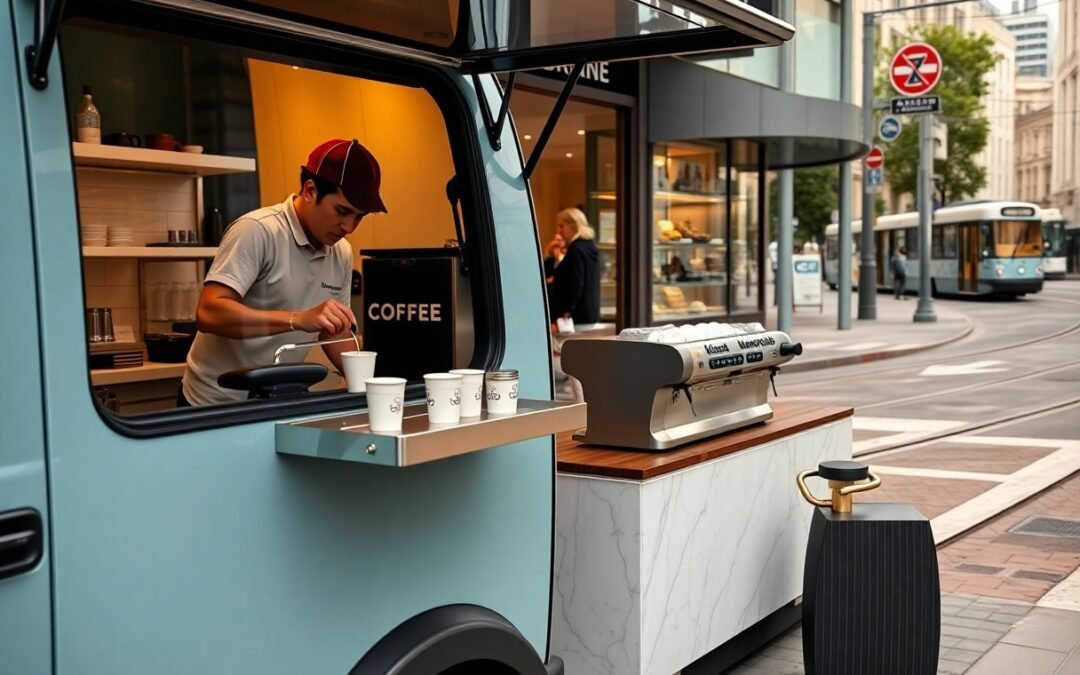
Over recent years you’ve likely noticed mobile baristas refining their craft, so you can evaluate whether Adelaide’s finest coffee vans now rival boutique cafés in bean sourcing, roasting partnerships, equipment, and consistency; this piece outlines how to judge crema, extraction, supplier transparency and service standards, helping you decide whether your next exceptional cup should come from a van or a storefront.
The Rise of Coffee Vans
Evolution of Mobile Coffee Culture
You’ve seen the transformation from makeshift setups with a single-lever machine to fully kitted mobile cafés: 2-group commercial machines, on-board grinders, water-filtration systems and refrigerated milk storage are now standard in many vans. Operators increasingly adopt plug-and-play electrical systems and lightweight chassis to meet health and safety standards, allowing a van to deliver the same extraction consistency and temperature stability you expect from a boutique counter.
Business models have matured in lockstep with equipment. Rather than relying solely on roadside trade, many vans split revenue across corporate catering, festival contracts and pop-up locations-during major events like the Adelaide Fringe or weekend markets some operators report sales spikes that eclipse weekday turnover. You’ll also notice closer partnerships with local micro-roasters and direct-trade suppliers, which means the beans served from a van can match provenance and roast profiles found in established cafés.
Popularity Among Consumers
For your morning run or a lunchtime detour, a coffee van often wins on speed and accessibility: queues move quickly, contactless payments are supported, and prices frequently sit a little lower-expect filter or piccolo prices commonly in the $3.50-$4.50 range compared with $4.50-$5.50 at many boutique cafés. Social proof matters too; successful vans build Instagram followings of several thousand and use live-location posts to drive concentrated foot traffic that sells out single-origin pours within hours.
Demographic patterns explain why you keep seeing vans in diverse locations: they capture commuters en route to work, students between classes, and festival crowds seeking a quality cup without a long wait. Many operators report that 40-60% of daily sales occur during morning peaks, while loyalty initiatives-digital stamps, pre-order apps and event-specific menus-turn occasional buyers into regulars, strengthening their competitive standing against fixed-location cafés.
Quality Comparison
Quality Metrics: Coffee Vans vs Boutique Cafés
| Coffee Vans | Boutique Cafés |
|---|---|
| Often run by solo operators or small teams using compact commercial machines (single- or double-group prosumer lines), grinders tuned for mobility, and weekly roast deliveries to maximise freshness. | Typically have multi-group commercial espresso machines, dedicated water-treatment systems, larger grinder fleets, and stable supplier contracts enabling consistent seasonal menus. |
| Sourcing ranges from supermarket blends to direct-trade micro-lots; top vans advertise roast dates and origin transparency to compete on flavour. | More common long-term roaster partnerships with specified cupping scores, farm-level traceability, and curated single-origin rotations for both espresso and filter. |
| Operational constraints favour compact setups; vans often serve 100-200 cups per busy shift and focus on repeatable workflows. | Higher throughput (200-500+ cups daily in busy cafés) supports dedicated bar teams, routine calibration, and split-shift peak management for quality control. |
Ingredients and Sourcing Practices
You can spot major differences by checking roast dates and traceability: boutique cafés commonly work with specialty roasters that disclose farm, lot and processing details and roast for specific brew methods, while the best Adelaide vans now mirror that transparency, sourcing seasonal micro-lots and aiming for roast-to-cup windows of roughly 7-14 days for espresso sweetness and 7-21 days for filter clarity.
Pay attention to how beans are purchased: cafés often buy on longer-term contracts to secure consistency, whereas vans may pay premiums for small-batch direct-trade lots to stand out. You’ll also notice that top operators in both formats look for 80+ SCA-point profiles, single-origin clarity for filters and balanced blends for milk-forward drinks.
Brewing Techniques and Equipment
Equipment choice dictates what you can expect: boutique cafés frequently run multi-group machines with PID control, 9‑bar brew pressure and stable 92-96°C boiler temperatures, while competitive vans use compact commercial machines (Lineas, GS-series or single-group Synesso-style units) plus commercial grinders such as Mahlkönig or Mazzer to hit consistent particle distribution and dosing.
You should evaluate extraction parameters: recommended espresso ranges are a 1:2 brew ratio with 18-20g dose for a double, yielding in the 25-45‑second window depending on grind and puck prep; for pour-over you’ll see 1:15-1:18 coffee-to-water ratios and 92-96°C water. Both vans and cafés that control water TDS in the 75-150 ppm range and steam milk to 60-65°C produce markedly better cups.
When consistency matters, you’ll find that boutique cafés leverage dedicated staff and fixed equipment placement to reduce variability, but well-equipped vans that use calibrated scales, digital shot timers and routine grinder checks can match that consistency in most service conditions.
Customer Experience
Service and Atmosphere
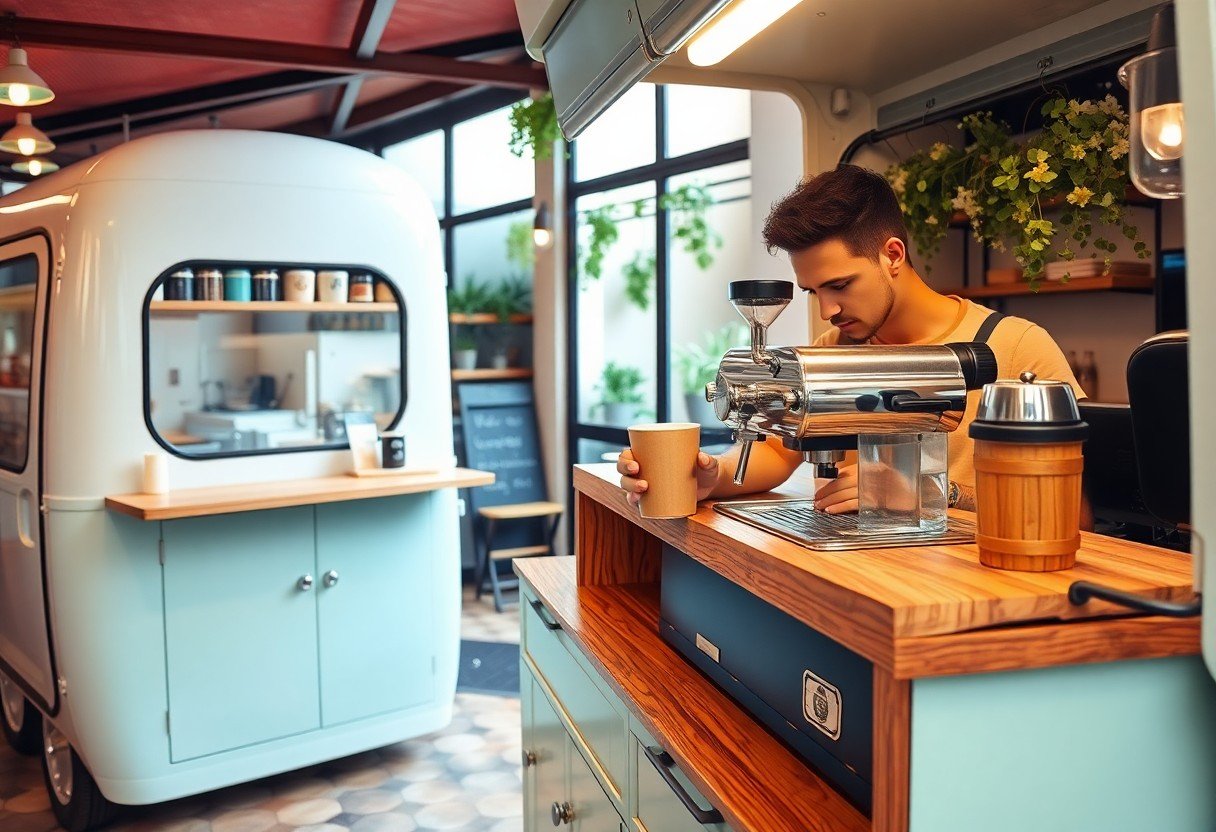
When you step up to a coffee van, speed is often the first thing you notice: orders are commonly turned around in a matter of minutes – 2-6 minutes off-peak and more like 8-15 minutes during lunch rushes or festival peaks – because vans are set up for flow rather than lingering. You still get professional extraction and milk texturing; many vans use commercial machines and dedicated grinders, and contactless payment, QR pre-ordering and digital loyalty stamps are widespread so you spend less time waiting and more time with your drink.
Compared with a boutique café’s 20-50 seats, blown-back playlists and reliable Wi‑Fi that invite you to stay 30-60 minutes, the van experience is mainly about immediacy and atmosphere on the move. You’ll trade table service and power outlets for outdoor ambience, curated pop-up seating and a highly visible barista-driven show; if you value interaction, vans can be surprisingly personal because a single barista often handles an entire service and remembers regular orders.
Community Engagement and Events
You encounter coffee vans at Adelaide Fringe, farmers’ markets and corporate events because mobility lets them follow foot traffic and seasonal demand; that presence turns a simple cup into a community touchpoint. Many vans partner with local roasters to feature single-origin or limited-run beans at specific events, so you can taste beans you wouldn’t find in a regular CBD café.
Vans also drive engagement through bookings and social media – you can book a van for office functions, weddings or pop-ups, and operators commonly use Instagram and Facebook to announce locations and limited offers, which brings regulars out to meet them. At weekend markets you’ll often see vans giving espresso samples, running loyalty promos and collaborating with stallholders, turning the coffee stop into an activator for the wider event.
Digging deeper, you’ll notice vans staging workshops, tastings and small competitions – latte-art throwdowns or guided cuppings – that build local following and brand loyalty; tracking those activities via social check-ins and repeat bookings gives operators a measurable way to gauge community impact and refine where they show up next.
Economic Impact
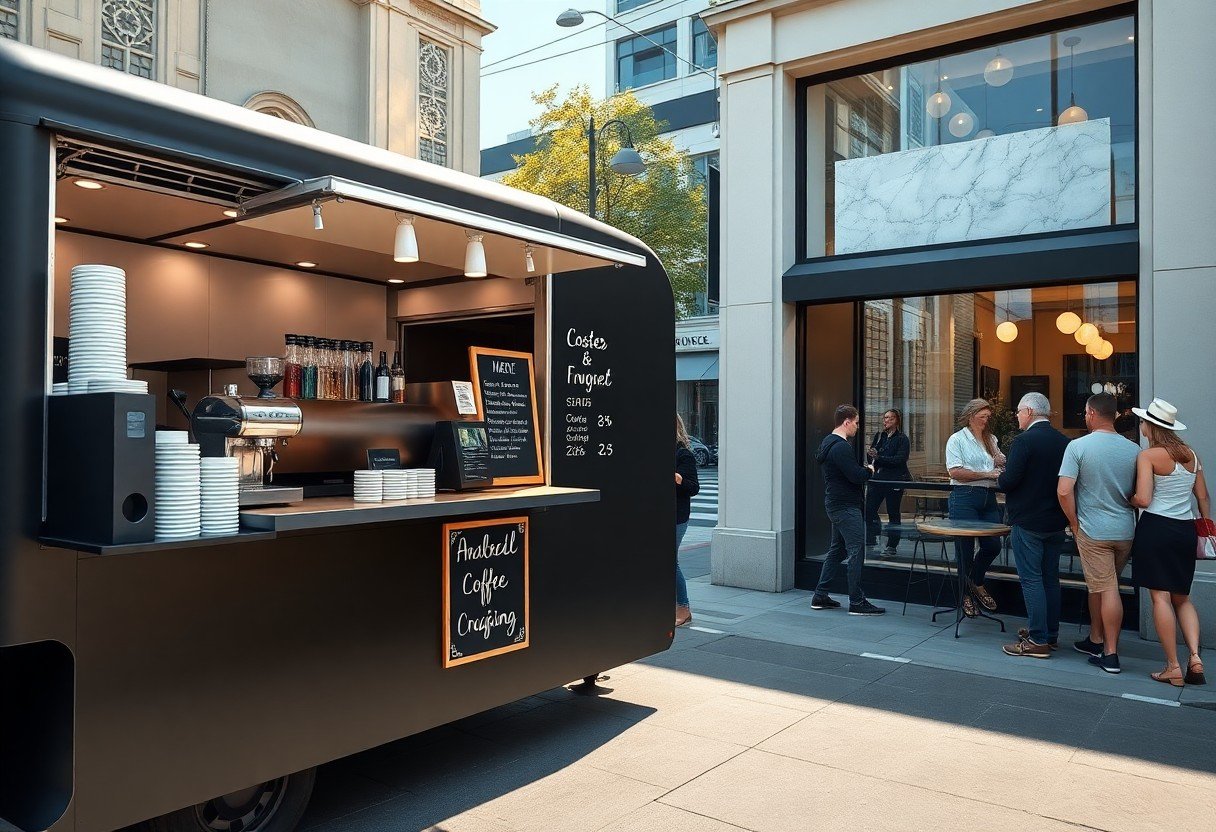
Beyond taste and service, the economic ripple from coffee vans alters local cash flows: setup costs for a fully equipped van typically sit between AUD 40,000-120,000 depending on espresso machine grade and refrigeration, while a boutique café can require AUD 250,000-700,000 to fit out and cover lease bonds. Operating overheads shift the math too – you can expect monthly van fixed costs (vehicle finance, permits, fuel, basic stock) to land around AUD 2,000-6,000, whereas café rents in central Adelaide precincts commonly range from AUD 5,000-25,000 per month plus utilities and waste management. For a closer look at small-business narratives that mirror these trade-offs, see Fiction 6.1.
Taxable turnover and employment effects follow: vans generally create 1-3 direct jobs and often classify operators as sole traders or small-entity employers, lowering payroll overheads but limiting scale, while cafés typically employ 6-12 staff across shifts and thus absorb more wage dollars into the local economy. You should factor in event income too – vans can double or triple daily revenue during markets or university orientation weeks, shifting short-term economic impact significantly in favour of mobile operators during peak seasons.
Cost Analysis of Coffee Vans vs. Cafés
When you break costs down per cup, margins can look similar but the fixed-cost structures diverge. A van can reach break-even at lower daily volumes because you avoid high rent and multiple full-time salaries; for example, selling 120-180 coffees on busy weekdays at an average price of AUD 3.80-4.50 can cover van financing, fuel, and a single operator wage. By contrast, a café often needs consistent daily covers (200-400 customers depending on price point) to cover higher rent, multiple staff wages, and utilities before profits appear.
Equipment and supply choices push the picture further: investing in a premium La Marzocco or Synesso machine raises upfront capital but improves consistency and speed, which matters in high-volume cafés; vans often balance machine quality against mobility and power constraints. Your choice of wholesale roaster, milk suppliers, and waste management provider will swing gross margins-coffee drinks commonly yield 60-70% gross margin on ingredients alone, but labour and occupancy costs determine net profitability.
Local Business Dynamics
Vans change the competitive landscape rather than simply displace cafés: you may see direct competition for morning commuter trade but also cooperation where cafés wholesale beans or roast profiles to mobile operators, extending brand reach without incremental rent. In Adelaide precincts like Rundle Street and the Central Market, some cafés have formed pop-up agreements with vans for weekend markets, turning potential rivalry into shared footfall and cross-promotion.
Regulation and neighbourhood sentiment shape outcomes too – councils set permit limits and trading zones, and landlords exercise control over where fixed hospitality can operate, so a van’s mobility can be an advantage in unmet catchments while cafés retain the experiential edge that drives dwell time and ancillary retail spend. You should expect lobbying efforts from bricks-and-mortar operators in areas where high-street rents make every commuter cup valuable, and local event organisers often prefer a mix of both formats to diversify offerings.
For your planning, that means mapping partners and pain points: negotiate supplier deals that benefit both van and café (shared roaster discounts, co-branded promotions), track council permit cycles to avoid fines, and use short-term event bookings to test locations before committing to a permanent site – these practical steps often determine whether a mobile operation complements or cannibalises the existing café ecosystem.
Expert Opinions
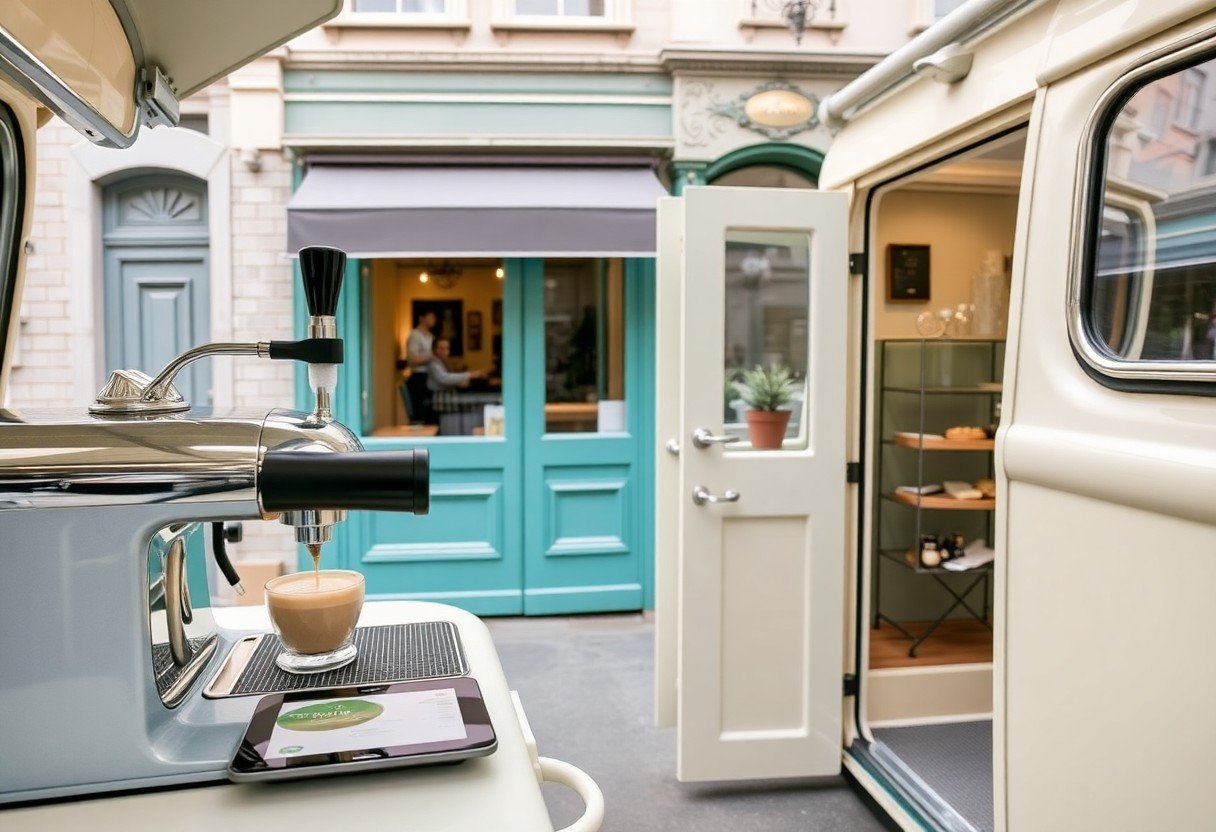
Industry consultants and specialty roasters point out that if you judge by established measures-SCA cupping scores (specialty coffees typically score 80+ on the 0-100 scale), clarity, and extraction consistency-mobile setups can hit the same marks as brick-and-mortar cafés when you prioritise bean freshness and strict brew control. You’ll notice experts highlighting that single-origin filter clarity and espresso sweetness depend less on venue and more on roast date, grind consistency and immediate dosing; a van that pulls beans within 7-10 days of roast can routinely match a boutique’s cup quality.
Practically speaking, your assessment should factor in operational constraints: stable power, water chemistry and equipment footprint. Vans that invest in PID-controlled dual-boiler machines, commercial grinders and onboard filtration with a 100-200 L water tank give you the technical baseline needed for repeatable results, while those that skimp on grinders or skip water treatment struggle to hold a steady 80+ cup standard across a busy service.
Baristas’ Perspectives
When you talk to baristas who work both in cafés and vans, they’ll tell you the craft differences are in the details: grind retention, tamp consistency and temperature stability become magnified in small spaces. You’ll hear experienced operators saying they often recalibrate grind settings hourly at peak service and pull 150-300 espresso shots on busy mornings, so having a high-quality grinder and a machine with reliable PID control is non-negotiable if you want café-level consistency on wheels.
Many baristas you meet in the mobile scene come from boutique cafés and bring SCA Foundation or Barista certifications, which matters when quality control is solo-driven. If you value technique, look for vans where the operator can discuss extraction percentages, brew ratios and water treatment-those talking points usually correlate with a barista who can replicate a tasting profile across a full service rather than just on the first few cups.
Customer Testimonials
You’ll find customers routinely praising van coffee for two things: perceived freshness and speed. Vendors often report serving 200-400 drinks on busy weekend markets and note social feedback that singles out brighter, more floral filter brews and sharper, cleaner espressos-comments that suggest many patrons equate mobile offerings with freshly roasted, well-executed shots when preparation is prioritized.
Digging deeper, your own experience likely mirrors informal vendor surveys that show return rates rising when a van maintains a consistent menu and presence; operators commonly estimate 30-50% of their regular weekend customers come back within a month, and social media check-ins or tagged photos amplify that repeat business by signaling reliability and quality to new customers.
Future Trends
As mobile operators expand what they can offer, you’ll notice a shift from novelty vans to purpose-built cafés-on-wheels that prioritise consistency and repeat business: expect dialled-in espresso recipes (18-20g doses, 25-30s extraction targets), digital scales and refractometers becoming standard in vans that want to match boutique cup quality, and an uptick in single-origin espresso and seasonal filter rotations to mirror café menus.
Innovations in Coffee Vans
You’ll see more vans fitted with dual‑boiler or heat‑exchanger machines with PID control to hold stable brew temperatures on the move, plus low‑retention on‑demand grinders to preserve freshness between shots. Practical upgrades-undercounter refrigeration, integrated water‑filtration, and compact commercial dishwash systems-mean vans can produce milk‑based drinks and pour‑overs at cafe standards without compromising service speed.
Battery and solar systems are also changing the game so you can get full service for 8-10 hours off‑grid; lithium battery packs paired with rooftop solar and efficient inverters cut generator noise and fuel costs. On the customer side, mobile ordering, contactless payments and app loyalty tie customers to specific vans the way café punch cards used to-order‑ahead cuts queue time and lets the van focus on extraction quality when your drink is ready.
Predictions for the Coffee Market
In the near term you should expect a hybrid landscape: coffee vans will gain share in daytime convenience markets-office precincts, construction sites and events-while boutique cafés will lean harder into space, hospitality and all‑day menus. Vans that adopt wholesale or catering lines will expand revenue beyond walk‑ups, and those that franchise successful formulas could scale much faster than stand‑alone operators.
Going deeper, you’ll likely see tighter supply relationships as mobile operators seek consistent micro-lot beans and predictable roast profiles; expect more direct‑trade partnerships and shared roastery arrangements to keep quality high across fleets. Regulation around parking, water disposal and food safety will shape rollout plans, so operators who invest early in compliant, high‑efficiency builds will be best placed to compete with established cafés.
Conclusion
With these considerations, you can see that Adelaide’s finest coffee vans are fully capable of matching-and in specific areas, outpacing-boutique cafés in quality. If your priorities include direct sourcing, focused barista expertise, seasonal single-origin offerings and the flexibility to bring exceptional coffee to events or changing locations, a carefully run van can deliver cups that rival those from established cafés.
That said, if your emphasis is on consistent ambiance, an extensive food program, and a dependable space to work or socialize, boutique cafés retain clear advantages. Weigh what matters most to your daily ritual-convenience and curated shots from a van versus the broader, steadier experience of a café-and you’ll be able to choose which format best serves your expectations for quality.