
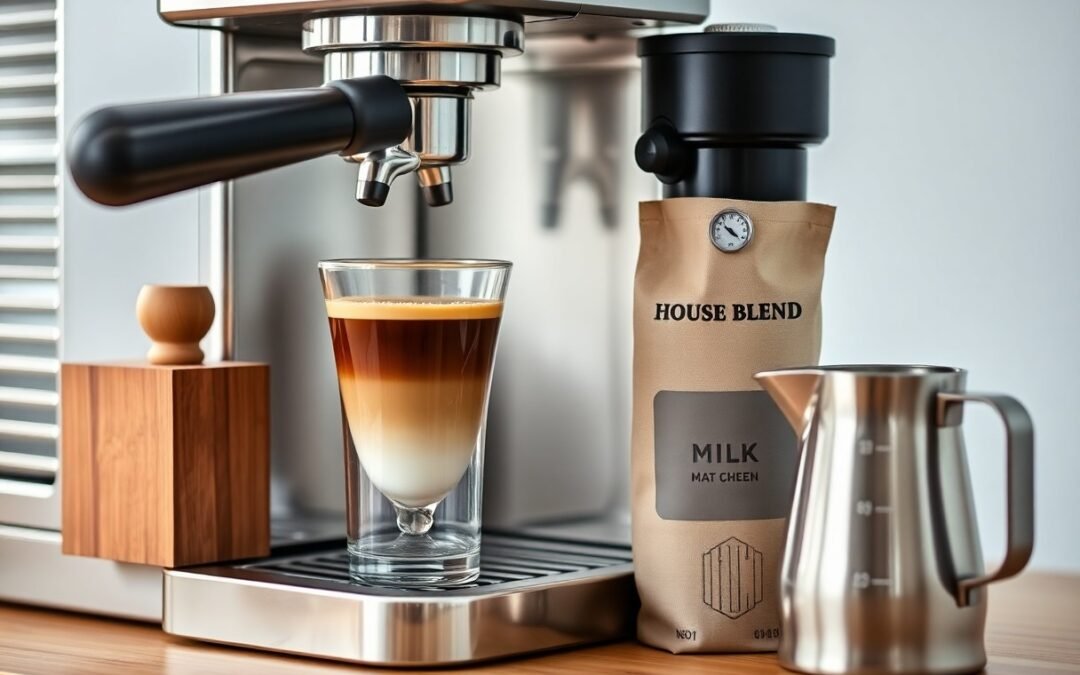
Brew the perfect cup using House Blend coffee beans by weighing beans, using a 1:16 coffee-to-water ratio, grinding medium-fine, and timing a 3-4 minute brew; adjust grind and water temperature to 195-205°F to refine the extraction and flavor you prefer.
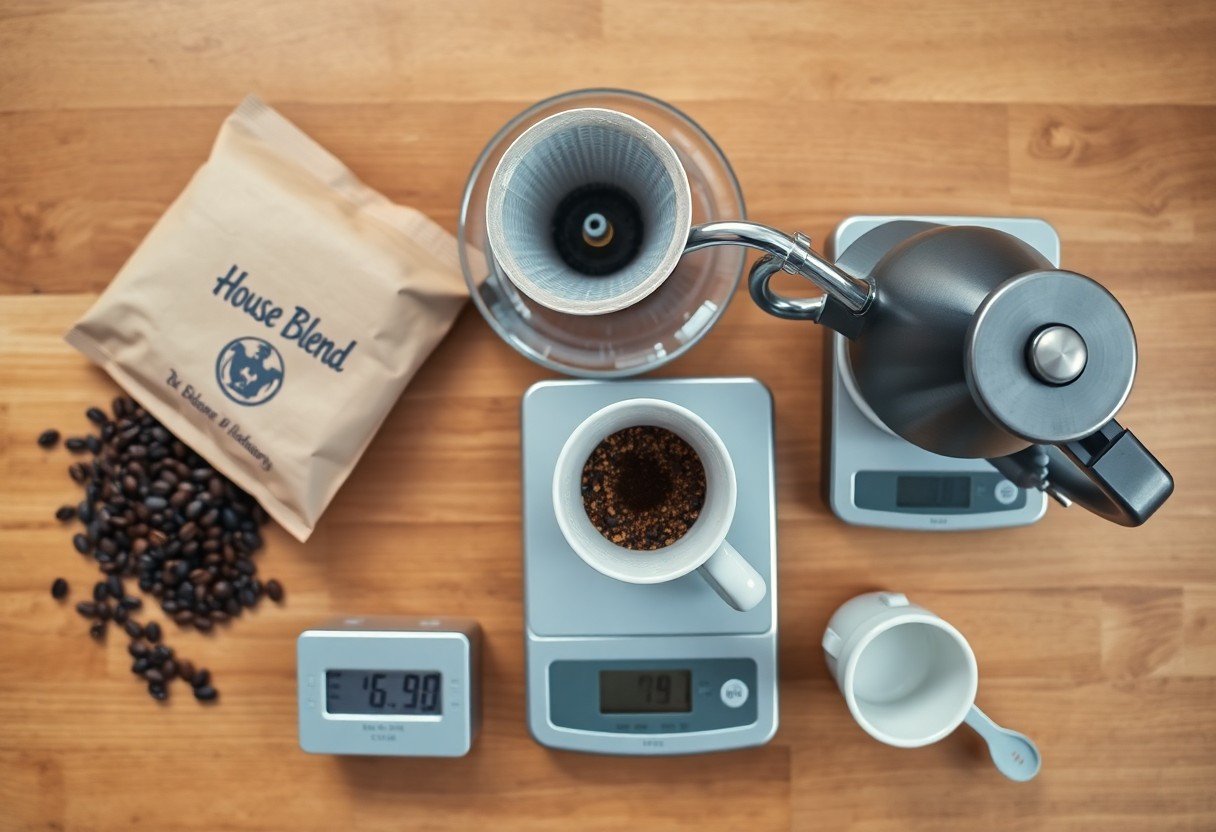
Key Takeaways:
- Use freshly roasted whole-bean house blend and grind immediately before brewing to preserve aromatics and flavor.
- Match grind size to your brew method, heat water to 195-205°F, and target a coffee-to-water ratio of about 1:15-1:17.
- Perform a 30-45 second bloom for pour-over or follow recommended contact times for immersion methods to achieve balanced extraction.
Key Factors in Selecting Premium House Blend Beans
Choice of origin, bean variety, and processing shape the cup you brew; you should evaluate tasting notes, balance, and how the blend performs across your preferred brew methods. Look for consistent sourcing and clear flavor descriptions so you can predict results when you dial grind and dose.
- Origin and variety
- Processing method
- Flavor profile and balance
- Roast consistency
- Packaging and roast date
Perceiving how acidity, body, and sweetness interact will help you pick a house blend that matches your taste and extraction approach.
Analyzing Roast Levels for Balanced Flavor
Roast level directly influences clarity and body, so you should choose a medium roast for balanced acidity and sweetness or a slightly darker roast if you prefer fuller body and lower brightness; match roast to your brew method to preserve desirable notes.
Evaluating Bean Freshness and Roast Dates
Check roast dates and packaging-beans are at their best within two to four weeks after roast for most styles; you should favor bags with one-way valves and clear roast information to ensure peak aroma and flavor when you grind.
Smell whole beans and inspect the aroma before buying; if the scent seems muted or flat, you should avoid those beans and opt for recently roasted, properly stored options to get predictable, lively cups.
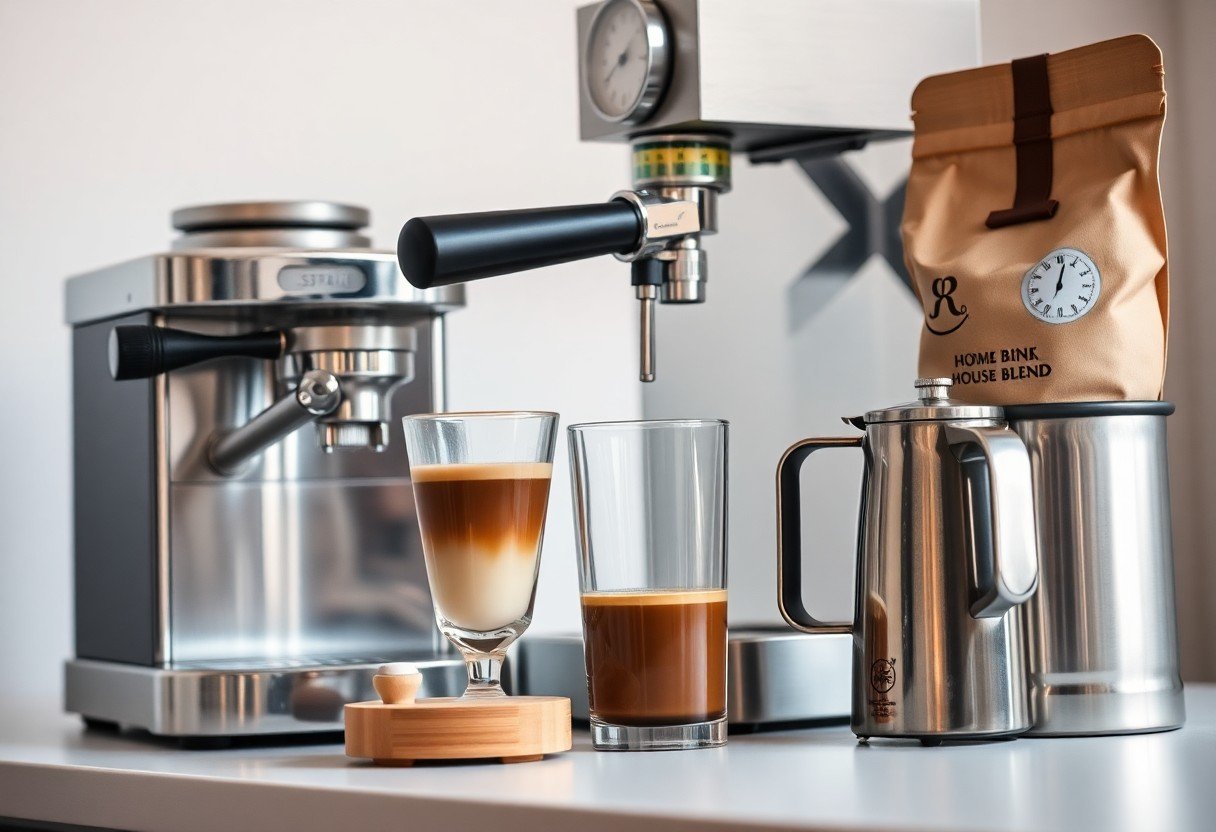
Essential Equipment for a Professional Home Setup
Your setup should prioritize a precise scale, stable water temperature control, and a reliable grinder so you can reproduce extraction parameters consistently.
Using quality filters and freshly roasted house blend beans ensures the hardware shows the blend’s balance and clarity rather than masking flaws.
Choosing a Burr Grinder for Particle Consistency
A conical burr grinder produces a uniform particle size that helps you extract evenly from a complex house blend.
Grind adjustments should be small and systematic so you can track how dose, setting, and brew time change the cup when you taste.
Selecting the Optimal Brewing Device for Blends
Choose a brewer that complements your blend’s body and roast-pour-over for clarity, immersion for sweetness, or a timed drip for repeatability.
Match grind size and brew time to the device and tweak water ratio until the blend’s acidity and sweetness meet your preference.
Experiment with slight temperature and agitation changes so you coax out nuanced notes without over-extracting darker roast elements.
How-To Determine the Perfect Coffee-to-Water Ratio
Start with a baseline ratio of 1:15 to 1:17 for house blends; that equals 1 gram of coffee per 15-17 grams of water. Adjust within that range based on roast and strength you prefer, and keep notes to replicate the results you like.
Applying the Golden Ratio for House Blends
Experiment with 1:16 as your golden ratio for a balanced cup, then nudge toward 1:15 for more body or 1:17 for brighter acidity. You should taste after each small change so adjustments reflect your preferred profile.
Using Precision Scales for Consistent Results
Use a digital scale accurate to 0.1 g so you can dose precisely and track variations between brews. You’ll get consistent extraction when both coffee and water are measured by weight instead of volume.
Adjust doses in 0.5-1 g increments and note grind, time, and taste so you can reproduce successful brews; you will build a clear reference for each house blend and brewing method.
How-To Master the Grind for Maximum Extraction
Grind consistency determines how evenly your house blend extracts, so you should choose a quality burr grinder and make incremental adjustments until the cup tastes balanced. Aim for uniform particle size to reduce channeling and improve clarity, and weigh doses to reproduce the exact profile you prefer.
Consistency in dose and grind prevents wild swings in flavor, so you should establish a routine-same scale, same grind setting, same tamp or bed preparation-before altering brew time or temperature. Keep a simple log of adjustments and their effects to refine extraction over multiple brews.
Matching Grind Size to Your Specific Brewing Method
Match grind to the method: coarse for French press and cold brew, medium-coarse for pourover like Chemex, medium for drip and AeroPress, and fine for espresso. You should treat these as starting points and tweak within each range to control contact time and flow.
Dial grind by observing extraction time and tasting: if the cup is sour, try a finer setting; if it’s bitter or hollow, move coarser. You should change only one variable at a time to identify the impact of grind on body and clarity.
Techniques for Grinding to Preserve Volatile Aromas
Protect fragile aromatics by grinding immediately before brewing and minimizing exposure to air; you should limit dwell time in the hopper and avoid long idle periods where fines degrade flavor. Low-speed burrs help keep temperatures down and preserve volatile oils.
Chill the bean chamber or grind in small batches to prevent heat buildup and static that strip volatiles; you should avoid long runs on high-speed grinders and allow burrs to cool between extended sessions. Short, consistent doses reduce retention and stale-off notes.
Use a dedicated brush and regular cleaning to remove trapped fines that can taint fresh grinds, and if you must pre-grind, store grounds in a small, airtight container away from light and use them within the shortest practical window to retain peak aroma.
Step-by-Step Guide to the Pour-Over Technique
You grind House Blend to a medium-coarse texture, weigh coffee and water, then use a gentle prewet; follow pacing in The 5 Steps to Today’s Perfect Cup of Coffee.
Measure a 1:15-1:17 ratio, pour in controlled bursts, and aim for a 3-4 minute total brew time for balanced extraction.
Pour-Over Quick Steps
| Dose | 15-18 g per 250 ml |
| Grind | Medium-coarse |
| Timing | 3-4 minutes total |
Managing the Bloom Phase and Gas Release
Allow a 30-45 second bloom by pouring twice the coffee weight in water, watching the bloom subside as CO2 escapes and the bed stabilizes.
Bloom and Gas Release
| 0-10s | Slow initial wetting to avoid dry pockets |
| 30-45s | Let gases escape before continuing pours |
Controlling Water Temperature and Pouring Motion
Maintain water between 195-205°F (90-96°C) and pour in slow concentric circles, avoiding the filter edge to ensure even saturation.
Controlling Temp & Pour
| Temperature | 195-205°F (90-96°C) |
| Motion | Slow, steady concentric pours |
Practice pulse pours and brief rests to manage flow rate; adjust grind one notch finer if the cup tastes under-extracted, coarser if over-extracted.
Refining Your Pour
| Pulses | Short pours with 10-20s rests |
| Grind Adjust | Finer → more extraction, Coarser → less extraction |
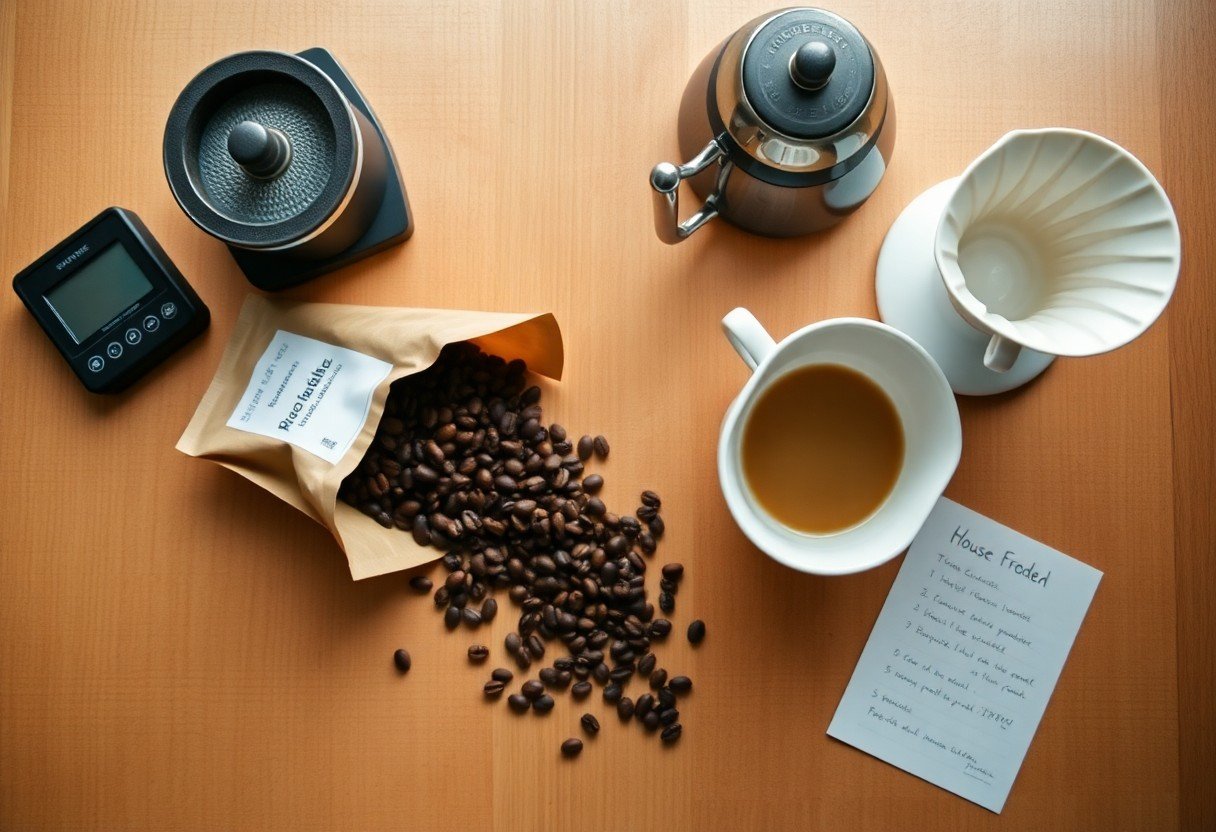
Professional Tips for Refining the Flavor Profile
Adjust grind, dose, and water temperature incrementally while tasting each change; small shifts reveal your blend’s highlights and guide precise tuning.
- Dial in grind size to reduce bitterness or enhance clarity.
- Tweak brew ratio to balance body and acidity.
- Control water temperature and bloom to preserve aromatics.
Focus on one variable per session and log results so you build a reliable recipe. This lets you reproduce a cup that matches your preferred profile.
Troubleshooting Bitterness and Under-Extraction
If your brew tastes sharp or hollow, coarsen the grind and shorten contact time to cut bitter extraction; if it’s sour or thin, grind finer or extend time to pull more sweetness and body while avoiding over-extraction.
Storing Beans Correctly to Maintain Peak Profile
Store whole beans in an opaque, airtight container at cool room temperature and away from light; avoid refrigeration and keep only what you’ll use within a week or two to preserve peak aromatics.
Keep bags sealed after opening and decant into smaller jars for daily use so you limit air exposure and maintain consistent freshness.
Avoid storing beans near heat, sunlight, or strong odors since those factors speed staling and mask subtle flavors.
Summing up
Taking this into account, you should grind beans fresh, use a 1:15-1:17 coffee-to-water ratio, and brew with water at 195-205°F while matching grind size to your method. Bloom grounds, control brew time for balance, and taste as you adjust dose or grind. Repeat measurements and keep equipment clean so you consistently reproduce the perfect cup with your house blend.
FAQ
Q: What makes a house blend suitable for brewing the perfect cup?
A: A house blend combines beans from different origins to create a balanced profile of acidity, body, and sweetness. Consistent roast level delivers predictable flavor from batch to batch. Look for tasting notes and choose a roast that matches your preference for brightness or chocolatey depth. A well-made house blend highlights harmony rather than single-origin intensity.
Q: What grind size should I use for different brew methods with house blend beans?
A: Grind size depends on brew method and affects extraction. Use a fine grind for espresso, fine-medium for AeroPress, medium for pour-over, medium-coarse for Chemex, and coarse for French press. Adjust grind to change strength and clarity: finer increases extraction and body, coarser decreases them. A quality burr grinder provides the most consistent particle size and the easiest dialing-in.
Q: How much coffee and water should I use to brew a balanced cup?
A: Start with a brew ratio of 1:15 to 1:17 (coffee to water by weight) as a baseline. For a 300 ml cup, use about 20 g of coffee at 1:15 and about 18 g at 1:17 for a milder cup. Measure by weight for repeatability and scale the ratio to taste. Keep notes of ratios and adjustments to reproduce your preferred strength.
Q: What water temperature works best for extracting flavor from a house blend?
A: Heat water to between 195°F and 205°F (90°C to 96°C) for most house blends. Water just off a rolling boil typically falls in this range after a short rest. Use filtered water without strong mineral or chlorine flavors to avoid off-notes. Small adjustments within the range can tame acidity or bring out sweetness.
Q: How does bean freshness and storage affect the final cup?
A: Buy whole beans and grind immediately before brewing to preserve volatile aromatics. Store beans in an opaque, airtight container at room temperature away from light and heat. Avoid refrigeration and repeated exposure to air, which accelerate staling. Use beans within two to four weeks of the roast date for best flavor clarity.
Q: Which brewing techniques highlight the best characteristics of a house blend?
A: Use a bloom phase for pour-over to release trapped CO2 and improve extraction; pour twice the coffee weight in water and wait 30-45 seconds. Maintain even saturation with controlled pours and gentle agitation to avoid dry channels. For immersion methods like French press, follow recommended steep times and apply steady plunging pressure. For espresso, adjust dose and tamping to find balance between sweetness, acidity, and body.
Q: How do I adjust variables to dial in the taste I want from a house blend?
A: Taste the cup and change only one variable at a time to identify its effect. Coarsen the grind to reduce extraction and brightness; refine the grind to increase extraction and body. Increase dose or shorten brew time to boost intensity, and tweak water temperature to round acidity or highlight sweetness. Record grind, dose, time, and temperature for each test to recreate your ideal settings.