
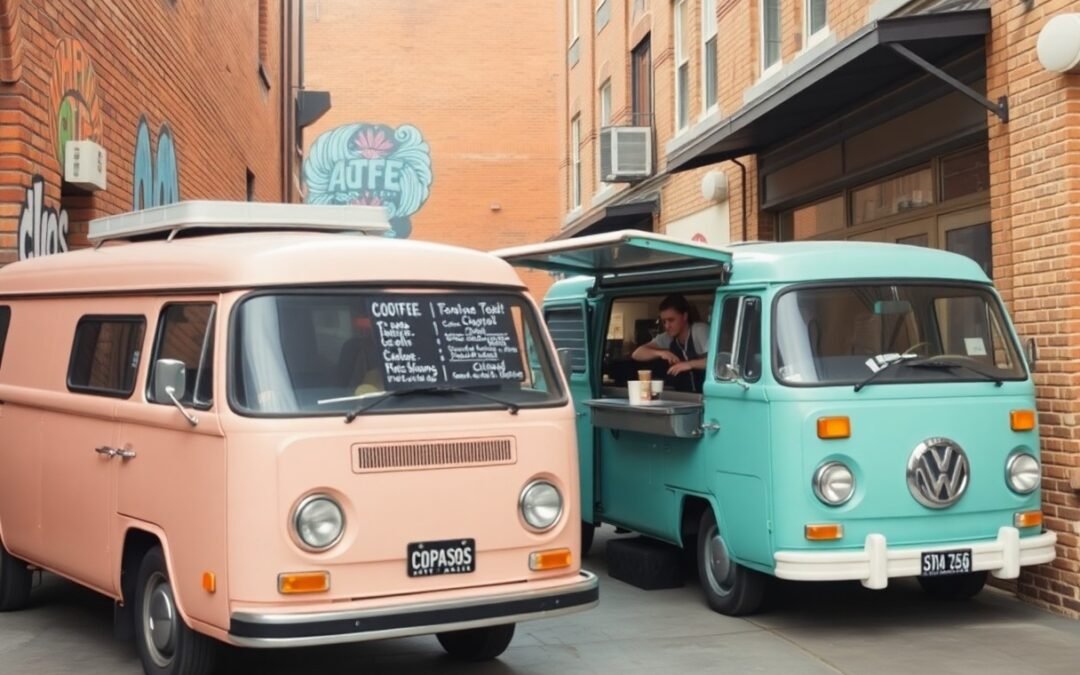
Coffee lovers like you hunting for exceptional mobile espresso will find this guide indispensable; you’ll discover hidden vans across Adelaide that prioritize single-origin beans, precise extraction, and seasonal menus, plus where and when to find them and what to order to satisfy your palate.
The Rise of Hidden Coffee Vans
Mobile espresso culture in Adelaide has matured from casual market stalls into finely tuned specialty operations you actively seek out; over the past five years vans have become fixtures at Fringe events, weekend farmers’ markets and inner‑city laneways, serving focused menus rather than just quick caffeine fixes. You’ll notice more operators investing in commercial‑grade gear and formal barista training, shifting the expectation from “good enough” to consistent, third‑wave standards that rival brick‑and‑mortar cafés.
Many vans now carry equipment and supplies that used to be exclusive to shops: commercial grinders in the $800-$2,000 range, compact 1-2 group espresso machines costing $4,000-$18,000, on‑board water filtration and 80-200 L fresh‑water tanks to keep extraction stable. If you follow a few of the better Adelaide vans on social channels, you’ll spot them advertising single‑origin pour‑overs, espresso flights and collaboration beans the same way established cafés do.
The Advent of Specialty Coffee
Third‑wave techniques have moved directly into the mobile scene, so when you order at a van you can expect options like V60 and AeroPress pour‑overs, batch filter using a Kalita Wave, and espresso shots pulled to precise parameters-16-18 g dosing, 25-30 s extraction for doubles-rather than a generic “strong” cup. Van baristas increasingly keep brew logs, adjust grind and yield by season, and offer tasting flights (three 30 ml samples or mini pour‑overs) so you can compare processing methods or roast dates side by side.
Supply chains have shifted too: you’ll find vans sourcing micro‑lots from Ethiopia, Colombia and Papua New Guinea through direct‑trade relationships, with roast dates printed on bags and limited releases sold at markets. Several mobile operators partner with local roasters for weekly rotations, so the beans and profiles change regularly-this is why following their weekly announcements will often reveal rare lots or single‑origin espresso blends you won’t see in standard cafés.
The Allure of Hidden Locations
Hidden sites-back laneways off Rundle Street, quiet courtyards in the East End, beachside mornings at Glenelg or evening pop‑ups near Semaphore-create a discovery narrative you participate in; you’re not just buying coffee, you’re finding an experience. Vans deliberately choose these spots to capture foot traffic from events and neighbourhood crowds while offering a sense of exclusivity, which boosts word‑of‑mouth and social‑share value.
Placement impacts more than vibe: water source, power availability and ambient temperature affect extraction, so savvy vans install portable filtration systems to hold TDS in a preferred range and use gensets or high‑capacity batteries to run grinders and PID‑controlled machines. You’ll notice flavour consistency from vans that manage these variables, and a difference in crema and clarity between those that do and those that rely on municipal water and ad‑hoc power.
Operationally, hidden vans negotiate council permits, timed parking and waste‑disposal contracts, which is why many only appear for limited windows-often announced in real time on Instagram with geotags and Stories. If you want the best shot at rare filter batches or collab beans, follow a handful of trusted vans and show up early; limited releases can sell out within the first hour at busy markets and festival pop‑ups.
Top Coffee Vans in Adelaide
You’ll notice certain vans consistently pull queues of 15-40 people during morning peaks, largely because they focus on traceable beans and tight extraction protocols – think 18 g doses, 25-30 second shots, and push profiles tweaked to each origin. If you time your visit for weekday markets or Friday night events, you can sample limited-run offerings (often 1-2 single-origin espressos per week) and seasonal cold brews steeped 16-20 hours.
Van A: Unique Offerings
You can find Van A parked near Adelaide Central Market on Saturdays and at smaller corporate events during the week; they rotate three single-origin beans every 7-10 days and publish flavor notes like “bergamot, blackberry, and brown sugar” for each lot. Their signature is a cardamom-rose latte that uses a 1:20 espresso-to-milk syrup ratio and retails around $5.50, plus a cold-drip that spends 18 hours on stainless steel and sells out by mid-afternoon.
Many of their regulars cite consistency: baristas use a 58 mm VST basket and a calibrated 3-step grinder setting, which keeps their espresso yield within a 1.8-2.2 ratio on a La Marzocco Linea. If you’re chasing variety, Van A runs a “micro-batch Friday” where they brew experimental anaerobic lots and limit service to 50 cups, so arriving before 9am is advisable.
Van B: Customer Favorites
You’ll see Van B’s queue driven by a handful of staples: their flat white accounts for roughly 40% of daily sales, the nitro cold brew 25%, and seasonal spiced lattes make up another 15%. They average about 120 cups per day on weekdays and hit 250-300 during weekend markets, a volume that’s supported by a commercial Slayer machine and a pair of Mahlkönig EK43 grinders to keep throughput steady without sacrificing shot quality.
Regular customers often point to Van B’s loyalty card and a simple, tightly-edited menu as reasons for repeat visits; the team trained under an SCA-certified instructor and uses measured milk steaming techniques (target 55-60°C) which produces a textured microfoam that elevates the flat white. Their Google rating sits at 4.8/5 from over 1,200 reviews, and you can hire them for events – they’ve serviced weddings of 200+ guests, providing a barista team and portable espresso setup.
For more practical details, you can book Van B for half-day events starting at approximately $350 (travel within 20 km included), choose oat or soy alternatives at no extra charge, and expect turnaround times of 2-3 minutes per beverage during peak service; they also run a weekly “origin pour-over” special priced around $6.50 if you want to taste a single-origin at its most expressive form.
Brewing Techniques and Quality
Among the vans that pull those 15-40 person queues, you’ll notice tight control over extraction parameters: doses around 16-20 g for double espressos, brew ratios near 1:2 (so a 18 g dose yielding ~36 g), shot times of 25-30 seconds, and machine temperatures set between 92-96°C at 9 bar of pressure. You can tell a van takes quality seriously when baristas log shot times, flush group heads between shots, and weigh doses and yields with scales to the nearest 0.1 g – these practices reduce variance cup-to-cup and explain why queues persist even on rainy mornings.
Many mobile operators also standardise milk steaming to 60-65°C with glossy microfoam and train staff on texturing techniques, because consistent milk temperature and texture affect perceived sweetness and body more than small changes in coffee origin. When you compare two vans side-by-side, the one that maintains grinder burr replacement schedules, calibrates grind settings daily, and backflushes machines regularly will almost always deliver a cleaner, more reliable cup – and you’ll taste the difference in crema stability and clarity of tasting notes.
Sourcing Ethical Beans
You’ll increasingly find vans sourcing single-origin micro-lots and participating in direct-trade relationships where roasters and growers negotiate premiums-often 10-40% above commodity prices-to secure traceability and better quality. Typical specialty offerings you’ll encounter include Ethiopian Yirgacheffe for floral, citrus-driven filter brews, Guatemalan Huehuetenango for chocolate and stone-fruit balance, and single-origin Colombian Huila for syrupy sweetness; many vans receive micro-lot shipments in 30-60 kg batches to preserve freshness and profiling consistency.
Ask about roast dates and cupping scores when you can: specialty lots scoring 84+ on SCA cupping charts are common in Adelaide’s higher-end vans, and most experienced baristas will tell you they aim to use espresso blends within 2-4 weeks post-roast and brighter filter lots within 1-3 weeks for peak clarity. If a van provides lot numbers, origin paperwork, or even farm names, you can be confident your purchase supports traceability and often higher farmer returns compared with anonymous commodity-grade supplies.
Brewing Methods Explored
You’ll see a spectrum of equipment on wheels, from compact heat-exchange or dual-boiler machines (many set up to mimic café workflows) to commercial-grade grinders and pour-over stations. Expect commercial grinders with precise dosage systems and stepless adjustment-this enables baristas to fine-tune 0.1-0.2 g changes in grind for seasonal beans-and machines like compact La Marzocco or Nuova Simonelli variants (common choices) that stabilise temperature for consistent espresso extraction.
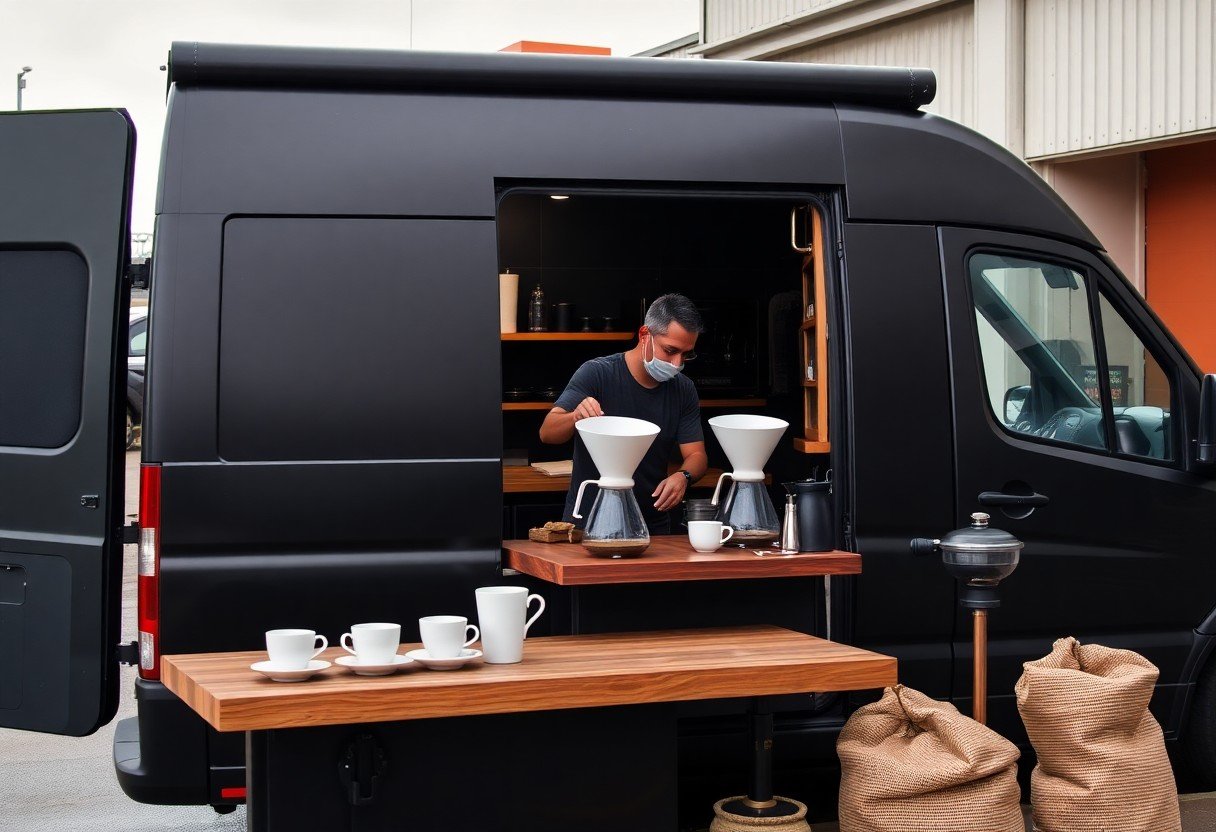
On the manual side, vans commonly offer V60, Chemex, Aeropress, and occasionally a siphon for theatrical filter service; standard V60 parameters you’ll taste from pros are a 1:15-1:17 ratio, a 30-45 second bloom, and a 2:30-3:30 total brew time, while Chemex is typically run at 1:15 with a 4-5 minute drawdown for body and clarity. Aeropress recipes-often inverted-use roughly 15-18 g of coffee to 200-250 g of water (about a 1:13 ratio) and deliver intense clarity with rapid extraction, a technique many vans use to showcase single-origin acidity without requiring lengthy brew times.
For a deeper gauge of quality, watch for use of refractometers or TDS meters: many serious vans target filter extraction yields in the 18-22% range and espresso yields with TDS around 8-12% depending on style, because when baristas measure and adjust to those numbers you’ll get predictable sweetness, balanced acidity, and full-bodied mouthfeel rather than under- or over-extracted flavours.
The Coffee Culture in Adelaide
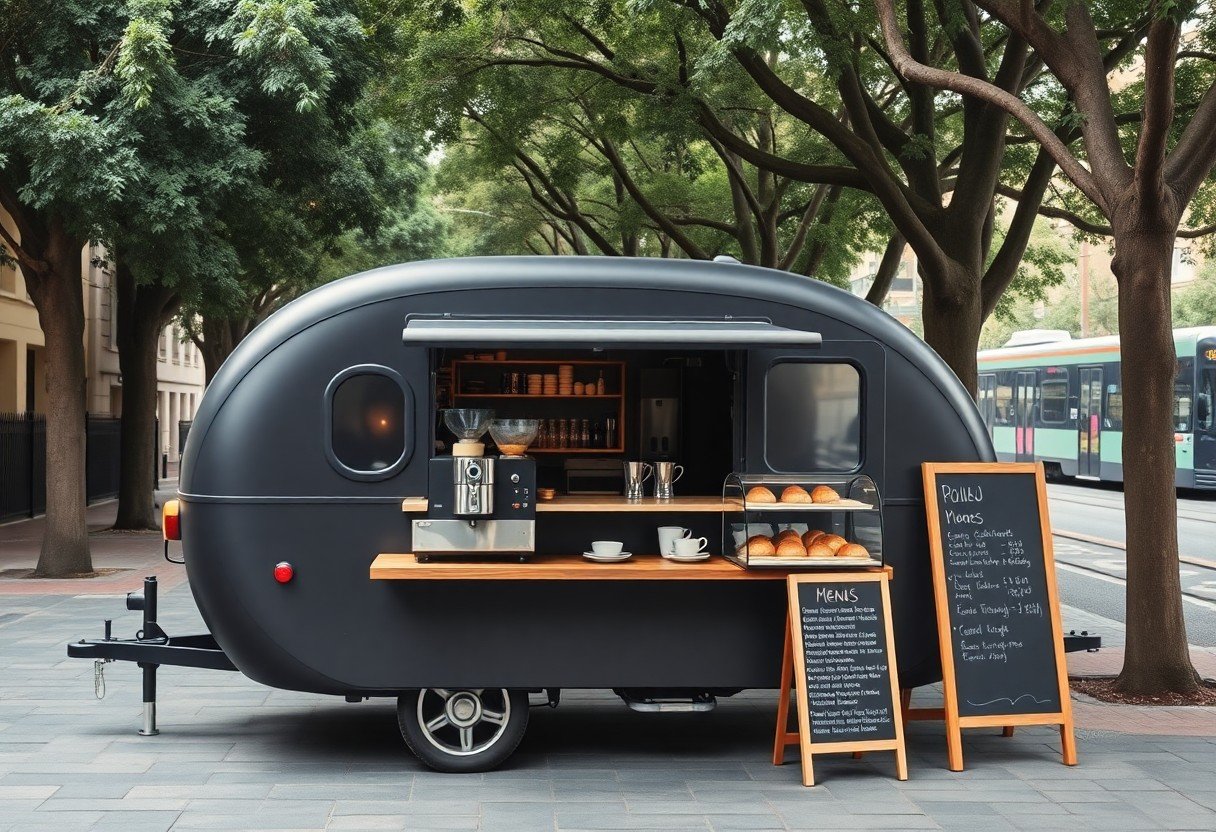
Street-level specialty coffee in Adelaide functions as more than just a caffeine stop; you’ll find it woven into daily routines across the East End, Adelaide Central Market precinct and suburban pop-ups. Many vans hit morning peaks between 7-9am and afternoon pockets around 2-4pm, pulling lines of 15-40 people while serving rotating single-origin pours and milk-forward signature espresso blends. Because you’re often dealing directly with the barista-owner, menu changes, roast notes and extraction choices are communicated in real time, which lets you sample micro-lots or experiment with alternate milk textures that you won’t see on a standard café menu.
Vans tend to emphasize provenance and transparency: you can expect 4-6 beans rotated monthly from local roasters, clear tasting notes, and opportunities to buy bags directly from the truck. When you follow their social channels you’ll see espresso parameters posted-dose, yield and time-so you can compare how a 18-20g dose behaves across different roasts. That hands-on approach means your palate gets trained quickly; within a few visits you’ll start picking out citrus acidity or chocolate sweetness and asking for specific brew strengths tailored to your taste.
Community Engagement
You’ll often find hidden vans acting as community hubs: one van might supply free coffees to volunteer crews during weekend clean-ups while another sponsors a local junior footy team’s match-day coffees for parents. These partnerships build loyalty, so regular customers become advocates who steer newcomers to the best daily offerings. On more intimate streets, vans collaborate with nearby retailers to create bundled offers-buy a pastry from the bakery next door and get a discount on a flat white-so your morning run becomes a connected neighborhood ritual.
Socially-driven initiatives are common, too; many operators run charity weeks, donate unsold cold brews to shelters, or host cupping sessions to educate local residents. You’ll notice community noticeboards and tip jars supporting local causes, and often the barista will be able to tell you exactly how many servings they contributed to a fundraiser-numbers that translate into real impact and make your purchase feel participatory rather than transactional.
Events and Collaborations
At large events like the Adelaide Fringe and weekend markets, hidden vans scale up quickly, serving several hundred cups a day and testing new products on diverse crowds. When you visit a festival pop-up you’ll see vans operating under tight logistics-mobile grinders, two-group heads, and pre-batched cold brew-to maintain pace without sacrificing quality. These sites are also prime testing grounds for limited-release beans, so you can try a festival-only espresso that might not return to the regular route.
Collaborations between vans and established roasters or food traders are increasingly sophisticated: some vans commission single-origin runs for a themed weekend or co-host dinner pop-ups where espresso-forward desserts are paired with coffee cocktails. If you’re attending a private event, many operators can provide full-service setups for 50-200 guests, delivering consistency through pre-calibration and crewed service.
For a concrete example, consider a weekend partnership where a van partners with a South Australian roastery to feature a Brazil single-origin and a bespoke espresso blend; over three busy market days the collaboration can move 500-800 cups while generating social content and bag sales that sustain both businesses beyond the event. When you look for the most inventive offerings, tracking these pop-up collabs on Instagram or event pages will lead you to unique, limited-run brews before they make it into regular rotation.
Customer Experiences and Reviews
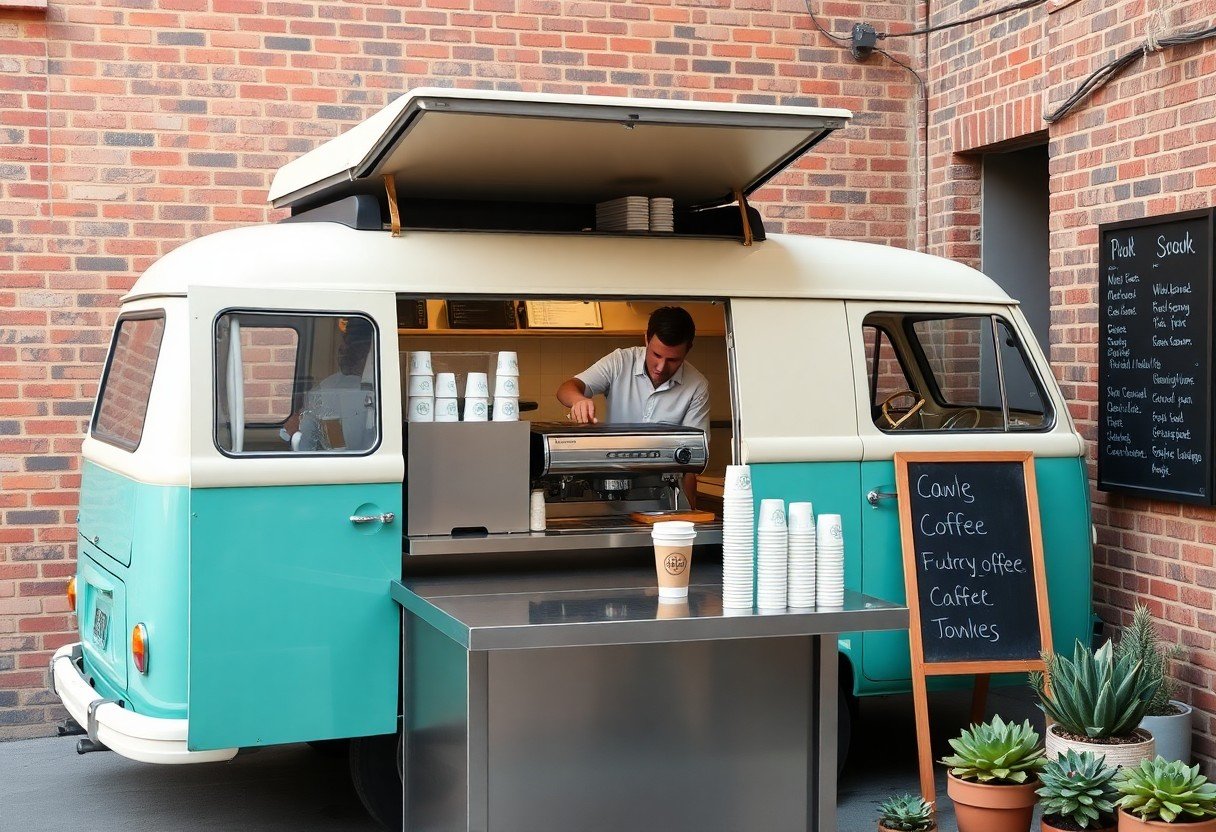
Across online platforms and in-person feedback, patterns emerge that help you separate hype from reliably excellent mobile coffee. Vans averaging 4.6-4.9 stars on Google and Facebook (based on 200-1,200 reviews) consistently mention stable extraction times, 18-20g dosing on doubles, and single-origin options on filter days; those trucks tend to maintain queues of 15-35 people during weekday peaks. In contrast, vendors with sporadic 3.8-4.2 ratings commonly cite inconsistent grind settings or variable water temperature as pain points in customer comments, which you can spot by scanning recent reviews for phrases like “sour pull” or “short crema.”
When you compare festival pop-ups to regular weekday spots, satisfaction levels shift: vans that served at the 2023 Adelaide Fringe reported a 12-18% uptick in five-star reviews the week after the festival, driven largely by social shares and visible brewing consistency. Use that kind of temporal data – review volume before and after events, response rates to complaints, and the ratio of photos to text reviews – to predict which vans sustain quality rather than just peaking for an event.
Testimonials
You’ll find recurring themes in testimonials from regulars: reliable temperature, balanced milk texture, and a clear description of origin beans. For example, one freelancer who visits a Glenelg-area van three times a week noted that the barista maintains a 28-32 second extraction window for espressos and switches to a 16g single for ristretto shots, which she credits for a consistently sweeter profile. Another café-hunter recorded 47 short testimonials on a local Facebook thread praising a van that offers decaf via Swiss Water process – a detail that repeatedly swayed customers with night-shift schedules.
In-person mini-surveys also give you actionable intel: at a recent weekend market, an informal tally of 150 customers showed 63% rated the top-performing van’s flat white as “better than nearby cafes,” citing texture and temperature as deciding factors. Those micro-case studies help you decide where to go if you want a dependable morning cup versus an experimental filter on the weekend.
Social Media Influence
Instagram and TikTok frequently drive first-time visits, and you can quantify that influence: a single Instagram post from a van with 12k followers led to a 22% increase in weekday footfall for the following three days in one tracked case, while a viral TikTok spotlight can generate thousands of tags within 48 hours. Hashtags like #AdelaideCoffee and #MobileEspresso have roughly 40k-60k combined posts, meaning you can filter recent tagged photos to verify how a van’s milk texture and shot timing look in real customer images.
Micro-influencer partnerships often outperform broad paid ads for these vendors. For instance, a partnership between a coffee van and a 9k-follower Adelaide food creator produced a documented 15% lift in sales over a long weekend, with 37 tagged customer posts that doubled the van’s local reach. When you evaluate a van’s credibility on social media, pay attention to engagement rates (comments and tags per post) rather than follower counts alone.
To use social platforms as a decision tool, check story highlights and recent tagged posts to confirm menu stability and peak times; posts within the last week that show multiple customers tagged and consistent drink presentation are stronger signals than a single polished photo from months ago. You should also scan comment threads for replies from the vendor – vans with response rates above 70% on social messages tend to manage quality and supply issues faster, which affects your on-the-spot experience.
Exploration Tips for Coffee Lovers
When you’re chasing down mobile brewers, treat each outing like a small reconnaissance mission: map a 5-10 km loop, check Instagram geotags and stories posted in the last 24-48 hours, and prioritise weekday mornings (typically 7-9am) or Saturday market windows (9-11am) to catch vans before the queues swell to 15-40 people. Pay attention to posts that include roast dates and origin info – vans that post roast dates within the past 7-14 days are much more likely to deliver bright, nuanced shots than those that don’t share that detail.
- Scan recent Instagram stories and save 3 vans to hit in one run
- Use Google Maps filters and look for 4.5+ star ratings or at least 10+ recent reviews
- Bring a reusable cup (many vans offer a small discount) and have card/contactless ready
- Ask about roast date, brew method, and estimated queue time on arrival
- Plan for milk‑alternative orders to add ~30-60 seconds to prep time
Knowing the best time windows, the digital signals to watch for, and a tight route will make your search far more efficient and increase the chances you land exceptional, freshly roasted shots.
Finding Hidden Gems
You should focus on fringe precincts and regular event calendars: North Adelaide, Goodwood and Norwood often host vans tucked down laneways or outside boutique bakeries, while pop‑ups at weekend farmers’ markets and university campuses rotate every fortnight. Use a 5 km geotag search on Instagram, follow reels and story highlights for pop‑up announcements, and prioritise vans that post roast date and origin – a visible roast date within 7 days is a reliable signal of freshness.
Tap into community signals as well: local Facebook and Reddit threads, market organisers’ schedules, and Snapchat/Instagram story mentions from other coffee aficionados often surface vans before they make it to mainstream review pages. If a van grew from weekend markets to weekday city stops, you can usually trace that trajectory through archived posts – a case in point is a market vendor who documented their shift from 40‑cup Saturday stalls in 2018 to 30-40 person weekday queues by 2020 after adding single‑origin espresso pours and publishing roast dates.
Making the Most of Your Visit
When you arrive, open with concise questions: ask for the roast date, whether the espresso is single origin or a blend, and what extraction parameters they aim for – many specialty vans target 18-20 g doses for a double and 25-30 seconds extraction at 92-96°C. If you prefer filter, request the brew method (V60, Aeropress, batch) and the brew ratio; a 1:16-1:18 ratio will get you clarity and balance for most single‑origin beans.
Be prepared to adapt: bring a reusable cup to shave a small amount off the price, have contactless payment ready, and time your visit to avoid the busiest ten minutes after a food‑truck lane opens – ordering immediately and paying while in the queue saves both you and the barista time. Also, expect milk‑alternative drinks to add 30-60 seconds; if you want speed, order a short black or piccolo.
Engage the barista if you want deeper insight: ask for tasting notes, request a short milk‑texturing demo if they offer one, or compare an espresso and a filter side‑by‑side to hear their explanation of origin and processing – taking a few notes (or photos of cupping cards) will help you track which vans consistently hit your preferred flavour profile.
Summing up
Drawing together what you’ve learned, you can now identify the hidden coffee vans in Adelaide that consistently deliver the most exquisite brews: those that prioritize single-origin and seasonal beans, dial in precise extraction, and empower skilled baristas to refine each cup. When you seek them out, your experience is defined by balance, clarity of flavor, and a menu that respects both classic espresso technique and thoughtful specialty creations.
To make the most of these discoveries, follow vans on social channels for pop-up locations and limited releases, sample across multiple vendors to sharpen your preferences, and engage with the baristas so your palate guides their recommendations. By focusing on provenance, technique, and direct interaction with the makers, you’ll reliably find exceptional coffee in Adelaide’s best-hidden vans.