
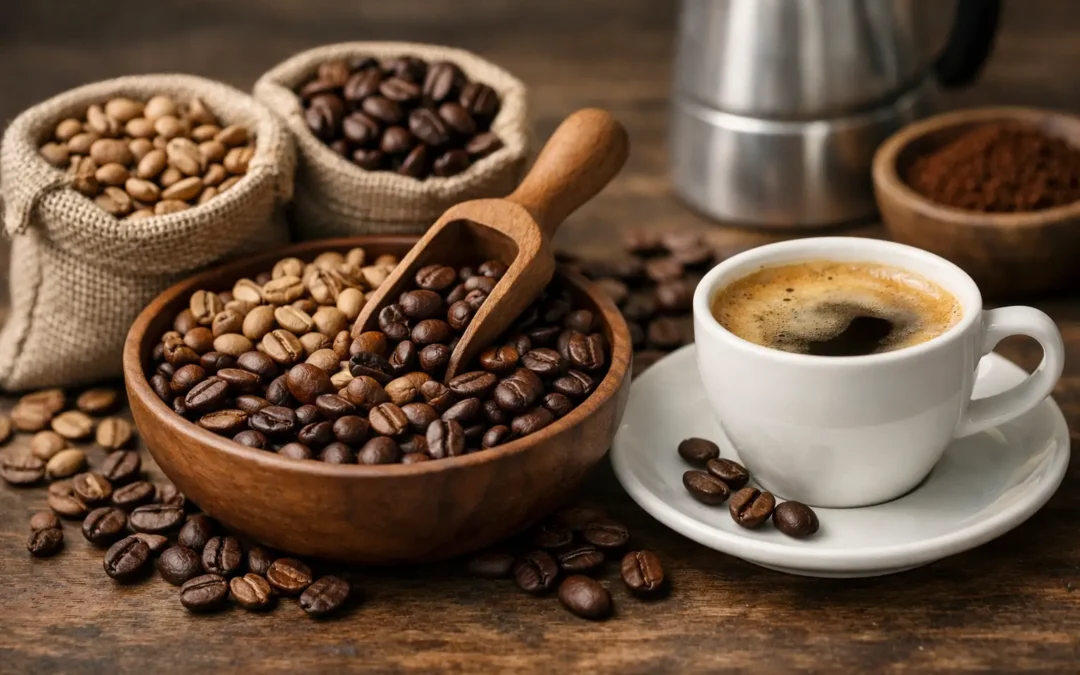
You can tell a lot about a coffee roaster by their house blend coffee beans. Not the flashy limited release. Not the rare microlot with a long tasting note card. The blend they keep roasting week after week is usually the clearest statement of what they want a daily cup to be – balanced, reliable, full of flavour, and easy to come back to.
For home drinkers, office kitchens and event planners alike, that matters more than people sometimes realise. A house blend is often the coffee that has to please different palates, work across several brew methods, and still hold its character from the first sip on Monday morning to the last cup poured at a busy function. When it is done well, it feels effortless. When it is not, you notice straight away.
What are house blend coffee beans?
House blend coffee beans are a roaster’s signature blend – a combination of beans from different origins, processed and roasted to create a consistent flavour profile that suits everyday drinking. Think of it as the coffee a roaster would happily put their name behind as their regular pour, not just their experimental one.
The key word is consistency. Single origin coffees can be brilliant, but they can also be seasonal, more delicate, or a bit more selective in how they brew. A house blend is usually built to be dependable. It should taste excellent as espresso, often perform well with milk, and still bring enough clarity and sweetness to stay interesting black.
That does not mean plain or boring. A strong house blend can carry real depth – chocolate, caramel, toasted nuts, stone fruit, berries, spice – but the flavours are usually arranged for harmony rather than shock value. It is coffee designed to be enjoyed often, not analysed once and forgotten.
Why a house blend matters more than the name suggests
Some people hear “house blend” and assume it is the basic option. In speciality coffee, the opposite is often true. The house blend is where roasting skill and palate really show up.
Creating a blend that tastes balanced is harder than simply roasting a great single origin. The roaster needs to think about body, sweetness, acidity and finish all at once. They also need to account for how that coffee will be used. A café may need it to cut through milk without becoming bitter. A home drinker might want it forgiving enough for a morning espresso before work. An office setup may need something approachable for a team with mixed preferences.
That is why the best house blends become staples. They are not trying to be everything to everyone, but they do have enough range to suit real life. In practical terms, that can mean fewer disappointing brews, better results across different machines, and coffee you can serve confidently whether it is one cup at home or a hundred at an event.
How house blend coffee beans are built
A blend starts with intent. Before any beans are combined, a roaster usually has a flavour direction in mind. Maybe they want a richer profile with dark chocolate and toasted almond notes. Maybe they want a more vibrant cup with caramel sweetness and gentle fruit. The final blend is then constructed from coffees that each bring something useful.
One origin might contribute body and crema. Another might lift sweetness. A third could add brightness or a cleaner finish. Roasting also plays a major role. Even with excellent green coffee, a blend can fall flat if the development is off. Too far, and you lose nuance. Too light, and the cup may taste sharp or thin, especially in milk-based drinks.
This is where freshness matters as well. Blended coffee is still speciality coffee. If the beans are stale, the blend loses the liveliness that makes it sing. Fresh roasting keeps the aromatics vivid and the flavour structure intact, which is exactly what you want in a coffee meant for regular drinking.
What to expect in the cup
Most house blends aim for broad appeal, but broad appeal should never mean bland. A good one tends to have a rounded flavour profile, steady sweetness and a finish that invites the next sip.
In espresso, you might notice syrupy body, cocoa, caramel or roasted hazelnut, with enough acidity to keep things lively. With milk, those flavours often soften into something smooth and comforting – think chocolate, malt, toffee or biscuit. Black, a more layered blend may open up into fruit, spice or citrus, depending on the components.
The exact profile depends on the roaster’s style. Some house blends lean classic and richer. Others are brighter and more modern. Neither approach is automatically better. It depends on how you like to drink your coffee and what role it needs to play in your day.
House blend vs single origin
This is where coffee conversations can get a bit silly. Single origin is not automatically superior, and blends are not a compromise. They simply do different jobs.
Single origin coffees are often chosen for distinction. They can highlight a particular region, farm or processing style with striking clarity. If you enjoy tasting the fine differences between coffees, they are rewarding. But they can also be less predictable from season to season and a bit less flexible, especially if you want one bean to handle espresso, milk and batch brew without fuss.
A house blend is usually about balance and repeatability. That makes it ideal for people who want quality without having to recalibrate every week. For offices, events and households with multiple coffee drinkers, that reliability is a huge advantage. You know what is going in the hopper, and you know the cup will land where you expect it to.
Choosing the right house blend coffee beans
Start with how you actually drink coffee, not how you think you should. If most of your cups are flat whites or cappuccinos, look for a blend with enough body and sweetness to carry milk well. If you prefer long blacks or espresso, you may want something with more brightness and detail.
Then consider your setup. Some blends are very forgiving in automatic machines and home espresso setups. Others shine when dialled in carefully on more advanced equipment. If you are buying for a workplace or event service, consistency and versatility should be high on the list. You want beans that perform under pressure and still taste polished in every cup.
Fresh roast dates, clear flavour direction and a roaster that understands everyday coffee all make a difference. If a blend is presented only in vague terms, it can be harder to judge whether it suits your taste. The best roasters make the decision easier by explaining what the coffee is meant to deliver and who it is likely to suit.
Why house blends suit homes, offices and events
There is a reason signature blends show up so often in hospitality and workplace coffee programs. They are built for repeat enjoyment. At home, that means fewer surprises and a smoother morning routine. In an office, it means a coffee that can keep the team happy without requiring café-level fiddling. At events, it means guests get a cup that tastes considered, not like an afterthought.
That balance of quality and ease is where a well-roasted blend really earns its place. You are not choosing between convenience and flavour. You are choosing a coffee designed to deliver both. For businesses and organisers, that can be the difference between simply offering coffee and creating an experience people remember.
A well-crafted blend like OmniSoul, for example, makes sense because it speaks to both sides of the equation – speciality character in the cup, with the consistency needed for daily brewing and service. That is what people come back for. Not novelty for novelty’s sake, but coffee that tastes excellent every time.
The real value of a dependable blend
Great coffee does not need to be complicated to feel special. Sometimes the best cup is the one that fits naturally into the rhythm of your day, arrives fresh, brews beautifully, and tastes just as good at your desk as it does when served from a mobile coffee bar at a packed event.
That is the appeal of house blend coffee beans. They are approachable without being ordinary, carefully built without feeling precious, and versatile enough to move from kitchen bench to boardroom to festival crowd. When you find the right one, it stops being just the default option. It becomes the coffee you genuinely look forward to drinking again tomorrow.