
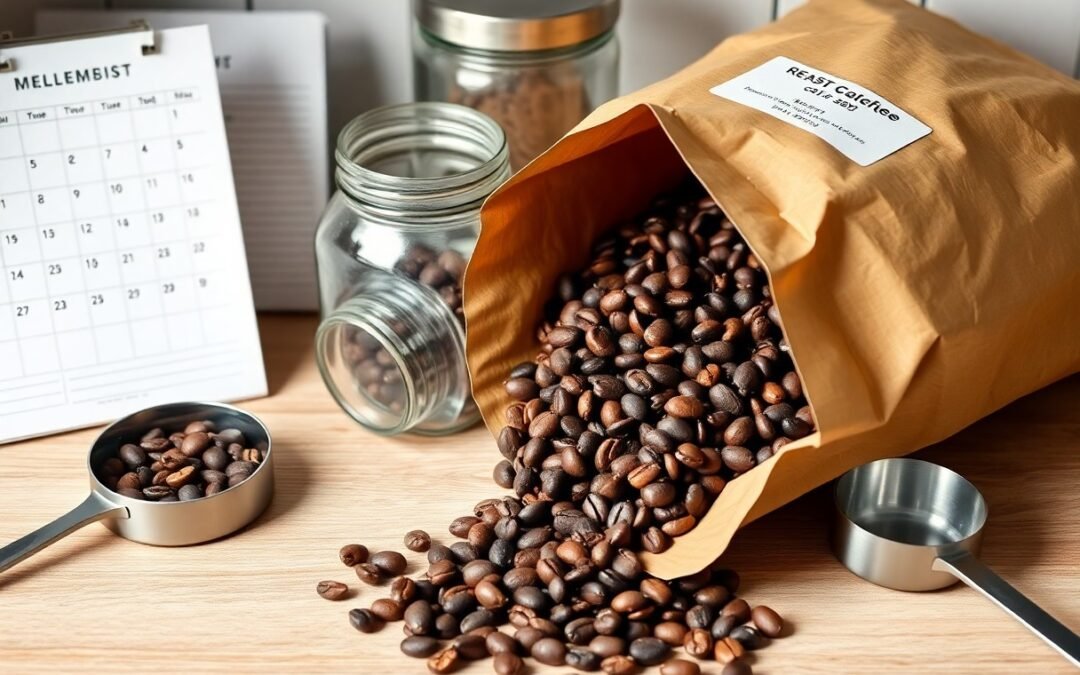
Coffee quality hinges on roast date, storage, and grind; you’ll learn how to assess freshness, extend shelf life, and select beans for reliable flavor.
Key Takeaways:
- Whole beans retain peak flavor for about two weeks after roasting; grind immediately before brewing to preserve aroma.
- Proper storage in an airtight, opaque container kept in a cool, dry place extends shelf life; avoid refrigerators and direct sunlight.
- Ground coffee loses aroma faster than whole beans and stays best for 1-2 weeks at room temperature; freeze whole beans in airtight packaging for long-term storage and thaw before opening.
Exploring Coffee Bean Types and Their Individual Shelf Lives
Beans vary by species, processing and roast, so you should expect different peak freshness windows; consult the table and follow simple storage actions to extend flavor.
| Arabica (whole) | Peak: 2-4 weeks after roast; best stored airtight |
| Robusta (whole) | Peak: 2-6 weeks; denser beans, slower flavor loss |
| Dark roast | Peak: 1-3 weeks; degasses and loses aromatics faster |
| Decaffeinated | Peak: 1-3 weeks; processing can shorten optimal window |
| Green (unroasted) | Peak: 6-12+ months if cool, dry and sealed |
- Keep beans whole and sealed in an opaque container.
- Store in a cool, dry spot away from sunlight.
- Avoid refrigerating; temperature swings speed staling.
Any storage misstep shortens those windows, so you should prioritize airtight containers and cool, dark storage to preserve peak flavor.
Structural Differences Between Arabica and Robusta
You can see Arabica beans are flatter and contain more natural sugars and acids, which yield nuanced flavors but give a narrower optimal freshness window, while Robusta beans are rounder, denser and higher in caffeine, so you can expect a slightly longer acceptable shelf life when stored correctly.
How Roast Profiles Influence the Degassing Process
Roasts alter cell structure and oil distribution, so darker profiles create more microfractures and release CO2 faster; you should allow dark roasts a short rest before brewing and consume them sooner than lighter roasts to enjoy peak aroma.
Fresh degassing affects extraction and aroma, so you should time grinding and brewing to the roast: lighter roasts benefit from shorter rest to preserve volatiles, while darker beans often need a few days’ rest and airtight storage afterward to slow further gas loss.
Pros and Cons of Modern Coffee Storage Techniques
You should weigh convenience against actual freshness when choosing storage methods, since some methods mask staling while others genuinely preserve oils and aromatics.
Many techniques offer trade-offs between accessibility and long-term protection, so pick what fits your brewing frequency and storage conditions.
Modern Storage Techniques: Pros and Cons
| Pros | Cons |
|---|---|
| Blocks oxygen and light, preserving flavor | Requires periodic opening, allowing air exchange |
| Allows degassing without oxygen ingress | Becomes less effective once opened and is not resealable |
| Removes most air for long-term storage | Can crush beans and strip fragile aromatics |
| Displaces oxygen to slow staling | Needs equipment and is impractical at home |
| Reduces temperature-driven degradation short-term | Risk of condensation and flavor contamination |
| Extends shelf life when portioned and sealed | Freeze-thaw cycles can cause moisture damage |
| Blocks light to protect oils | Does not prevent oxygen exposure unless airtight |
| Convenient and portable for daily use | Poor barrier for long-term air and moisture protection |
Airtight Canisters vs. Original Valved Packaging
Compare airtight canisters and original valved bags by how often you open them and how quickly you consume the beans, since frequent access favors canisters and single-batch use favors valved packaging.
Canisters shield beans from light and oxygen but require proper sealing, while valved bags let gases escape without letting air in and work well if you keep beans in their original portioned bags.
The Debate Over Freezing: Preservation vs. Condensation
Freezing slows chemical reactions and can extend bean life if you divide beans into ready-to-use portions and seal them airtight before freezing.
Sealing each portion individually limits thaw cycles, which reduces the chance that you’ll introduce moisture or odors when you remove a portion for use.
Condensation forms when frozen beans meet warm air, so you should thaw beans sealed and avoid refreezing to prevent moisture-driven staling or mold risk.
Step-by-Step Instructions for Verifying Bean Vitality
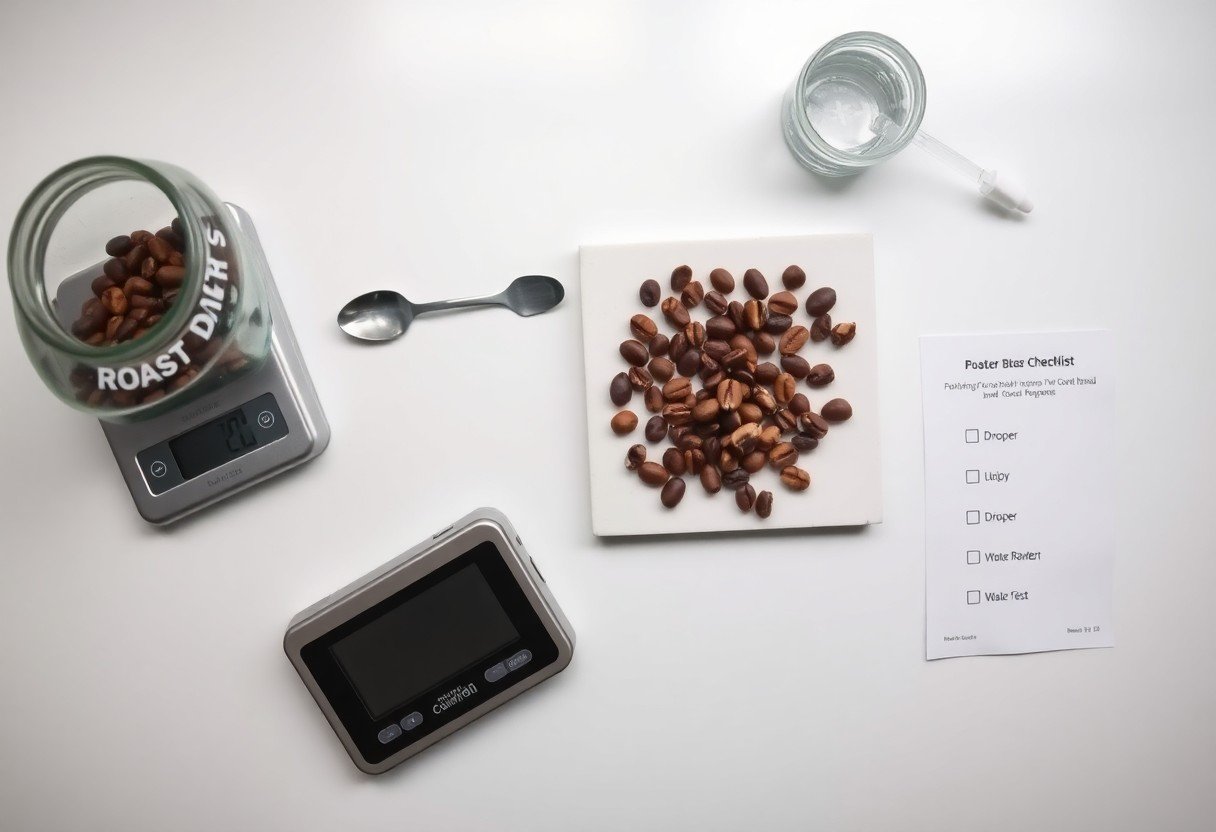
Use this practical sequence to test beans quickly, focusing on aroma, appearance, and simple home checks you can perform to judge freshness.
Follow the table below for step labels and expected results so you can assess bean condition at a glance.
Step Checklist
| Visual Inspection | You check color, surface oil, and uniformity; odd spots or extreme oiliness can signal age or poor storage. |
| Aroma Sniff | You smell whole beans for intensity and complexity; musty or cardboard notes indicate staleness. |
| Ziploc Gas Test | You place grounds in a sealed bag for several hours; puffing suggests active degassing and recent roast. |
| Grind & Bloom | You grind and observe bloom during preinfusion; vigorous bloom points to fresher beans. |
| Brew Taste | You taste for brightness, clarity, and off-flavors during a controlled brew to confirm freshness. |
| Storage Check | You verify roast date and packaging; long storage or poor sealing reduces quality. |
Performing the Ziploc Bag Gas Test
Place 10-15 grams of whole beans or a tablespoon of grounds into a clean Ziploc bag, seal it partially, and leave it at room temperature for 8-12 hours so you can detect trapped gases.
Observe the bag for swelling and smell through the seal; if the bag puffs and you notice a strong coffee aroma, the roast is recent, while a flat bag with faint scent suggests older beans.
Evaluating Freshness Through the Brewing Bloom
Pour a controlled amount of hot water over a medium-fine grind and watch the bloom rise; vigorous, foamy expansion shows active degassing you can use as a freshness indicator.
If the bloom is slow or minimal, you should suspect older beans and try adjusting grind size, water temperature, or dose to see if extraction improves.
Taste the first pours and note how you perceive acidity and aroma-brighter acidity and lively aromatics during bloom-linked pours often indicate fresher beans, while flat flavors point to age-related decline.
Professional Tips for Maintaining Peak Flavor
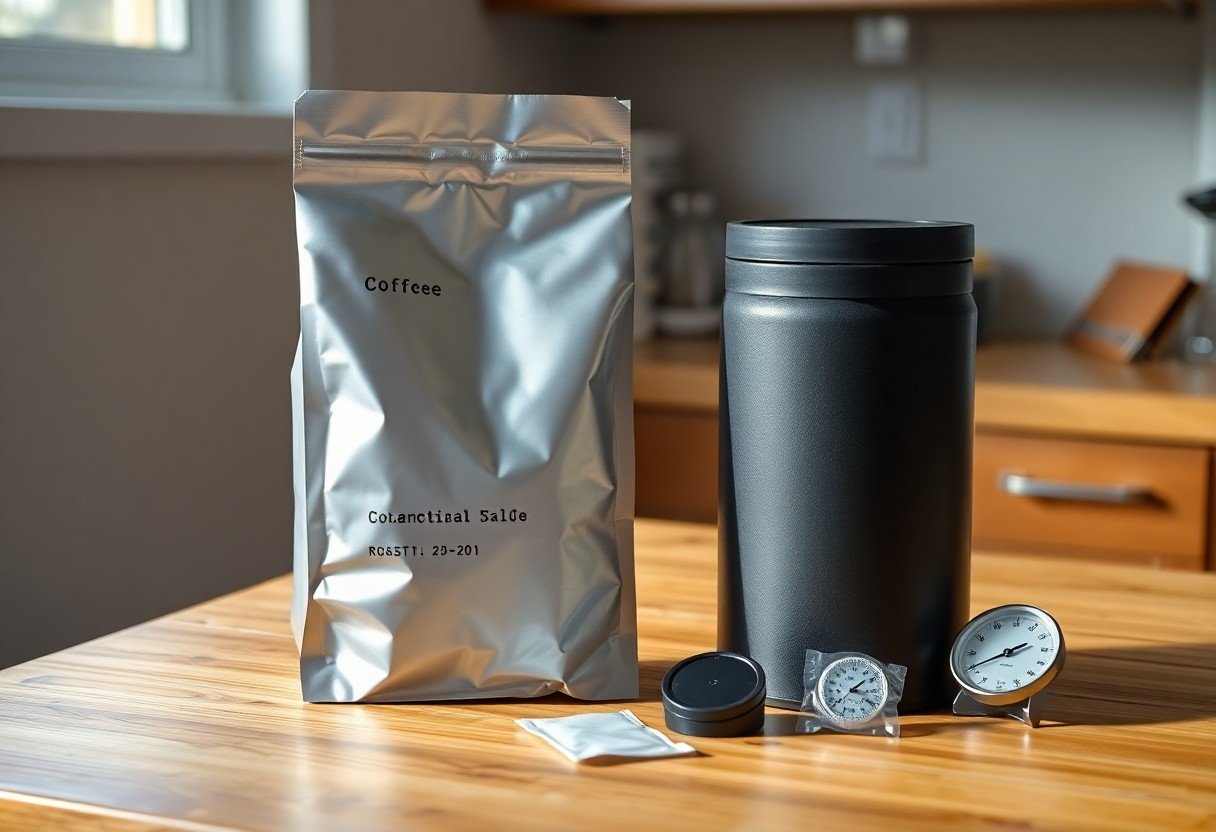
You should store whole beans in opaque, airtight containers at cool, stable temperatures and away from direct light to keep oils and aromatics intact.
- Store beans in small, sealed containers to limit oxygen exposure.
- Purchase amounts you will finish within two to four weeks to keep stock fresh.
- Keep beans dry and out of heat; avoid the fridge and freezer for daily-use coffee.
Strategic Purchasing Based on Consumption Rates
Plan purchases to match how many grams you brew weekly so you buy only what you’ll use before flavor declines, and consider smaller bags or frequent deliveries if you drink a lot.
Grinding Protocols to Prevent Rapid Oxidation
Grind immediately before brewing with a quality burr grinder to reduce uneven particles and limit surface-area exposure that accelerates oxidation.
Assume that you grind only the beans needed for each brew, measure by weight to minimize waste, and set grind size to the brew method to slow flavor loss.
Final Words
Now you have the key practices to preserve coffee bean freshness and shelf life: buy whole beans with a clear roast date, store them in an airtight, opaque container in a cool, dry spot, and grind only before brewing. You should consume freshly roasted beans within two to four weeks for peak flavor, freeze only excess in truly sealed bags and avoid repeated temperature changes, and rely on aroma and taste to discard stale beans.
FAQ
Q: What factors determine coffee bean freshness and how long do beans stay fresh?
A: Freshness depends on roast date, roast level, grind size, storage conditions, and bean origin. Whole roasted beans typically peak in flavor between 7 and 21 days after roast and remain good for 2-4 weeks under proper storage; they can still be brewed for months but with diminished complexity. Pre-ground coffee loses aroma very quickly, with noticeable degradation within minutes to hours and best use within 1-2 weeks if stored airtight. Green (unroasted) beans store longest, often 6-12 months when kept cool, dry, and away from light.
Q: How do I read roast dates and why do they matter?
A: Roast dates tell you when beans left the roaster and provide an objective starting point for freshness. Bags labeled with a roast date let you plan usage around the peak-flavor window; “best by” dates often reflect safety or retailer estimation rather than flavor. Buy beans with a clear roast date from roasters that list it openly to get predictable taste and avoid guessing how old a bag really is.
Q: What is the best way to store coffee beans at home?
A: Store beans in an airtight, opaque container at room temperature in a cool, dry place away from sunlight and heat sources. Keep beans in their original bag with a one-way valve until the bag is opened, then transfer small daily-use amounts to your container and leave the rest sealed. Avoid keeping coffee in the refrigerator because temperature swings introduce moisture and odors; use the freezer only for long-term storage in portioned, airtight packaging.
Q: Can I freeze coffee beans, and how should I do it correctly?
A: Freezing works for long-term preservation when you plan to store beans longer than two weeks. Divide beans into small, airtight, moisture-proof bags or containers, remove excess air, freeze once, and thaw a portion fully before opening to prevent condensation. Do not repeatedly remove and return the same bag to the freezer; portioning prevents multiple freeze-thaw cycles that accelerate staling.
Q: How does grind size and timing affect shelf life and flavor?
A: Grinding increases surface area, accelerating oxidation and aroma loss, so ground coffee goes stale much faster than whole beans. Grind immediately before brewing for the best flavor; match grind size to your brew method to preserve extraction quality. If you must store grounds, keep them in a small, airtight container and use them within days rather than weeks.
Q: How can I tell if coffee is stale or rancid?
A: Stale coffee smells flat, lacks complexity, and tastes dull or muted; rancid coffee emits sour, soapy, or chemical off-odors and produces unpleasant flavors. Oily sheen on dark-roast beans indicates surface oils that can accelerate staling, but oiliness alone is not proof of rancidity. Brew a small sample to check aroma and taste before using large quantities in recipes or commercial service.
Q: Does roast level affect how long beans stay fresh?
A: Roast level influences aging behavior: darker roasts tend to show flavor degradation sooner because higher-temperature roasting opens the bean structure and brings oils to the surface. Light and medium roasts are denser and can retain delicate aromatics slightly longer, though proper storage matters more than roast level alone. Choose darker roasts for near-term use and plan to consume them sooner when you want peak flavor.