
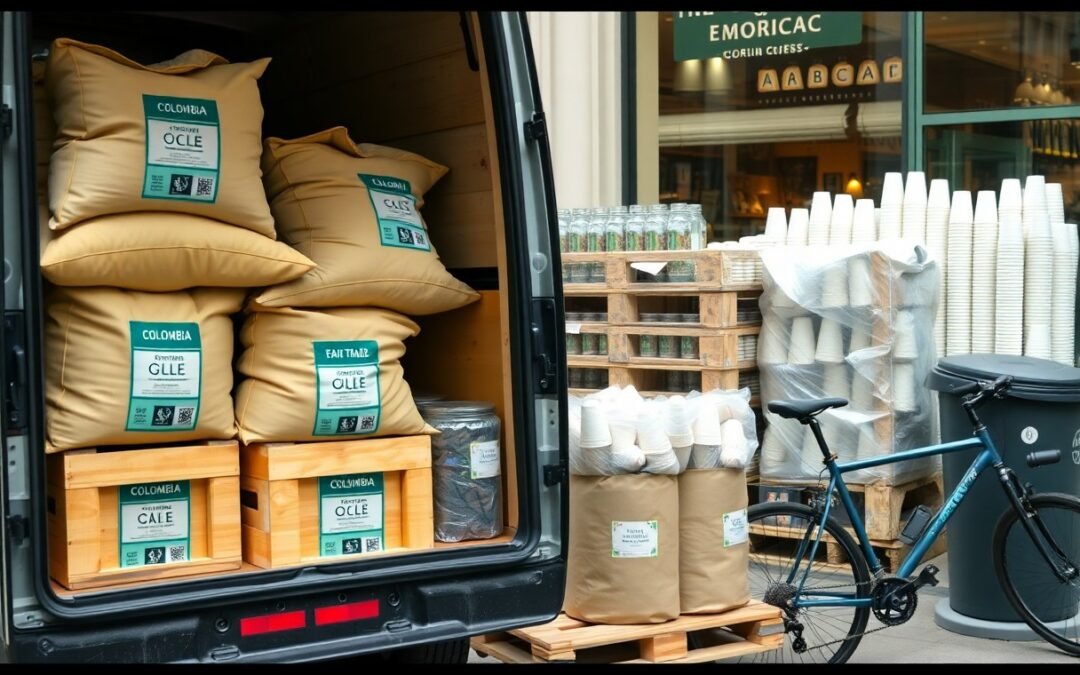
With lower overhead and flexible routes, an itinerant coffee van can cut resource use and local travel emissions. You should compare sourcing, energy sources, waste handling, and durability to determine if it truly outshines an artisanal café.
Key Takeaways:
- Coffee vans can produce lower per-cup emissions and waste when they use efficient equipment, renewable power options, and single-purpose menus that minimize energy and inventory needs.
- Artisanal cafés can reduce lifecycle impacts through durable fixtures, on-site waste management, bulk sourcing, and economies of scale that vans usually cannot match.
- Regulation, supply-chain transparency, and customer behavior determine which model performs better in sustainability; policy incentives and clear reporting tip the balance more than mobility alone.
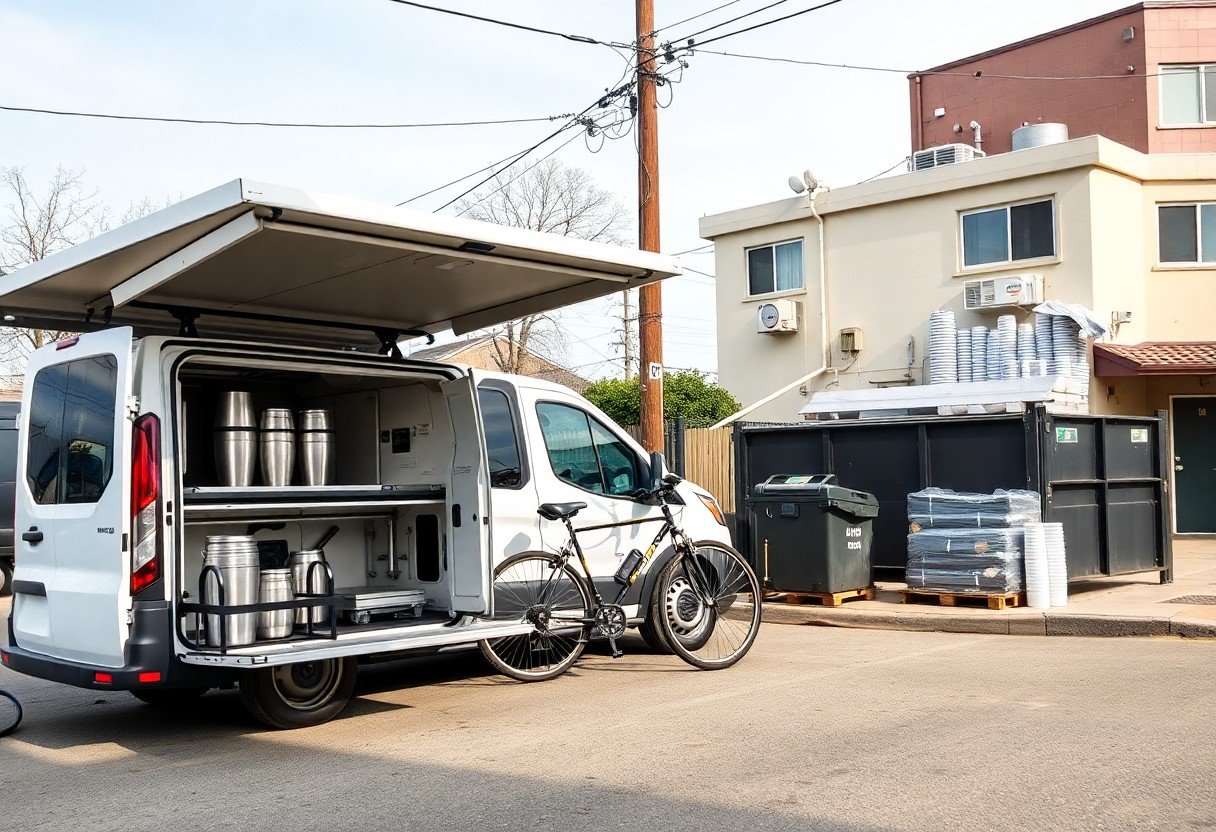
Operational Carbon Footprints: Mobility vs. Infrastructure
You will find itinerant vans often have lower embodied emissions than fixed cafés, yet their operational carbon rises with distance, idling, and frequent relocations, so you must weigh construction savings against ongoing fuel use.
Comparisons should include service hours, customer density, and the electricity grid’s carbon intensity so you can determine whether mobility’s transport emissions outweigh a storefront’s continuous energy demand.
Vehicle emissions and the transition to electric fleets
Electric vans cut tailpipe CO2, but you should account for grid mix, charging efficiency, and battery lifecycle impacts to assess true fleet sustainability.
Energy demands of climate control and lighting in fixed storefronts
Fixed storefronts carry steady HVAC and lighting loads that raise per-cup energy footprints during slow periods unless you deploy smart scheduling and efficient equipment.
Heating, cooling, and ventilation dominate café energy use, so you should prioritize heat-pump upgrades, zoning controls, and daylighting while monitoring consumption to reduce operational carbon.
Waste Stream Management and Packaging Solutions
You can reduce waste by separating streams at the van or café, installing labeled bins for compost, recyclables and landfill, and training staff to sort quickly during peak service.
Operators, you should choose truly compostable packaging only where municipal systems accept it, favor clear recyclable materials, and label items so customers discard correctly.
Challenges of single-use culture in itinerant service
Single-use cups and lids simplify service but force you to manage high contamination, bulky waste at events, and dependence on inconsistent disposal infrastructure.
Implementing circularity and reusable systems in permanent locations
Fixed locations let you implement return schemes, deposit incentives and onsite dishwashing so you can run reusable cup loops efficiently across shifts.
Operational changes help you add storage, staff cleaning protocols and digital tracking for returns, reducing per-serving footprint while normalizing reuse among customers.
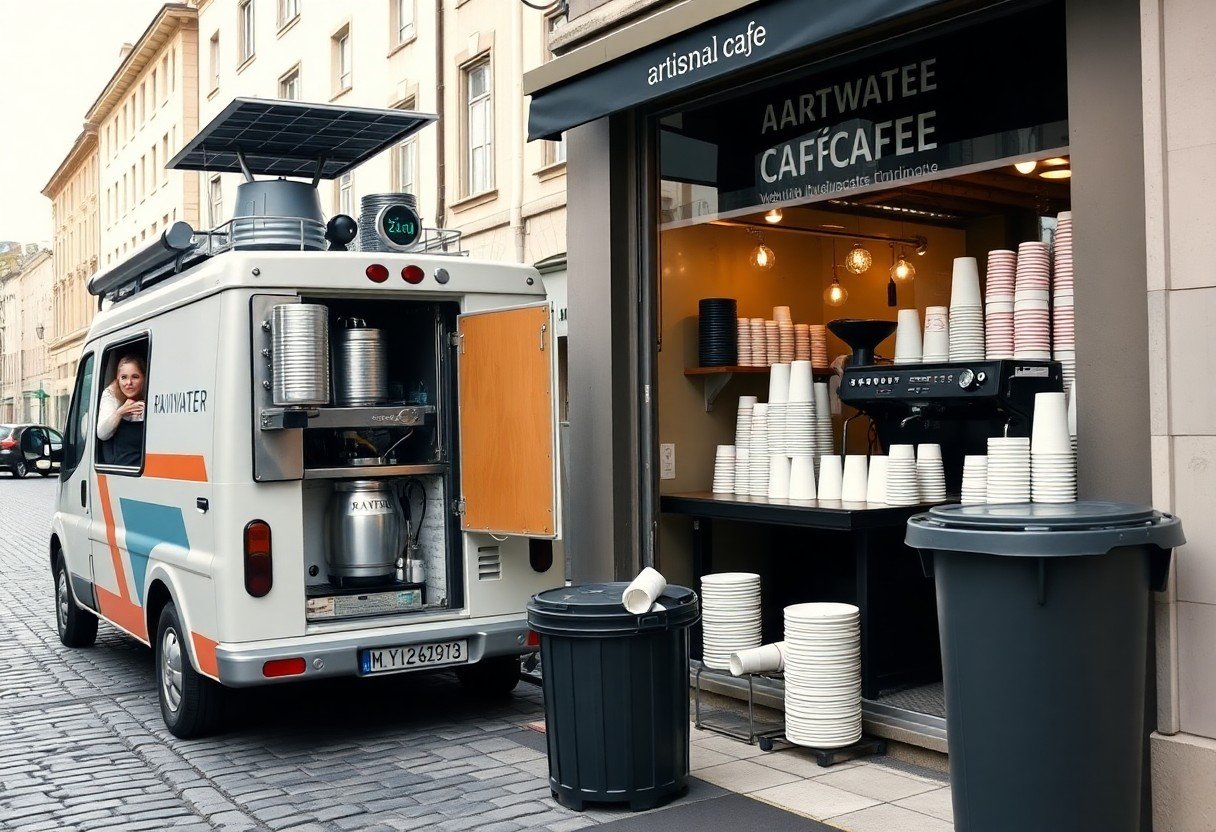
Water Stewardship and Resource Efficiency
You should prioritize metered tracking and scheduled reuse of rinse water so your van minimizes freshwater hauling and reduces trips for refills.
With compact filtration and on-demand heating, you can cut per-cup water waste and lower energy for water treatment on the move.
Conservation strategies within limited mobile tank capacities
On a mobile service, you must balance customer flow against tank limits by batching tasks, reusing greywater where regulations allow, and prioritizing low-water beverage options.
Smart scheduling of peak hours and compact recirculation pumps lets you extend periods between fills and keeps your operation predictable for resource planning.
High-volume consumption and wastewater management in commercial plumbing
Commercial cafés force you to design plumbing that handles continuous demand, using high-capacity boilers, compliant drainage, and redundant supply lines to prevent service interruptions.
Wastewater from busy outlets obliges you to implement grease traps, oil separators, and monitoring to avoid blockages or fines while protecting downstream infrastructure.
Investing in on-site pre-treatment and smart sensor networks helps you anticipate peaks, reduce pollutant loads, and align with municipal discharge permits for larger venues.
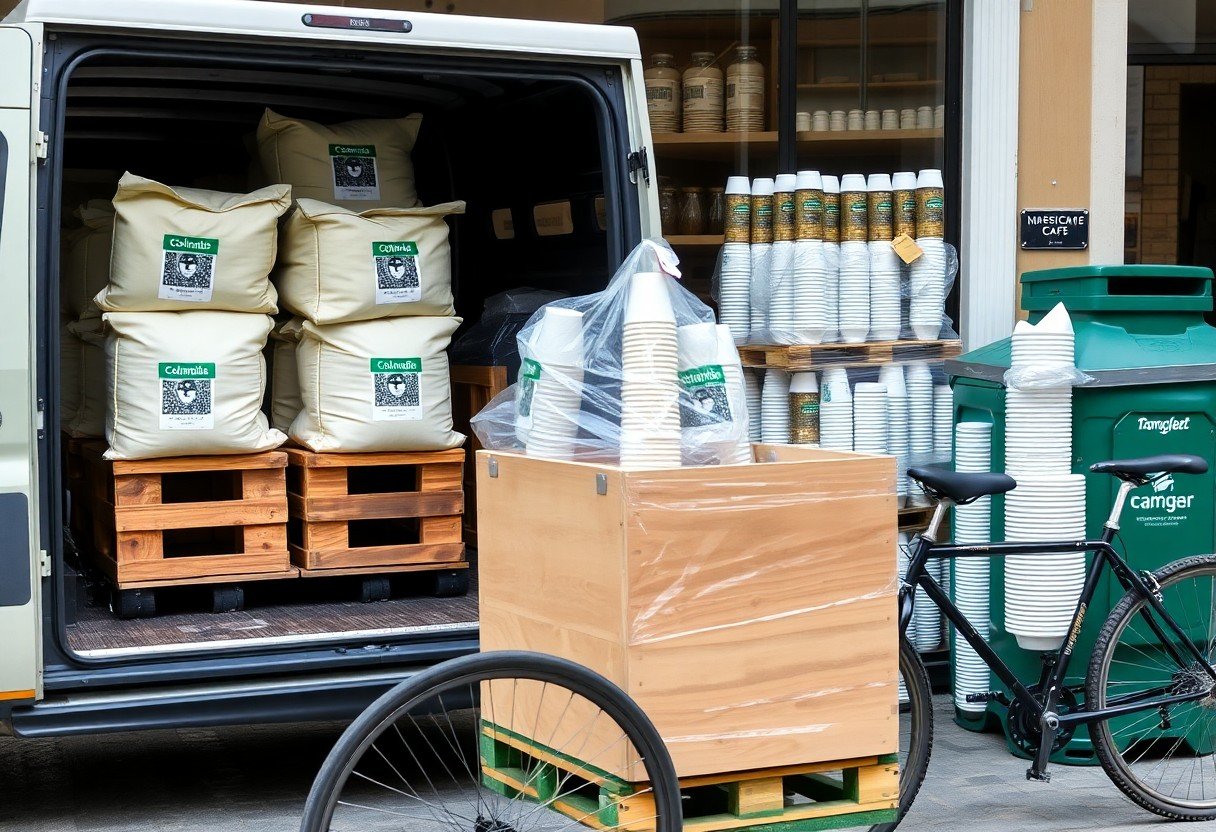
Supply Chain Integrity and Ethical Sourcing
Supply chain audits are often tailored to brick-and-mortar cafés, yet you can adapt core practices for a van through batch tracking, supplier invoices, and clear roast-date labeling. Shorter purchase paths can cut emissions and reduce middlemen, but you must maintain cold-chain and storage practices so ethical claims remain credible.
Traceability relies on consistent documentation and visible certifications, so you should log lot IDs and supplier agreements and share origin details with customers. Open-source traceability apps and QR labels let you match the transparency shoppers expect from artisanal cafés without heavy infrastructure.
Transparency hurdles for small-scale mobile vendors
Small mobile setups often confront irregular sourcing schedules and limited digital capacity, making it harder for you to produce continuous origin records. Building simple mobile-friendly records, written supplier commitments, and occasional third-party verification will help you win customer trust despite constrained resources.
Leveraging bulk procurement for direct trade and fair wages
Bulk purchasing opens access to direct-trade contracts and price premiums that support higher farm incomes, though your van’s individual volume may be too low. Forming partnerships with local roasters or a cluster of vendors lets you aggregate orders so you can claim responsible sourcing and fair wages.
Cooperatives and buying groups enable you to share shipping, split certification costs, and reach minimum volumes for direct contracts; you should evaluate governance, quality control, and payment flows to ensure premiums actually reach producers and improve livelihoods.
Socio-Economic Sustainability and Community Impact
You can see itinerant coffee vans redistribute spending power by unlocking new points of sale and reducing barriers for specialty roasters to enter underserved zones, shifting where and how local economies capture value.
Mobile operations let you test demand with minimal capital, redirecting profits into local supply chains and short-term events that stimulate small-business activity without the risk of long-term leases.
Expanding specialty coffee accessibility through geographic flexibility
Cafés on wheels bring specialty beans to places you would otherwise not find high-quality coffee, giving you access to direct-trade offerings and seasonal profiles outside urban cores.
Serving corporate campuses, transit hubs, and community events allows you to create touchpoints that convert occasional consumers into regular supporters of ethical sourcing and premium roasters.
The permanent café as a localized economic and social anchor
Permanent cafés provide steady employment and a predictable revenue base you can rely on to support long-term partnerships with local suppliers and farmers.
Neighborhood hubs let you host meetings, training, and cultural programming that attract regular foot traffic and distribute economic benefits across nearby businesses.
Workers and owners in fixed cafés often develop mentorship paths and procurement practices you can engage with to broaden supplier diversity and strengthen local hiring pipelines.
Technological Innovations for Greener Brewing
Technologies like efficient boilers, water-recycling group heads, and IoT controllers cut energy and waste, letting you compare mobile and boutique footprints. You can track emissions and optimize operations, making sustainability measurable rather than aspirational.
Off-grid solar integration for mobile espresso units
Solar arrays and lithium batteries let you run grinders, pumps and compact espresso boilers without idling a generator, so you can serve remote sites with near-zero fossil fuel use. You should size panels to demand and include smart inverters to prioritize critical loads during service.
Smart energy monitoring and high-efficiency roasting in boutiques
Sensors and cloud dashboards show you real-time draw for grinders, brewers and roasters, enabling schedule shifts and demand-response that cut peak consumption. You can set alerts to avoid phantom loads and validate savings for certifications.
Roasters with heat-recovery systems, insulated chambers and variable-speed fans reduce fuel use per kilogram while maintaining profile control, and you can batch roast during off-peak hours to benefit from lower grid emissions. Data-driven roasting also gives you traceable metrics to demonstrate boutique sustainability to customers.
Summing up
With these considerations you can determine that an itinerant coffee van can outshine an artisanal café in sustainability when you prioritize local sourcing, low-emission transport, efficient equipment, and reusable-cup practices, but a café can match or exceed those gains through fixed-energy solutions, bulk purchasing, and comprehensive waste systems. You should compare scale, supply chains, and customer habits to decide which model best meets your sustainability goals.
FAQ
Q: What sustainability advantages can an itinerant coffee van offer compared to an artisanal café?
A: The itinerant coffee van can reduce physical infrastructure and energy tied to a fixed building, lowering embodied carbon from construction and ongoing heating, cooling, and lighting. Smaller size enables easier adoption of renewable energy such as roof-mounted solar and smaller battery systems, and mobility lets operators follow local demand to cut delivery mileage when designed carefully. Mobile service models can promote local sourcing and on-site waste reduction tactics like offering discounts for reusable cups. Trade-offs include limited storage, constrained equipment choices, and stricter health-code logistics.
Q: How do vehicle emissions affect a van’s sustainability profile and how can they be minimized?
A: Vehicle emissions form a significant portion of an itinerant van’s lifecycle impact when fossil-fuel vehicles are used. Switching to an electric van reduces operational tailpipe emissions and, when charged from low-carbon electricity, cuts lifecycle CO2 per cup substantially. Route planning that minimizes empty miles, consolidation of service stops, and regular vehicle maintenance lower fuel or energy use. Charging with on-site solar plus battery storage further reduces grid dependence and peak-demand emissions.
Q: Can a coffee van realistically manage packaging and food-waste better than a café?
A: A van can target low-waste operations by prioritizing reusable cup programs, offering incentives for returns, and using durable serviceware when local rules allow. Compostable cups and single-use alternatives reduce visible waste but require compatible industrial composting to avoid contamination in landfill streams. Onboard waste separation, compacting systems, and partnerships with local composting or municipal waste services help manage waste; limited space and water for rinsing can constrain in-van washing and contamination control compared with cafés that have larger back-of-house facilities.
Q: How does bean sourcing and supply chain affect sustainability for vans versus cafés?
A: Both vans and cafés influence supply-chain impacts through roast selection, origin choices, and purchase volume. Vans can emphasize micro-batches from local roasters, direct-trade lots, or seasonal beans to shorten transport distance and highlight small suppliers. Lower order volumes may raise per-unit packaging and transport emissions, while cafés benefit from bulk purchasing efficiencies and consistent storage conditions. Collaborative buying groups or rotating partnerships with local roasters help vans access better sustainability terms without large storage footprints.
Q: What water, sanitation, and food-safety challenges do vans face and what are low-impact solutions?
A: Vans operate with limited fresh-water tanks and wastewater capacity, which constrains dishwashing and rinsing practices. Low-impact solutions include high-efficiency electric boilers, water-saving espresso machines, on-board greywater containment with proper disposal points, and chemical sanitizers that minimize water use. Regular permitted waste disposal routes and permits for wastewater are necessary to meet regulations while keeping environmental impacts low.
Q: Can an itinerant van scale sustainable practices to match what an established café can achieve?
A: Scaling sustainable practices faces practical limits for vans: storage for bulk reusables and compost, electrical capacity for equipment, and staff training across multiple locations. Cafés often realize economies of scale in energy-per-cup, centralized dishwashing for reusables, and waste processing through established supplier relationships. Vans can compensate by specializing in low-footprint menus, running concentrated service windows, and forming networks with fixed venues for shared dishwashing and waste facilities.
Q: What metrics and actions should a van operator use to evaluate and improve sustainability?
A: Operators should track carbon intensity per cup (including vehicle and energy use), waste per cup (by stream: landfill, recycling, compost), water use per cup, percentage of renewable energy used, and percentage of beans sourced with sustainability certifications or direct-trade terms. Effective actions include electrifying the vehicle, installing solar and battery storage, implementing a reusable cup program with small deposits, partnering with local composters, buying in cooperative volumes with other vendors, and reporting simple monthly metrics to measure progress.