
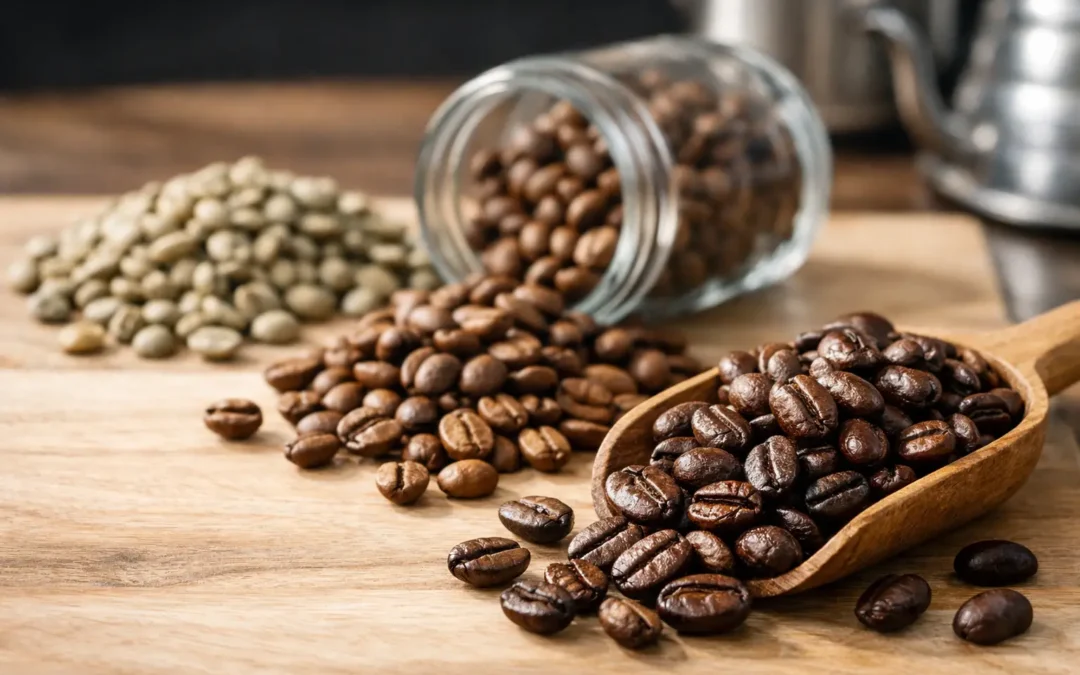
That first bag crackle when you open freshly roasted coffee is exciting, but it also raises a question a lot of people get wrong – how fresh should coffee beans be? The short answer is not straight out of the roaster, and definitely not months old. Great coffee lives in a sweet spot where the beans have had enough time to settle, but not so much time that the richest flavours have faded.
If you buy specialty beans for home, stock the office kitchen, or want every cup at an event to taste polished and consistent, freshness matters more than most people realise. It affects aroma, crema, extraction, body and balance. And while fresher usually sounds better, coffee is a bit more nuanced than that.
How fresh should coffee beans be after roasting?
Coffee beans need a short resting period after roasting. During roasting, gases build up inside the bean, especially carbon dioxide. In the first few days after roast, those gases escape quickly. If you brew too early, that excess gas can interfere with extraction, pushing water away from the grounds and making the cup taste uneven, sharp or strangely hollow.
For most specialty coffee, the ideal window starts around 5 to 10 days after roasting and can stay excellent for roughly 3 to 5 weeks, depending on the roast profile, the coffee itself and how you brew it. That is the range where many beans show the best balance of sweetness, clarity and body.
Espresso usually benefits from a little more rest than filter coffee. A bean that tastes lively and expressive as a pourover on day 6 might not settle into a smooth, syrupy espresso until day 10 or later. That is because espresso is a high-pressure method and very sensitive to trapped gas.
So if you are asking how fresh should coffee beans be, the best answer is this: fresh enough to preserve flavour, rested enough to brew properly.
Why ultra-fresh coffee is not always better
This surprises people. A bean roasted yesterday sounds premium, but yesterday’s roast is often not at its best in the cup. You might still get a big aroma hit from the bag, but brewing can be messy.
With espresso, ultra-fresh beans can produce too much crema, but not the good kind. It can look impressive at first, then disappear quickly, leaving a shot that tastes underdeveloped or unbalanced. You may also find your grinder settings seem to change day by day as the coffee degasses, which makes consistency frustrating whether you are pulling shots at home or serving a crowd.
With filter methods, brewing too soon can mute sweetness and reduce clarity. Instead of a clean cup with layered notes, you get something restless and slightly confused. That is not a fault with the coffee. It just needs time.
Freshness is not about chasing the nearest roast date at all costs. It is about catching the bean at the moment it tastes most complete.
The ideal freshness window depends on how you brew
Brewing method changes the answer. If you use a plunger, pourover, AeroPress or batch brew, many coffees start drinking beautifully within a few days of roast. They often show bright acidity, floral aromatics and a cleaner finish a bit earlier than espresso.
If you brew espresso, milk-based coffees or a stronger stovetop style, a longer rest usually pays off. Somewhere around 7 to 14 days after roast is often a very comfortable zone. The shot tends to run more evenly, the crema settles, and the cup becomes sweeter and more rounded.
Darker roasts can seem ready earlier because they are more soluble, but they also lose their peak flavours faster. Lighter roasts can need more patience, especially for espresso, yet may reward that extra time with more complexity. That is why there is no single number stamped in stone.
How long do coffee beans stay fresh?
Whole beans stay fresh far longer than ground coffee, but they are still at their best for a limited time. Once roasted, coffee starts reacting with oxygen, light, heat and moisture. Those forces slowly flatten aroma and rob the cup of its sparkle.
As a general guide, whole beans are usually at their best within the first month after roast if stored well. They can still be enjoyable after that, but the vivid top notes begin to soften. By two or three months, many specialty coffees lose the character that made them worth buying in the first place.
Ground coffee fades much faster. Once you grind, you massively increase the surface area exposed to air, so flavour loss speeds up. If possible, buy whole beans and grind only what you need just before brewing. It is one of the easiest ways to make your daily coffee taste noticeably better.
How to tell if your beans are in the sweet spot
Roast date is the clearest starting point, but your senses matter too. Good, fresh coffee smells lively when you open the bag. You should notice distinct aroma, not just a generic roasted smell. In the cup, the coffee tastes expressive and balanced, with sweetness carrying through the finish.
Beans that are too fresh can be harder to dial in, especially for espresso. Shots may gush one day and choke the next. The flavour can swing from sour to flat without much warning.
Beans that are too old often smell dull, brew with less crema, and taste papery, woody or muted. The cup loses energy. Even milk cannot fully hide stale coffee.
If you are making coffee for a workplace or event where reliability matters, this sweet spot becomes even more valuable. You want beans that perform consistently from the first cup to the last, not coffee that is still changing dramatically day to day.
Storage matters almost as much as roast date
You can buy beautifully roasted beans and still lose the magic with poor storage. The enemies are air, heat, light and moisture. Keep your coffee sealed in an airtight bag or container, stored in a cool, dry cupboard away from the oven and direct sun.
Avoid the fridge. It introduces moisture and odours, and coffee absorbs both very easily. The freezer can work for longer storage if the beans are sealed properly and portioned before freezing, but for everyday use it is usually simpler to buy in sensible amounts and use them while they are in their prime.
A good rule is to buy enough for two to four weeks, not three months. That way you keep the ritual fresh and the flavour where it should be.
How fresh should coffee beans be for home, office and events?
At home, the best coffee is usually coffee you can finish while it still tastes vibrant. That often means one or two bags at a time, not a pantry full of backups. If you brew espresso daily, look for beans that have rested for at least a week. If you brew filter, you can often start a little earlier.
For an office, consistency is everything. You want beans fresh enough to taste premium, but stable enough that staff are not fighting the grinder every morning. A well-rested bean in its peak window makes office coffee feel less like an afterthought and more like a genuine daily upgrade.
For events, freshness needs to work hand in hand with service. Coffee has to taste excellent under pressure, across dozens or hundreds of cups. That is where small-batch roasting and sensible resting shine. It is not about showing off the newest roast. It is about serving coffee that is ready, balanced and memorable. That same thinking sits behind the way Lygon Coffee approaches quality – every cup should feel polished, not rushed.
Common mistakes people make about coffee freshness
One of the biggest mistakes is assuming a roast date as close as possible is always best. Another is buying large quantities to save time, then wondering why the last half of the bag tastes flat.
People also confuse oily beans with freshness. In reality, surface oil is more about roast level and age than quality. Very dark beans can look shiny early, and older beans can become oilier over time. Shine is not a freshness badge.
Then there is pre-ground coffee. It is convenient, but if flavour matters, it is a compromise. Fresh grinding gives you better aroma, better extraction and far more control. Even a modest grinder can lift your morning cup.
The better question to ask
Instead of asking for the freshest possible beans, ask for beans that are freshly roasted and ready to brew well. That small shift changes everything. You stop chasing a date and start chasing flavour.
Coffee should feel alive in the cup – sweet, aromatic, balanced and full of character. When the beans have rested just enough and are brewed within their peak window, every sip tells a clearer story. That is the kind of freshness worth looking for.