
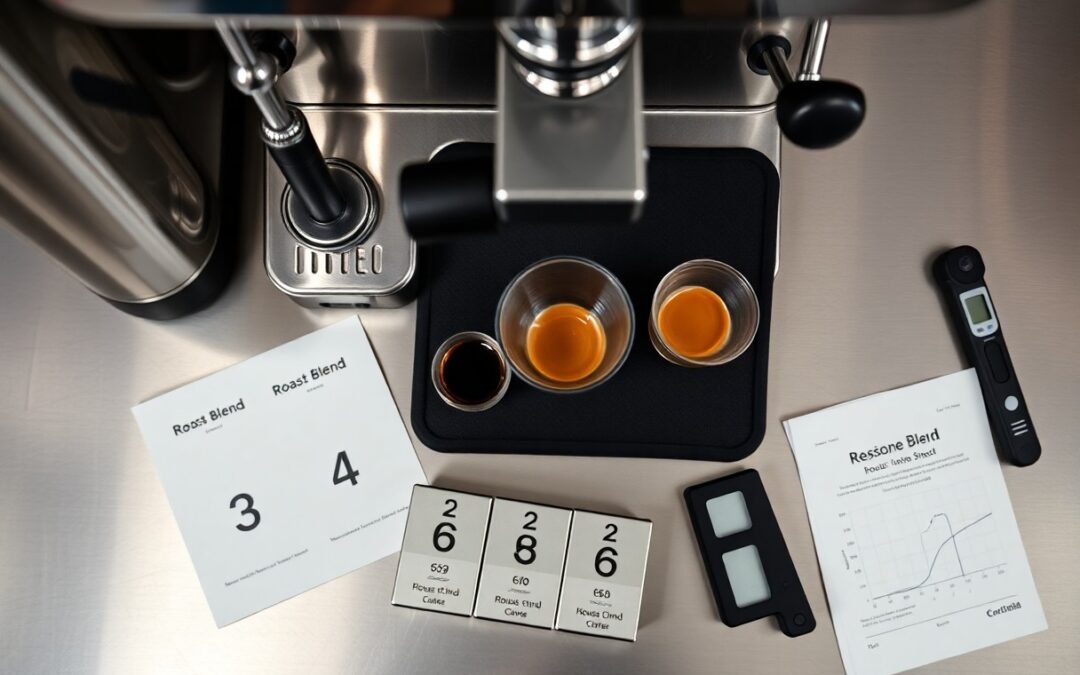
There’s a signature house blend that gives you consistent, tailored flavor, simplifies brewing across methods, and reflects your taste so you can serve a dependable cup and refine roast profiles.
Key Takeaways:
- A signature blend delivers a consistent, personal flavor profile that matches your preferences and reduces guesswork during brewing.
- Blending beans from complementary origins balances acidity, body, and aroma to create a cup you cannot buy off the shelf.
- Owning a house blend streamlines shopping and brewing, saves money over time, and makes serving guests effortless.
The Art of Flavor Balancing
Artisan blending lets you shape the overall profile of your house blend to deliver consistent taste from cup to cup. You control origin ratios and roast curve so contrasting notes resolve into a coherent signature that customers recognize and seek.
Harmonizing Acidity, Body, and Sweetness
Acidity should brighten without dominating, body gives weight, and sweetness smooths edges; you adjust roast level and proportions to find the sweet spot. You confirm success through cuppings and brew tests, tuning until the trio sings together.
Understanding Complementary Single-Origin Profiles
Single-origin components let you assign roles-one bean for structure, another for lift, a third for finish-so you build layers rather than clash. You evaluate each origin’s dominant note and decide whether it leads, supports, or fills gaps in the blend.
Experiment with small-batch trials and side-by-side cuppings so you can observe how roast and extraction shift interplay between origins; you collect tasting notes and percentages until the combination reliably produces your desired house character.
Ensuring Seasonal Consistency
Seasons will shift tasting notes across harvests, so you should build a flexible blend base that absorbs fluctuations while keeping the signature characteristics your customers expect.
You can track origin harvest windows and adjust ratios in small steps to preserve the aroma, sweetness balance, and mouthfeel that define your house blend.
Navigating Variations in Crop Availability
When a single-origin crop shortens its season, you should have pre-vetted substitute lots matched on acidity, sweetness, and body so the cup remains familiar.
Maintaining a Uniform Flavor Profile Year-Round
Blends configured with a steady base-consistent heart beans paired with rotating accent lots-help you retain core flavor while showcasing subtle seasonal notes.
Consistency requires strict cupping standards, target score sheets, and batch records so you can replicate profile goals even when lot characteristics shift.
Beyond sourcing and records, you should train roasters on profile curves, maintain a small reserve of key lots, and set narrow tolerance bands for acidity, sweetness, and body to smooth seasonal edges.
The Economic Advantages of Blending
Blending your own house mix reduces reliance on single-origin premiums and smooths out cost fluctuations, letting you balance price and profile while protecting margins as demand shifts.
Mixing allows you to scale offerings and set price tiers without sacrificing character, helping you manage inventory and introduce value options that broaden appeal without eroding profitability.
Optimizing the Use of Premium Components
Selective use of rare beans in small percentages delivers signature notes without the full price tag, so you can advertise distinct flavors while keeping per-bag costs manageable.
Rotating premium components seasonally keeps your blend fresh and limits spoilage, enabling you to buy smaller lots at better prices and reduce waste across your lineup.
Strategic Sourcing for Cost-Effective Quality
Cultivating direct relationships with producers secures more predictable pricing and access to mixed-lot deals, allowing you to maintain consistent quality without paying spot-market premiums.
Consolidating purchases across blends and roast profiles strengthens your negotiating position, so you can obtain volume discounts that lower cost per kilo while retaining flavor control.
Auditing suppliers for traceability and consistency helps you prioritize partners who deliver stable crops, reducing the need for costly substitutions and preserving your blend’s reputation.
Crafting a Unique Sensory Identity
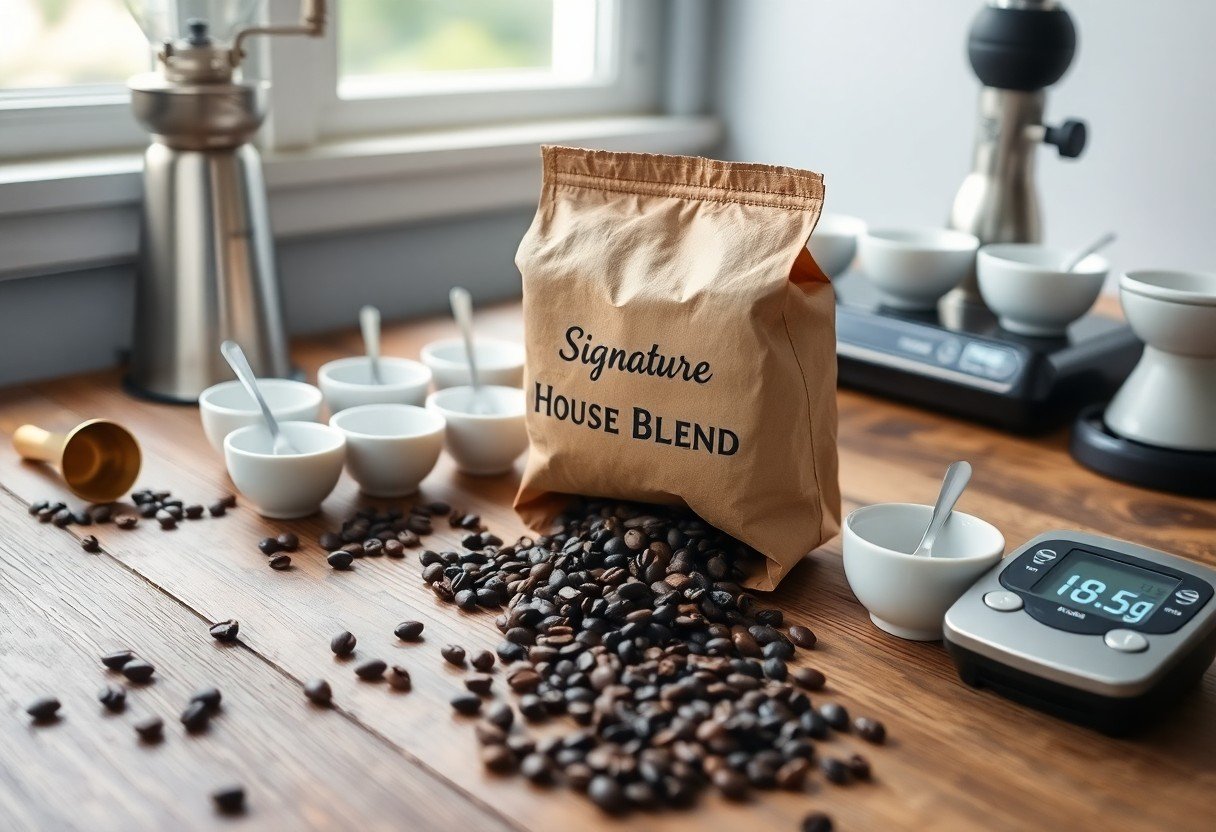
Your house blend acts as a fingerprint for your palate, letting you define preferred acidity, sweetness, and body so every cup reflects intentional choices. Consistently choosing origins, roast levels, and ratios trains you to reproduce that profile and makes tasting notes easier to compare.
Consistency in bean sourcing and roast decisions amplifies recognition of your flavor signature; when you serve the same balanced cup, people associate that taste with you and choose it again.
Developing a Personal Flavor Trademark
Experimentation with single-origin beans and deliberate blending helps you isolate hallmark notes-citrus lift, cocoa depth, or floral sweetness-that can become your trademark. Tasting side-by-side and keeping roast and grind logs accelerates your ability to produce reliable results.
Elevating the Home Brewing Experience for Guests
Guests notice the thought behind a dedicated house blend and often equate it with hospitality; serving a consistent profile turns casual sips into a recognizable ritual and sparks conversation about flavors. Sharing a brief origin note invites curiosity and makes the visit more memorable.
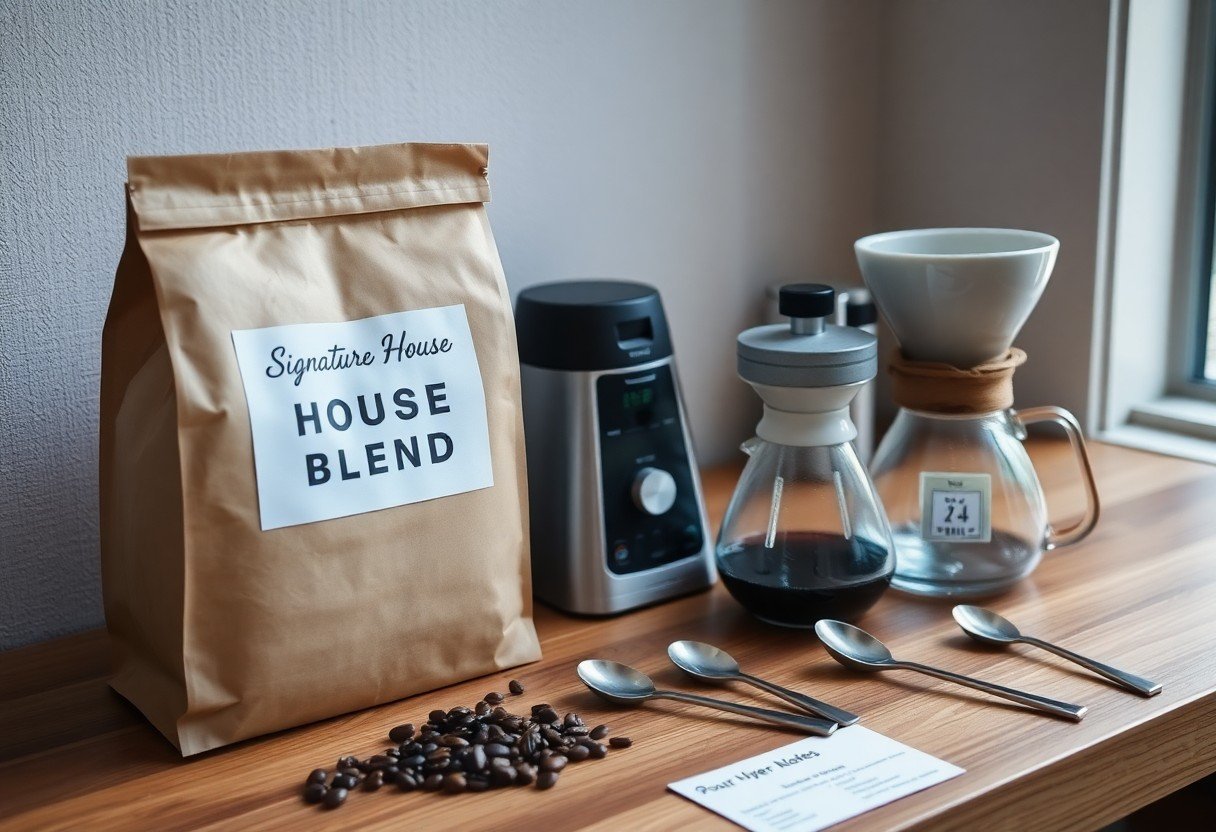
Serving clear brew ratios, recommended grind size, and concise tasting notes lets you guide guests through the cup and teach appreciation; small touches like labeled bags, timers, or tasting cards show attention and care.
Technical Mastery of the Blend
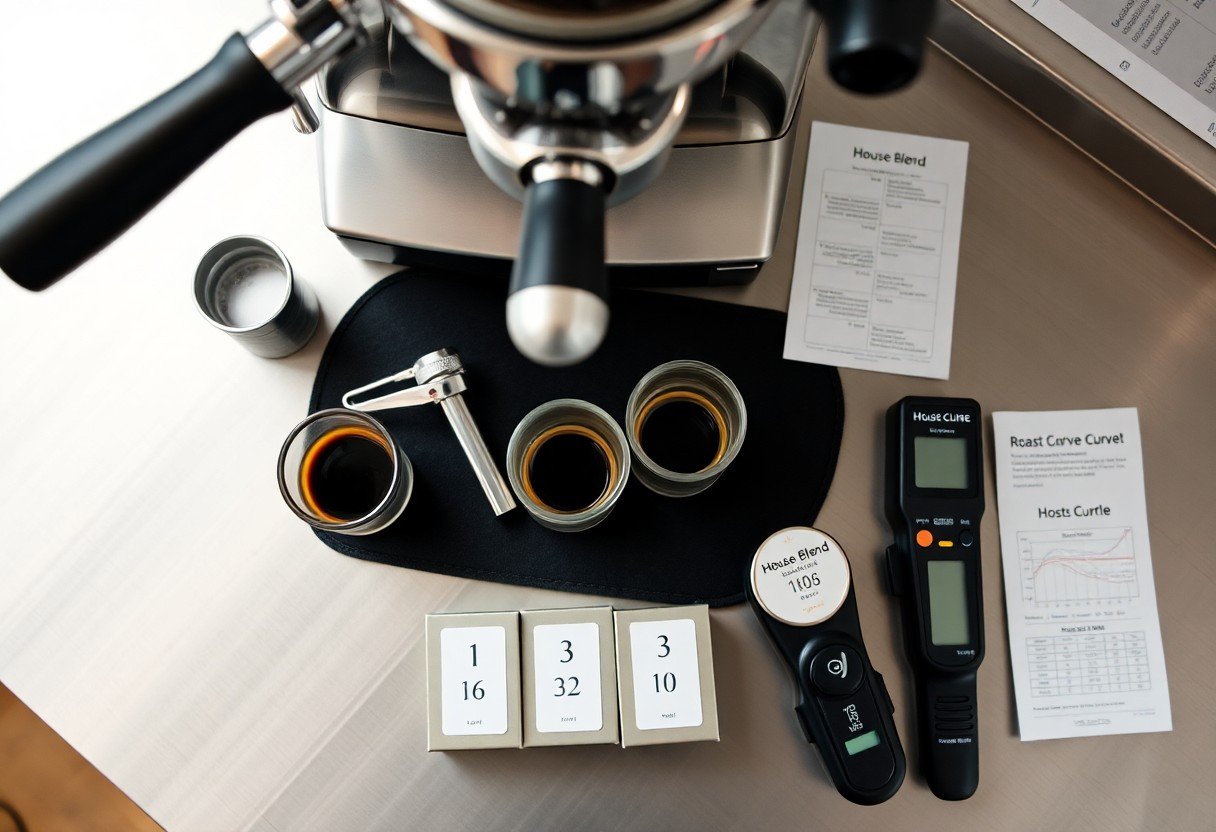
You refine roast profiles and component ratios until the blend behaves predictably across brewing methods; consistent cupping logs and roast-to-brew tracking let you isolate variables and tune sweetness, acidity, and body. Agreed measurement protocols and sample roasting keep your signature stable as you scale.
Comparing Pre-Roast and Post-Roast Techniques
Compare pre-roast and post-roast methods by focusing on control points: green bean selection, moisture, and blend percentages versus roast curve adjustments, cooling, and post-roast resting. That mindset helps you decide whether to lock in character before roast or shape it afterward.
Comparison Overview
| Pre-Roast | Post-Roast |
|---|---|
| Focus on origin, variety, and green bean quality | Focus on roast curve, development time, and cooling |
| Tools: sourcing, grading, sample blends | Tools: roaster settings, airflow, drum speed |
| Outcome: predictable baseline flavor | Outcome: texture, surface oils, and final balance |
Precision Measurement and Ratio Development
Measure everything to the gram and log ratios so you can reproduce the same cup; maintain consistent water temperature and brew time records to track how small changes affect extraction and balance.
Calibrate scales, time with a reliable stopwatch, and standardize grind distribution; track dose-to-water ratios and percent extraction to refine your recipe into a repeatable house standard.
Advanced Refinement Strategies
You refine your house blend by iterative tasting and precise record-keeping, aligning roast, grind, and ratio to desired cup clarity; consult House Blend Coffee: A Signature In Every Cup for practical starting points and reference profiles.
- Standardize cupping rounds and sampling frequency.
- Log roast curves, grind distribution, and extraction yields.
- Test micro-batches across brewing equipment and note consumer feedback.
Blend Variables & Actions
| Roast profile | Adjust in 30-60s increments and note sweetness shifts. |
| Grind distribution | Map particle sizes to extraction method and tweak for balance. |
| Origin ratio | Alter percentages to emphasize acidity, body, or sweetness. |
| Dose & yield | Calibrate to achieve target TDS and perceived strength. |
Utilizing Professional Cupping Protocols
Cupping gives you a controlled method to isolate acidity, body, and aftertaste; follow standardized grind, dose, and water temperature, score each attribute, and convert notes into actionable blend tweaks for consistency.
Adapting Blends for Diverse Extraction Methods
Experiment with roast level and particle distribution so your blend translates from espresso to filter and cold brew; you should shift proportions and roast depth to preserve core flavor traits across methods.
When you compare methods, change one variable at a time and keep a control recipe; document sensory differences and iterate proportions until the blend performs reliably on each extraction platform.
Summing up
On the whole you benefit from a signature house blend because it guarantees consistent flavor, refines your tasting skills, and simplifies daily brewing; you set a repeatable standard that represents your taste, aids hospitality, and lets you fine-tune origins and roast to suit occasions.
FAQ
Q: What exactly is a signature house blend?
A: A signature house blend is a custom coffee mix created to reflect an individual’s flavor preferences, combining specific origins, roast levels, and bean varieties. The blend aims for a consistent profile cup after cup while allowing room for subtle tweaks that match changing tastes or brewing methods. Many blends focus on balancing acidity, sweetness, body, and aroma to produce a repeatable, recognizable experience.
Q: Why should every coffee enthusiast consider having one?
A: A personal blend gives control over flavor and consistency that single-origin experimentation sometimes lacks. It sharpens tasting skills by forcing deliberate choices about proportion and roast, which deepens appreciation of how origin and processing affect the cup. A signature blend also simplifies daily brewing decisions, so enjoyment becomes both predictable and personal.
Q: How does a signature blend improve my home brewing results?
A: A tailored blend matches your preferred brew strength, grind setting, and extraction method, which reduces trial-and-error each morning. Once the blend’s characteristics are known, you can lock in grind size, dose, and brew time for repeatable results. Consistency from the beans makes it easier to troubleshoot equipment or technique when a cup varies.
Q: Can creating a house blend save money?
A: Blending lets you combine premium and more affordable beans to achieve desirable flavors at a lower average cost per pound. Buying component beans in larger quantities often reduces price and packaging waste compared with small batches of specialty blends. Controlled blending also reduces wasted beans from experiments that didn’t suit your palate.
Q: What practical steps should I follow to create my own signature blend?
A: Start by defining the flavor profile you want: bright and tea-like, chocolatey and full, or fruit-forward and complex. Choose two to three base beans that contribute complementary traits, then roast or buy them at compatible roast levels. Mix small test batches, document ratios, and cup each variation side by side until you identify the ideal balance. Scale up once the formula consistently produces the desired cup.
Q: How often should I adjust my signature blend and how do I track changes?
A: Adjustments are appropriate when your taste shifts, new beans become available, or seasonal harvests change characteristics. Keep a log with roast dates, bean origins, blend ratios, and tasting notes to track evolution over time. Make single-variable changes-alter one bean or ratio at a time-so you can identify what affects flavor most.
Q: Does having a signature blend help with ethical sourcing and traceability?
A: Building a blend encourages deliberate sourcing choices because component selection highlights origin and producer practices. Working with a few trusted roasters or direct-trade suppliers makes it easier to request provenance information and support farmers with transparent pricing. Choosing beans with clear traceability allows your blend to reflect both flavor preferences and ethical priorities.