
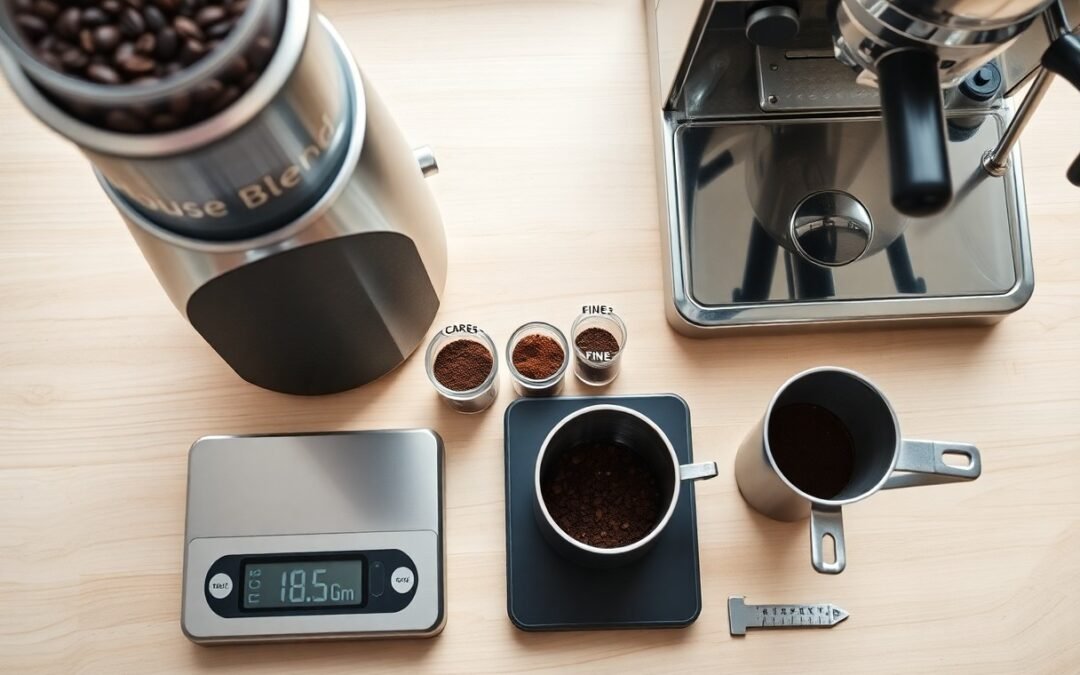
You can achieve consistent extraction by choosing the right grind size for your house blend, setting your grinder to uniform particle distribution, and testing dose and brew time until flavor balance is achieved.
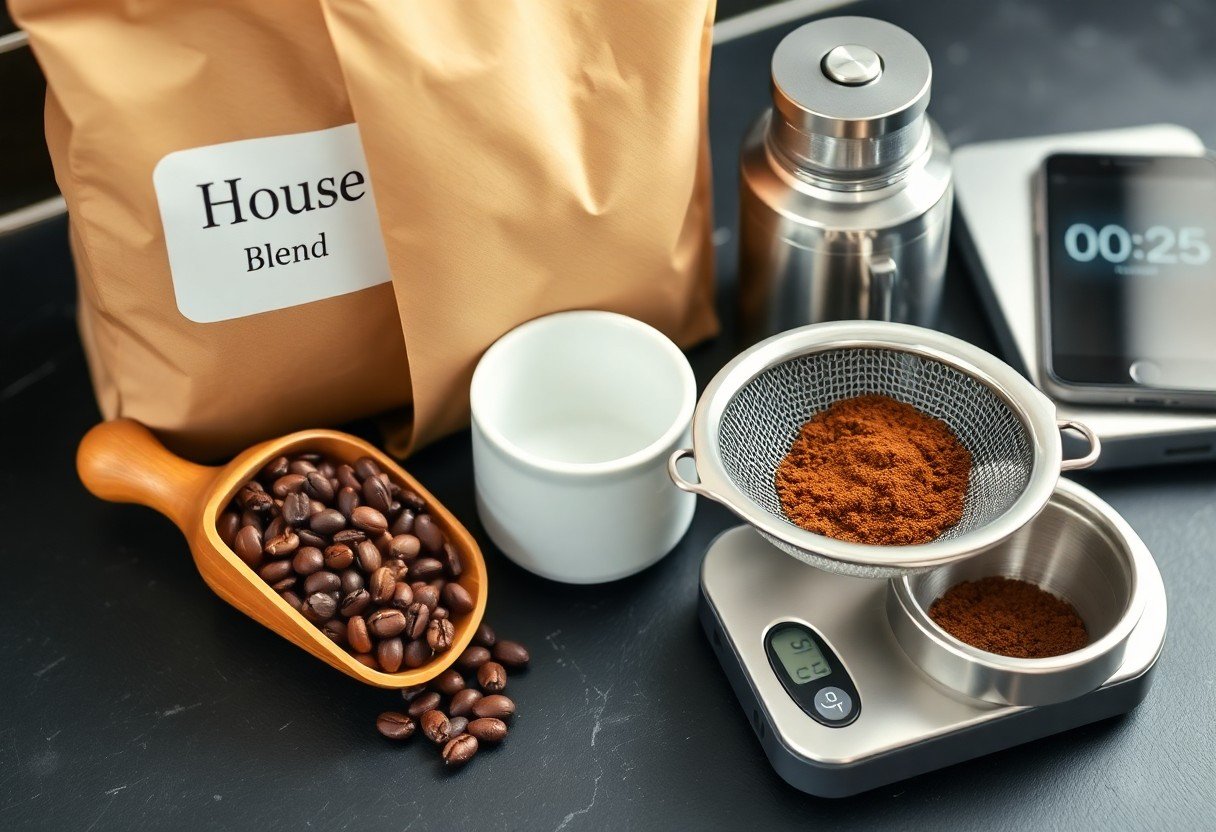
Key Takeaways:
- Use a quality burr grinder to produce uniform particle size; consistent particles yield even extraction and clearer flavor, while blade grinders create fines and boulders that cause imbalance.
- Match grind size to brew method: espresso = fine, pour-over/drip = medium, French press = coarse; adjust one notch finer for sour (under-extracted) coffee or one notch coarser for bitter (over-extracted) coffee.
- Grind immediately before brewing at the correct dose, then distribute and tamp (espresso) or level the coffee bed (pour-over) to promote even water flow and optimal extraction.
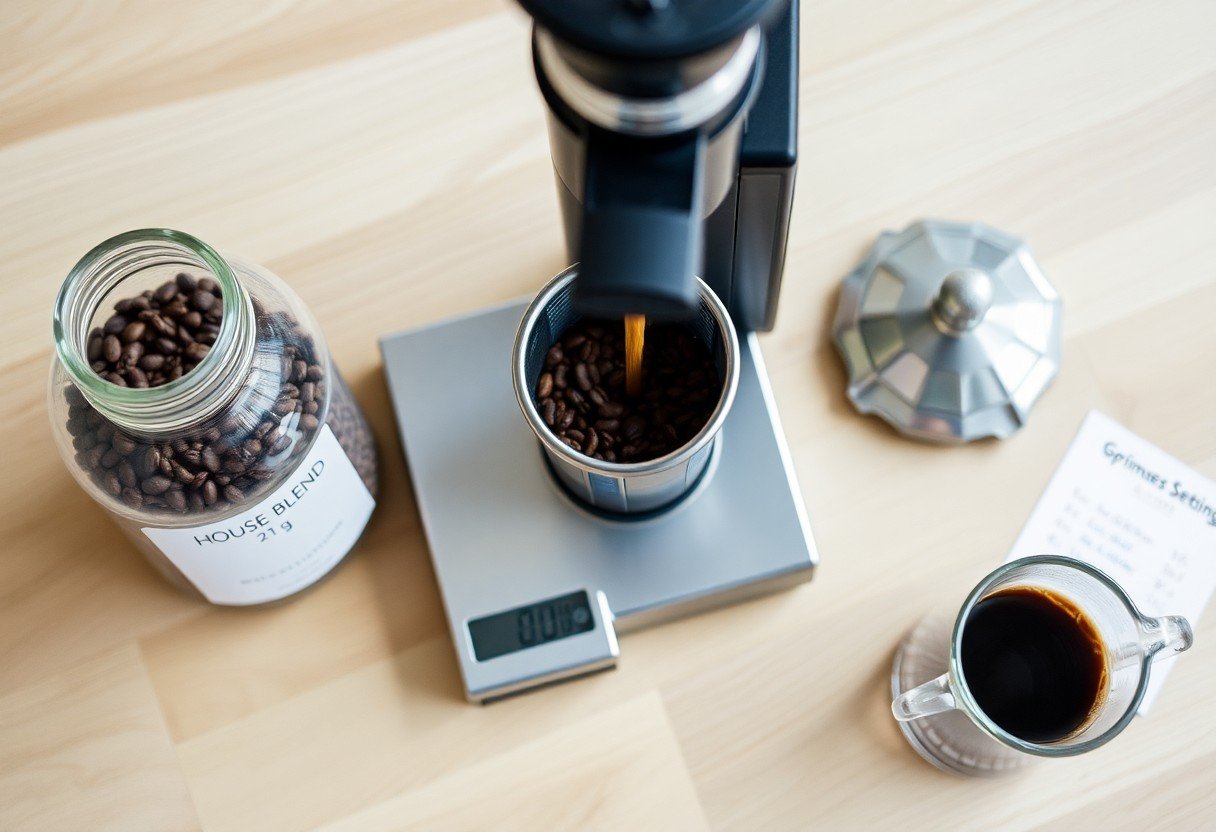
Primary Factors Influencing House Blend Extraction
You must balance grind size, dose, water temperature and contact time against bean density, roast profile and oil content to hit an even extraction. You will notice that uneven particle size or excessive fines quickly shifts extraction toward bitterness or sourness.
- Your grind size and uniformity
- Your bean density and roast level
- Your bean oil content and surface sheen
- Your dose, water temperature, and extraction time
Adjust your grinder in small, measured steps and evaluate shots by yield and taste rather than by guesswork; logging changes helps you replicate results. You can dial in extraction by tuning burr gap, dose and grind distribution.
Understanding Bean Density and Roast Profile
When you check bean density, expect lighter, denser roasts to extract more slowly and often require a finer grind or slightly higher temperature to reach proper solubles. You should compensate with increased surface area or longer contact without overdoing acidity.
Roast development alters brittleness and solubility, so you change grind settings to prevent under- or over-extraction; darker roasts typically benefit from coarser settings. You will improve consistency by logging roast-to-grind correlations.
Evaluating Oil Content for Grind Consistency
If you find oily beans, anticipate clumping, higher retention and uneven flow that force you to adjust feed speed or coarsen the grind. You can mitigate issues by cooling beans, sifting fines, and cleaning burrs more often.
Assessing oil sheen before grinding lets you choose tactics-coarser grind, shorter retention or dosing tools that prevent packing-and may prompt a grinder change to one with lower retention. You should also monitor humidity and storage practices.
Thou can extend cleaning intervals, adopt sifting or single-dose workflows, and store beans cool and dry to limit surface oils and preserve consistent grind behavior.
Selecting the Right Grinder for Smooth Results
Choosing a grinder narrows variables that affect extraction; you should prioritize grind consistency, low heat buildup, and adjustable settings to match your brewing method.
Mechanical build quality and ease of maintenance impact long-term flavor stability; you should favor sealed hoppers, stable motors, and accessible burrs for routine cleaning.
Why Burr Grinders Surpass Blade Alternatives
Burr grinders produce uniform particle sizes so you can dial in extraction time more predictably; you’ll extract flavors evenly and avoid the uneven fines and large shards blade grinders create.
Consistency matters for smoothness, so you should look for commercial-grade burrs or well-rated home models that minimize particle variation across doses.
Calibrating Your Equipment for Precision
Set your grinder to a baseline for the brew and adjust in small steps, testing by weight and extraction time so you can clearly see the effect of each change.
Record grind settings, dose, and brew outcomes in a simple log so you can reproduce the sweet spot and detect when recalibration is needed due to bean changes or burr wear.
Inspect burrs for wear and clear trapped grounds regularly; you should replace or realign burrs per manufacturer guidance and tweak settings seasonally as humidity and bean roast change.
How-to Identify the Perfect Grind Size
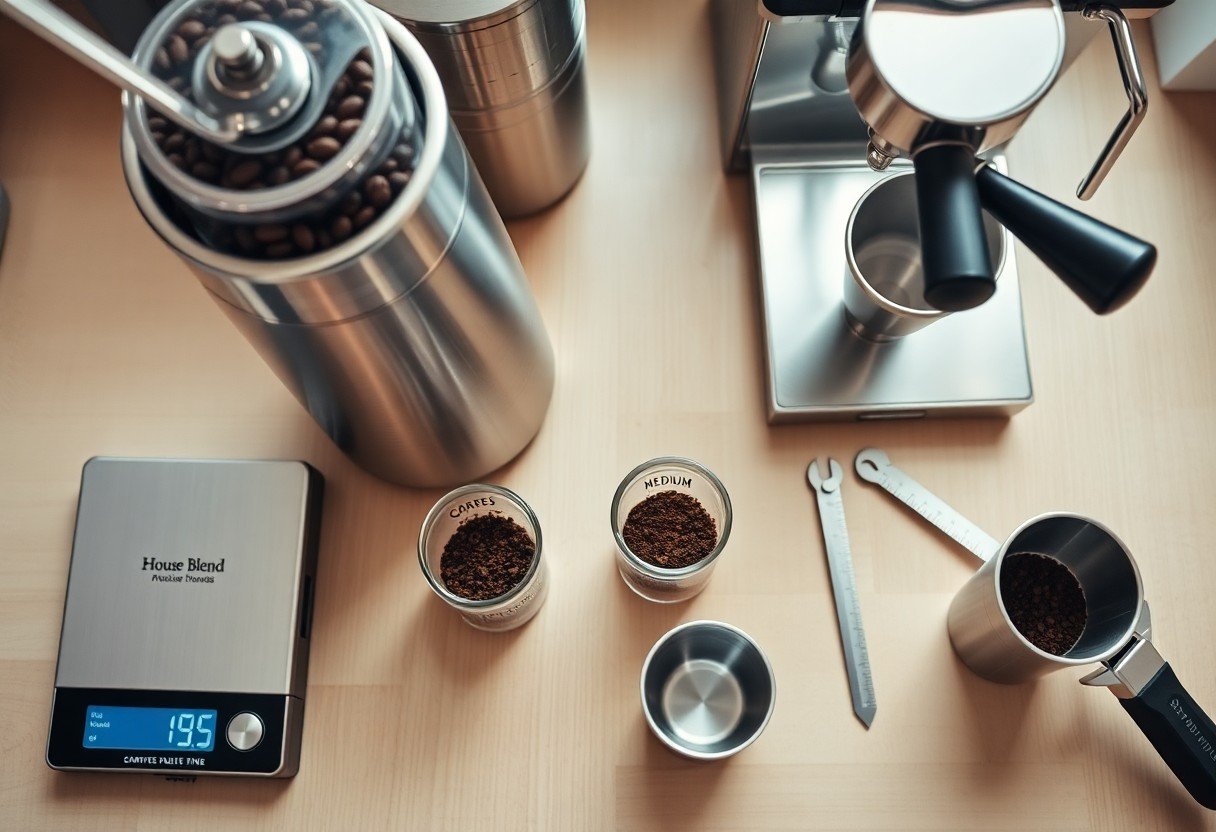
Grind size dictates extraction balance, so you should aim for a particle distribution that avoids both sour under-extraction and bitter over-extraction. Use a quality burr grinder and make incremental adjustments while keeping brew time and taste notes as your guides.
Observe changes in flow rate and flavor as you tweak settings: faster run-off with bright acidity means coarser; slow, syrupy pours with harsh bitterness mean finer. Keep a log of each change to reproduce the sweet spot.
Adjusting for Drip, Press, or Pour-Over Methods
Drip brewers work best with a medium grind, roughly the texture of coarse sand, which promotes even saturation and steady flow through the filter. You should avoid too many fines that clog and slow extraction.
Press methods require coarse, chunky grounds so you can steep cleanly and separate the brew from the bed, while pour-over prefers medium-fine for controlled extraction and clarity; adjust your burrs toward each target and taste the differences.
Utilizing the Visual and Tactile Texture Test
Look for a uniform bed of grounds without visible clumps or a dust layer; consistent color and particle size correlate with predictable extraction and fewer bitter pockets. You should inspect the grounds after each adjustment.
Feel a small pinch between finger and thumb: sandy and granular for drip, gritty and chunky for press, and slightly finer-like coarse sugar-for pour-over. You can gauge the amount of fines that will cloud the cup.
Compare your grounds to method benchmarks and make single-step changes: if pour-over tastes thin, move one notch coarser; if press is muddy, coarsen and sift out fines or adjust grind profile, noting each change for repeatability.
Expert Tips for Reducing Static and Clumping
You can reduce static by pulsing the grinder, tapping the chute between doses, and using a metal dosing cup to discharge charged fines; small changes to how you handle grounds cut cling and improve dosing consistency.
- Tap the grinder chute between doses
- Use a metal dosing cup to reduce charge
- Pulse the grinder briefly to settle fines
Any time you see clumping, lower dose size, clear the grind path, and adjust grind settings incrementally so you keep extraction even while minimizing mess.
Implementing the Ross Droplet Technique
Use the Ross Droplet Technique by adding 2-4 drops of filtered water per 20 g dose, tumbling the beans gently, then grinding; you will notice fewer fines sticking to the chute and cleaner dosing without changing grind distribution.
Managing Heat Transfer During the Grinding Process
Control heat by grinding in short bursts, resting the burrs between runs, and avoiding long continuous sessions that raise friction and shift particle roll-off; these steps help preserve your coffee’s volatile flavors.
Monitor grinder temperature with a fingertip check after several doses; if the burrs feel warm, pause longer, reduce motor load, or grind smaller batches to keep extraction predictable.
Reduce heat buildup further by keeping burrs sharp and clean, feeding consistent doses, and using lower RPM settings or short pulses when available to maintain flavor clarity during extended use.
Step-by-Step Guide to Grinding for Smoothness
| Grind Checklist | |
|---|---|
| Set target dose | Tare scale with portafilter or brew vessel and aim for repeatable grams |
| Choose grinder setting | Start medium-fine, then refine based on extraction |
| Test and inspect | Evaluate flow, texture, and presence of fines |
| Purge before dosing | Clear retained grounds, then weigh the true dose |
Measuring Dose Weight with Precision Scales
You should tare the scale with the portafilter or brew vessel in place, then dose to your target grams to keep extraction consistent.
Place the scale under the grinder catch and log each dose, adjusting if your measured weight drifts beyond 0.2-0.5 g between pulls.
Executing the Grind and Verifying Uniformity
Dial the grinder to your baseline setting, grind a small test dose, and observe for a steady, even particle flow without clumps.
Inspect the grounds by sight and touch; a uniform texture with minimal fines predicts a cleaner, smoother cup and steadier extraction.
Adjust burr gap in small increments and purge a couple grams before brewing so the dose you weigh and tamp reflects the true setting.
Critical Maintenance Factors for Quality Control
Maintain a routine for cleaning, calibration, and logging so you can detect drift in particle distribution and extraction performance quickly.
Keep a simple checklist for burr condition, hopper cleanliness, and dose consistency to ensure consistent shots and reduce troubleshooting time.
- You should inspect burr alignment monthly and replace blades when wear affects grind uniformity.
- You should purge grounds from the chute after each batch to prevent stale accumulation.
- You should verify dose weight and extraction time daily to catch small deviations.
- You should monitor ambient humidity and record changes that affect grind retention.
Deep Cleaning Burrs to Remove Residual Oils
Remove the hopper and disassemble the burr set periodically; use a stiff brush to sweep oils and trapped fines from both burr faces and housing.
Use a mild degreaser or food-safe solvent on a cloth for stubborn residues, then dry thoroughly before reassembly to prevent corrosion and clumping during grinding.
Adjusting Settings for Seasonal Humidity Changes
Adjust grind steps gradually when humidity shifts, testing tamp, yield, and extraction time; in higher humidity you may need to widen the gap slightly to avoid clumping and channeling.
Any adjustments you make should be small, logged, and paired with a taste test so you can correlate setting changes with cup quality and revert if needed.
To wrap up
Considering all points, you should grind your house blend to a uniform medium-fine consistency, adjust grind size for your brew method, and dose precisely to control extraction. Use a burr grinder, grind fresh before brewing, and test small changes to balance acidity and body. Consistent technique and scale measurements will help you achieve repeatable, ideal extraction and a smooth cup every time.
FAQ
Q: What grind size produces a smooth extraction for a typical house blend?
A: Aim for a grind size that matches your brew method: fine for espresso, medium-fine for pour-over, medium for drip machines and AeroPress (with shorter immersion), and coarse for French press. Adjust grind to reach recommended brew times and flow rates: 18-30 seconds for espresso, 2.5-4 minutes for most pour-overs, 4-6 minutes for immersion brews, and 4-5 minutes for French press. Taste the brew as you adjust: sourness suggests too coarse, harsh bitterness suggests too fine, and balanced sweetness with clear acidity indicates a good extraction.
Q: Which grinder type gives the most consistent grind for smooth house coffee?
A: Burr grinders deliver the most uniform particle size; choose a quality conical or flat burr model over blade grinders. Stepped grinders allow repeatable settings, while stepless grinders offer micro-adjustments for dialing in. Check burr alignment, keep burrs clean, and replace worn burrs to maintain consistency. Weigh doses before and after grinding to detect retention and ensure repeatable results.
Q: How do I dial in the grind for the smoothest extraction?
A: Start with a standard recipe for your method (brew ratio, water temperature, and target time), then adjust grind size in small increments. If extraction is underdeveloped and weak, grind finer; if it is bitter and overextracted, grind coarser. Change only one variable at a time, record each setting, and taste side-by-side samples. Use flow rate and total brew time as objective guides while confirming with flavor.
Q: How can I reduce static, clumping, and uneven dosing when grinding?
A: Grind into a metal or glass container to dissipate charge and reduce cling. Tap or gently shake the container to settle grounds and level the dose. Use a dosing cup with anti-static coatings or a small spray of food-safe oil on a brush for persistent clinging. Adjust grinder speed and grind chute clearance if static is excessive, and clean burrs and chute regularly to prevent buildup that causes uneven flow.
Q: How do bean roast level and freshness affect the ideal grind for a house blend?
A: Freshly roasted beans release CO2 and may require a short rest period before dialing in; many blends hit a stable window between 2 and 7 days post-roast, but lighter roasts sometimes need longer to develop. Darker roasts tend to be more brittle and extract faster, so a slightly coarser grind often improves balance. Lighter, denser roasts usually benefit from a finer grind to expose more surface area for extraction.
Q: What simple tests can I use at home to evaluate grind quality and extraction?
A: Time the brew and compare to known targets for your method, watch flow rate for pour-over and espresso, and taste for sour or bitter notes. Use a refractometer and scale to measure TDS and calculate extraction yield when precision is desired; aim for 18-22% extraction for balanced cups in most methods. Inspect grounds after brewing: a uniform puck or even bed indicates even grind distribution, while channeling or very uneven particles suggests adjustment is needed.
Q: How should I maintain my grinder to keep grinding smooth house blend beans for ideal extraction?
A: Clean burrs, hopper, and chute regularly using a brush and recommended grinder cleaner pellets to remove oils and fines. Schedule a deeper disassembly and inspection every few months depending on use, and replace burrs when wear increases fines or reduces uniformity. Calibrate settings after cleaning or burr changes, and store beans in a cool, dark container to keep their properties stable between grinds.