
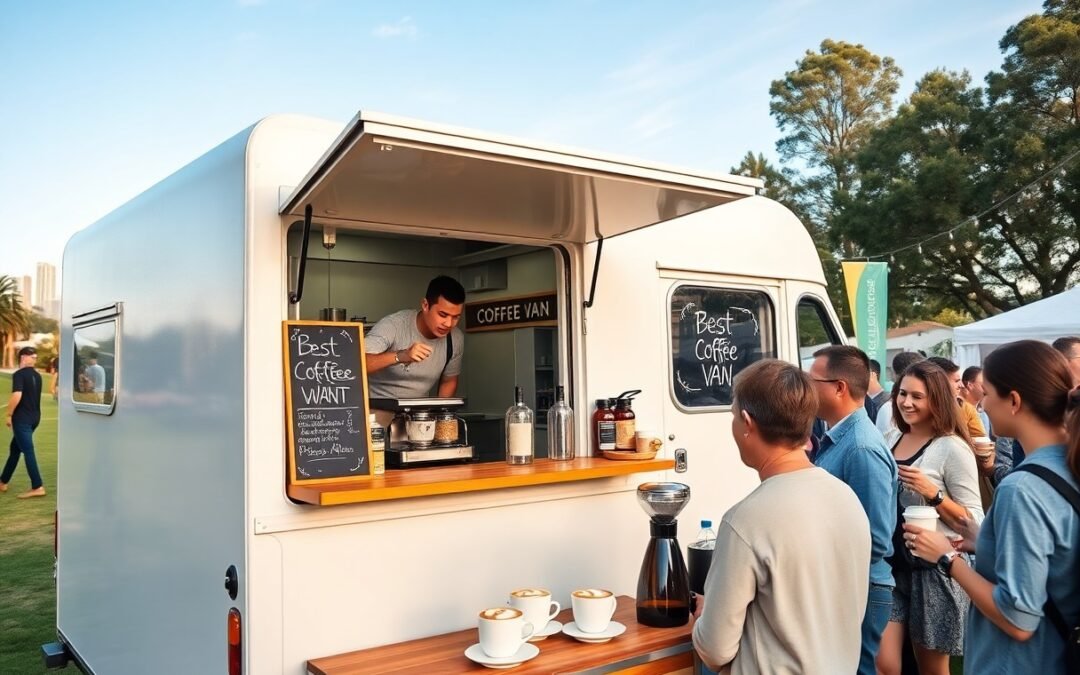
Just assess your event’s size, audience, and location, then compare coffee vans in Adelaide by menu quality, machine standards, barista experience, hygiene, licensing, and insurance to ensure smooth service; prioritize clear pricing, flexible packages, and positive local reviews so you get reliable, high-quality coffee that enhances your event.
How-To Determine Your Event Needs
Identifying Guest Preferences
Check the mix of attendees and the event schedule to predict what people will order: morning business breakfasts often see 60-80% of guests ordering coffee, with lattes and flat whites dominating, while afternoon cocktail-style events drop to 30-45% coffee uptake and shift toward long blacks and iced options. If your crowd skews younger or into specialty coffee, plan for a higher proportion of single-origin pour-overs and milk-alternative requests; you can validate local tastes by reading community feedback such as Coffee vans : r/Adelaide.
Factor dietary needs and service style into choices: for seated dinners expect low turnover but higher-quality pours, whereas festivals and expos need quick-service drinks and more non-dairy milk options (almond/oat demand often runs 15-25% of milk drinks). Use simple polls on invites or RSVP forms to capture specifics – if 40% of respondents tick “dairy-free,” you should stock at least three non-dairy options and advertise them at the van.
Estimating Volume Requirements
Start with attendance × expected coffee uptake × average cups per person. For example, a mid-morning networking event with 150 guests, a 65% coffee uptake and 1.4 cups per coffee drinker gives 150 × 0.65 × 1.4 ≈ 137 cups. Translate that into hourly throughput: if the main service window is 60 minutes you need ~137 drinks/hour. Machine and staff capacity matter – a single-group commercial espresso machine typically produces 60-80 espresso-based drinks/hour; a two-group machine can handle 120-160/hour if the barista is experienced.
Plan staffing by matching required throughput to realistic operating rates: aim for one barista per 80-100 drinks/hour for high-turnover events and add support staff for milk steaming, takeaways, and POS. For the 137 drinks/hour example you’d need either a twin-group machine with a seasoned barista plus an assistant, or two single-group setups with separate operators to keep queues below 5-7 minutes.
Account for peak spikes, churn and extras: if you expect a 30-minute peak (e.g., post-ceremony), scale capacity so you can serve 60-70% of total demand in that window – that might mean doubling machines or adding a batch-brew station (batch brewers can deliver 40-80 filter cups/hour per unit) and reserving a staff member for rapid espresso service. Also confirm power, water and waste disposal at the site because limited utilities can force you to reduce machine count and therefore increase staffing or alter the menu.
Tips for Researching Coffee Vans
When you research, focus on measurable details: typical service rate (many vans serve 80-120 drinks per hour), typical hire rates (often $600-$1,500 for a 3-4 hour block), equipment list (commercial espresso machine, grinder, backup gas/water supplies), and any travel or power requirements – vendors frequently add a travel fee past 20-30 km. Give priority to vendors who publish menu prices, sample timelines, and clear staffing numbers so you can match capacity to guest count.
- Check recent photo galleries and full-event videos to verify consistency of finished drinks and setup.
- Confirm menu flexibility: espresso, batch-brew, decaf, dairy-free milks, and specialty options like cold brew or chai.
- Ask about on-site needs: power (generators or 15A circuits), water, footprint (typically 3m x 3m), and waste removal.
- Verify certifications and insurance: barista qualifications, food-handling certificates, and public liability cover (commonly $10,000,000).
- Request a sample run sheet and a written contingency plan for equipment failure or weather.
Thou should contact at least three vendors for written quotes, ask for exact service times, and compare those side-by-side before booking.
Evaluating Local Options
Visit local markets, corporate precincts, or event pop-ups to see vans operating under pressure – you’ll notice real service pace, queue management, and consistency of drink quality. When you observe, time a barista’s throughput: a single-machine setup typically manages 80-100 drinks per hour, while dual-machine setups can hit 120+; use those numbers to decide if one van can handle your guest list or if you need multiple vans or additional staff.
Speak with nearby event planners or venues in Adelaide (many venues maintain preferred supplier lists) and ask about typical travel fees and setup constraints; vendors often charge extra beyond a 20-30 km radius and require a flat setup window of 45-60 minutes. Compare those logistics against your site layout – tight service lanes and limited power can double service time if not planned.
Checking Online Reviews and Testimonials
Scan Google Business, Facebook, Instagram comments, and local wedding forums for patterns rather than isolated opinions; an aggregate score above 4.5 from 30+ reviews indicates consistent performance, while multiple reports of lateness, inconsistent drink quality, or staffing issues are red flags. You should read reviews that mention event size and timing – a vendor praised for a 50-person brunch may not scale the same way for a 300-guest wedding.
Request direct references and follow up: ask to speak with two recent clients who had similar event size and format, and get specifics such as how many drinks were served, how long peak service took, and whether any issues occurred (and how they were resolved). Also check whether the vendor publicly responds to negative reviews – transparent remediation often correlates with professional service.
Look at review timestamps and photo metadata when available, and quantify trends: count mentions of speed, taste, staff attitude, setup punctuality, and hygiene to form a weighted picture – for example, if 70% of reviews praise taste but 40% mention slow service, plan for an extra barista or a second van to avoid bottlenecks.
Factors to Consider in Coffee Quality
Assess bean freshness, traceability and measurable extraction data when you compare vans: good vendors will supply roast date, origin, cupping score and target extraction numbers. You can use specific thresholds-look for beans scoring 80+ on SCA cupping, roast dates within 3-14 days for filter or 7-21 days for espresso, and documented extraction targets (brewed coffee TDS ~1.15-1.35% with an 18-22% extraction yield; espresso shot time 25-30 seconds with 8-12% TDS).
- Roast date: within 3-14 days (filter) or 7-21 days (espresso)
- Cupping score: 80+ for specialty; 84+ commonly used by high-end vans
- Origin & processing: single-origin vs blend, washed vs natural-ask for farm/lot
- Extraction parameters: brew ratio 1:15-1:18, water temp 92-96°C, espresso dose 18-20g → yield 36-40g
- Equipment & maintenance: grinder recalibrate every 200-300 shots; backflush group head every 50-100 shots
Coffee Bean Sourcing
You should insist on traceability: request farm, lot and harvest date so you can assess seasonality and consistency-many reputable Adelaide vans will list the producer and cupping score (for example, a van that catered a 300-person event used an 88-point Ethiopian single-origin and kept service at ~110 drinks/hour without quality loss). Asking for direct-trade or micro-lot details often yields fresher, higher-scoring lots than anonymous commodity blends.
Ask how the van stores and rotates stock: proper packaging (valve bags), single-bag opening per event and on-site grinder sealing cut staling. You can also test a short tasting flight on-site-sample a shot and a filter brew-so you verify roast profile and that the roaster’s recommended rest period matches the service style (filter vs espresso).
Brewing Techniques
You need to match brewing method to the event and bean: espresso gives consistent quick service (18-20g dose, 25-30s extraction), pour-over highlights single-origin clarity (brew ratio 1:15-1:18, 92-96°C), and cold brew requires long steeping (12-20 hours; 1:8 concentrate). Provide specific machine models or grinder types when possible-La Marzocco and Faema class machines and Mahlkönig or Mazzer grinders are common in vans that prioritise consistency.
Operational discipline is part of quality: calibrated scales, timers and a refractometer to verify TDS will keep your drinks consistent across shifts; insist that the van documents typical shot times, yield ratios and serving TDS or extraction yield during a site tasting. You should also confirm staff training-experienced baristas will adjust grind, dose and tamp to compensate for ambient temperature and event volume.
Water profile matters: SCA guidance targets water TDS ≈75 ppm and alkalinity ≈40 ppm (as CaCO3), so check that the van uses a 2-3 stage filtration system or a commercial filter cartridge to hit those numbers; consistent water reduces bitterness and preserves origin clarity. Thou-ensure you ask for roast dates, cupping scores, grinder calibration intervals and sample extraction numbers before signing a booking.
How-To Evaluate Service and Experience
When assessing a coffee van’s service, quantify what matters: response times (a vendor who replies within 24 hours shows operational readiness), public liability insurance limits (look for cover of at least $10 million), and proof of food-handling and barista qualifications such as SCA Level 1/2 or equivalent. Check equipment specs-commercial grinders and 2-3-group espresso machines handle high demand-and confirm throughput figures (one experienced barista typically produces 80-120 cups per hour during peak service).
Ask for specific references from events of a similar size-request three recent clients for 100-500 guest functions-and review photos or short videos of past setups to verify consistency in presentation. Insist on a trial tasting for 4-6 people and a written run sheet that covers setup (usually 30-60 minutes), peak staffing plans, breakdown times, and local council permit responsibilities so you can compare vendors objectively.
Staff Professionalism
Your frontline impression comes from the team, so evaluate uniforms, name-tags, and interpersonal skills during initial contact and the tasting session. Verify certificates: food handling, SCA barista training, and RSA if the van offers alcohol-based drinks; a vendor who can name specific trainers or accreditation bodies demonstrates credible investment in staff training.
Observe measurable service standards during a trial or reference event-target order-to-serve times under 90 seconds for single espressos and 2-3 minutes for specialty drinks during busy periods. Also confirm staff ratios for your event size (for example, plan 1 barista per ~100 guests for morning events or 1 per ~80 for functions with heavy specialty drink demand) and ask how they manage queues, peak surges, and special requests such as decaf, dairy-free milk, or allergy-safe options.
Customer Engagement
You should evaluate how the van interacts with guests beyond just serving coffee: effective vans provide clear branded signage, laminated menus with pricing, and promotional elements like latte-art demos, tasting flights, or a signature drink tailored to your event. Practical examples include a latte-art station that runs 20-30 short demos in a 30-minute window to draw crowds, and on-site barista-led tastings that convert casual interest into sales and social media shares.
More info: probe how the vendor measures engagement-ask for metrics such as number of social posts using the event hashtag, email signups collected via QR codes, or on-site feedback scores. Vendors who offer post-event analytics (examples: counts of branded cup photos, 30-day social reach, or a brief guest satisfaction summary) give you data to assess ROI and inform decisions for future events.
Tips for Comparing Pricing and Packages
When you line up quotes, concentrate on the headline numbers and the fine print: per‑head or per‑drink pricing, minimum spends, and any hourly rates for extended service. Several Adelaide vendors list per‑head packages from $5-$10 for basic espresso service, while bespoke packages that include cold brew or specialty lattes commonly run $8-$14 per person; factor in typical minimums of $300-$800 for small events and allow for peak‑time weekend premiums of 10-25% on top of base rates.
Understanding Pricing Structures
Different vendors use one of three common models: per‑drink (e.g., $3.50-$5.50 per espresso), per‑head (flat $6-$12 per guest), or flat event fee (example: $650 for up to 100 guests including two hours of service). You should request sample invoices showing how those models scale – ask for cost projections for 50, 100, and 200 guests so you can compare total spend and spot step‑up points where per‑head becomes cheaper than per‑drink.
Also verify how overtime and additional baristas are charged: many providers add $40-$80 per hour per extra barista and apply a setup/packdown fee of $50-$150. If you expect lines of 80-120 drinks per hour, confirm whether the quoted package includes enough staff and machines to hit that throughput without surcharges.
Comparing Pricing Components
| Component | What to check / Examples |
|---|---|
| Per‑head rate | What drinks are included? Example: $7/person for 2 drinks allowance (espresso or filter) |
| Per‑drink pricing | Check extras for syrups or dairy alternatives; baseline $3.50-$5.50, +$1.00-$1.50 for alternatives |
| Minimum spend | Often $300-$800; ask if shortfalls are charged or waived with credit |
| Staffing | Extra barista $40-$80/hr; confirm included hours and break coverage |
| Travel & setup | Travel fees $0-$120; setup/packdown $50-$150 depending on distance and site complexity |
| Consumables & equipment | Check if cups, sugar, napkins, and water are included; equipment hire may add $50-$200 |
- Request a full line‑item quote (so you can compare apples‑to‑apples)
- Get projected totals for multiple guest counts (50, 100, 200)
- Ask about peak‑hour or weekend surcharges (typically 10-25%)
- Confirm power/water requirements to avoid last‑minute fees
- Clarify cancellation and rescheduling terms – deposits are often non‑refundable
Inclusions and Exclusions
Insist on written detail of what the package covers: which beverages, how many drinks per guest, barista hours, and whether cups, milk, syrups, and disposables are provided. For example, a $9 per‑head package might include 2 drinks, disposable cups, and 2 hours of service but exclude premium beans and reusable cups, which can add $1-$2 per drink if requested.
Compare examples from vendors: one operator might include travel within 10 km and basic milk alternatives but charge $60 for setup across stairs, while another covers setup but adds a $100 equipment hire fee. You should tally those extras against the base price rather than assuming a lower headline rate delivers better value.
Also verify scope items that commonly trip people up – insurance cover, barista uniform, GST inclusion, and whether late‑running events incur hourly penalties – since these can swing the effective hourly rate by 15-30%.
Knowing how each line item affects total cost helps you choose the package that matches your guest count, service expectations, and budget.
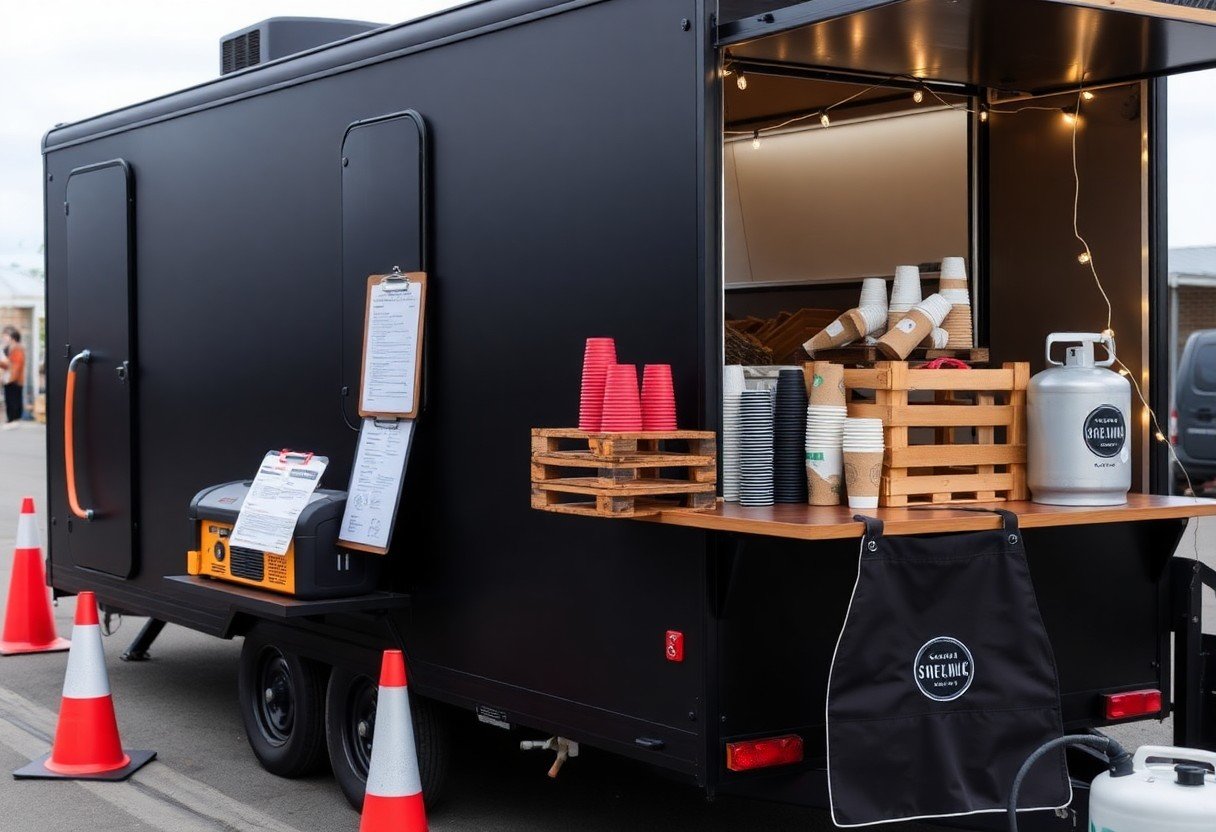
How-To Ensure Logistics and Setup
Plan your timeline and circulation as early as you lock in a van: most operators need 45-90 minutes to set up and 30-60 minutes to pack down, so block those windows in the event schedule. Confirm delivery routes and a minimum vehicle turning radius of 6-8 metres so the van can access the site without offloading equipment onto public roads, and provide a clear contact for on‑site coordination – a single point person speeds decisions about load‑in, power access and queue placement.
Allow for contingencies such as late arrivals, wet weather and permit checks; if the site is grass or soft ground, specify a hardstanding or matting for the van to prevent sinking and to comply with safety inspections. Require the vendor to supply a site plan showing their footprint, generator position (if used) and customer queuing area so you can slot the van into emergency egress and other vendor layouts without surprises.
Space Requirements
Give the van a minimum operating footprint of about 3 m (width) × 4 m (depth) free of obstacles, with an extra 2-3 m in front for customer flow – a typical setup for a single‑service window van. If you expect busy peaks (for example, 80-120 drinks per hour), reserve an additional 8-12 m of linear queuing space or lay out barriers to manage lines; that prevents spillover into walkways and keeps service times steady.
Factor in staff parking and a small staging area for deliveries: vendors often need space beside the van for milk crates, spare beans and rubbish bins (another 2-3 m²). Verify any council or venue setback requirements – some event sites require a 1-2 m clearance from tent lines, buildings or fences for safety and fire access.
Power and Water Access
Expect an espresso machine, grinder and fridge to draw between 4 and 6 kW during normal operation: a 2‑group machine is typically ~3.5 kW, grinders ~0.5 kW and a small underbench fridge ~0.5-1 kW. You should therefore provide either a dedicated 240 V single‑phase supply capable of 20 A (or higher) or a generator rated at least 5-8 kVA; avoid sharing power with heavy lighting rigs or sound systems unless capacity is confirmed in advance.
Water needs vary by service volume, but plan on roughly 20-30 L of fresh water per 100 coffees served per hour and equal wastewater containment. Vendors commonly bring onboard tanks of 200-400 L for mobile events, yet at full‑day events or where you expect sustained queues it’s safer to arrange a mains tap connection and a sanitary waste disposal point so the van can operate without frequent refills.
Confirm specifics in writing: ask the vendor for their peak kW draw, plug type and required cable length, whether they need a generator permit, and the size of their fresh/wastewater tanks; if the site provides mains water, verify the tap type and pressure, and ensure the venue has an agreed plan for trade‑waste disposal to avoid on‑site shutdowns.
To wrap up
Taking this into account, you should focus on matching a coffee van’s capabilities to your event needs-capacity, menu variety, and service style-while verifying quality through tastings, references, and examples of past events. Inspect equipment, staff professionalism, and required permits and insurance to ensure your guests receive consistent, high-quality service and that logistical details such as power, placement, and timing are settled in advance.
When you compare quotes and contract terms, prioritize transparency on pricing, cancellation and contingency plans, and confirm what is included on the day so there are no surprises; book the vendor that gives you confidence in execution and aligns with your budget and guest expectations. Taking these steps will let you select the best Adelaide coffee van with certainty and ensure your event delivers the experience you intend.